
Reviewed · HISTORICAL TOURS
Entry Ticket for The Limestone Heritage Park and Gardens
Malta’s limestone tells a story. With this entry ticket to The Limestone Heritage Park and Gardens in Siggiewi, I like how the visit feels guided even though you are on your own, thanks to a 17-language audio-guided walkthrough. I also like the hands-on energy of the live stonework demonstrations, which make the island’s famous building material feel practical, not just decorative.
One thing to plan around is that there is no guide included. You will follow the audio (plus what happens during the live demos), and food and drinks are extra, so build in a little time to grab a snack if you want one.
In This Review
- Key Things You’ll Notice First
- Limestone Heritage Park and Gardens: Why This Outdoor Stop Works
- Where You’ll Go in Siggiewi (and What the Setting Adds)
- The Audio-Visual Presentation and Audio-Guided Walkthrough (17 Languages)
- Geology Section: Learning Limestone the Way Malta Uses It
- Museum Hall: Where the Story Gets Human
- Punic Tomb Access (400 B.C.): A Real Malta Timeline Moment
- Live Stonework Demonstrations: The Part That Feels Like a Workshop
- Citrus Garden and Farm Animal Park: A Needed Reset
- Food and Shopping: Plan for Tea, Platter, and Ftira Extras
- Price and Value: Is $10.43 Worth It?
- Practical Tips for a Smooth Visit
- Who This Entry Ticket Is Best For
- Should You Book This Ticket?
- FAQ
- How long does the visit usually take?
- Where is The Limestone Heritage Park and Gardens located?
- What is included with the entry ticket?
- Is food and drink included in the ticket price?
- Are there live stonework demonstrations?
- Is the ticket audio-guided, and in how many languages?
- What are the opening hours?
- What is the last entry time?
- Can I re-enter after leaving?
- What is the cancellation policy?
Key Things You’ll Notice First
- 17-language audio-visual and audio-guided content so you can match your pace and language
- Access to the Punic tomb (400 B.C.) for a very real Malta timeline
- Live stonework demonstrations that show how limestone work happens
- Museum hall and geology section that turn stone into a story you can see
- Citrus garden and farm animal park for a slower, family-friendly break
- Mon to Fri hours plus limited Saturday time with last entry 30 minutes before close
Limestone Heritage Park and Gardens: Why This Outdoor Stop Works
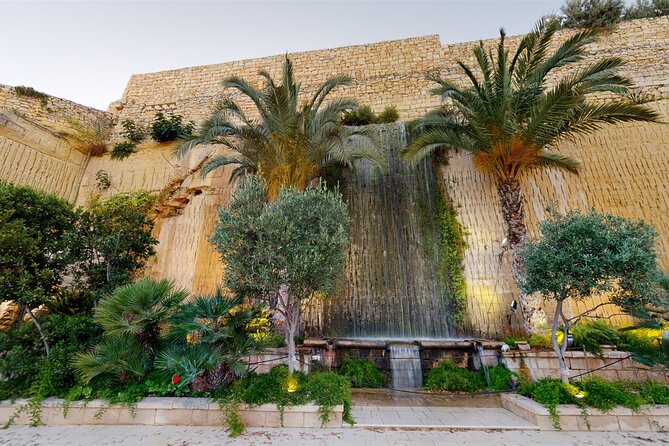
If you want Malta without the crowds-on-crowds feeling, this is a smart choice. The Limestone Heritage Park and Gardens is set up as a walk-through experience in an outdoor park, with indoor bits like the museum hall. The whole idea is simple: you see limestone, you learn how people used it, and you connect it to the island’s long human history.
I like that it does not assume you already know the jargon. Between the audio-visual presentation and the audio-guided walkthrough, you get explanations in 17 different languages, plus physical areas to look at right beside the information. That combination helps you slow down, notice details, and leave with a clearer picture than you would from a quick roadside stop.
And yes, the live stonework matters. When someone is demonstrating stonework while you are standing there, the place stops being a “museum building stone” concept and becomes something you can understand with your eyes and ears.
More History Tours in Mgarr:


Where You’ll Go in Siggiewi (and What the Setting Adds)
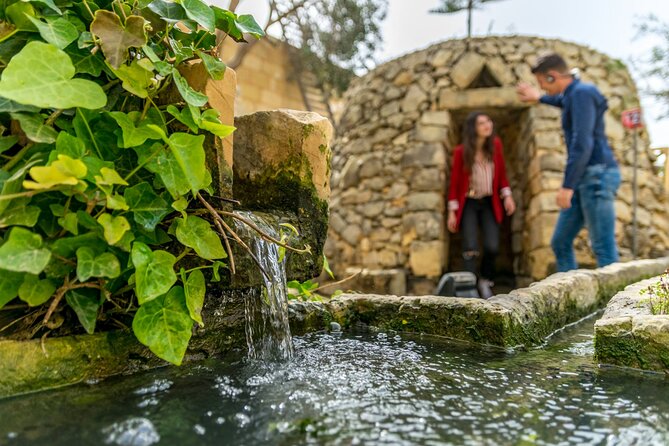
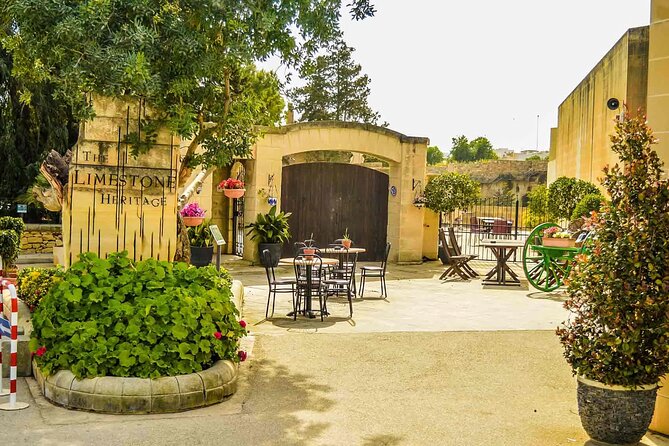
The ticket is listed with Mgarr, Malta, but the attraction itself is in the traditional Maltese village of Siggiewi. That village setting is a big part of why the visit feels different from a typical museum day. You are not just indoors under lights. You are walking through themed areas that mix the geology story with gardens and animals.
Also, it is family-run, and it shows in the layout. You will find sections that work for kids and non-experts, and it is easy to take pauses. If you are traveling with mixed ages, that flexibility is a real plus.
Because it is outdoors, the visit length can stretch or shrink depending on your pace. The stated duration is about 1 to 3 hours, but I’d think of it as a “take your time” range. If you want to listen carefully to the audio and watch the demonstrations closely, you will likely land nearer the longer end.
The Audio-Visual Presentation and Audio-Guided Walkthrough (17 Languages)
Your visit starts with the information you carry with you. This ticket includes:
- an audio-visual presentation available in 17 languages
- an audio-guided walkthrough available in 17 languages
For you, that means two good things. First, it reduces guesswork. You can follow a route without needing a guide standing next to you. Second, the translation options matter if you are not traveling in English or if you want to match your language comfort level.
Practical tip: give yourself time in the first part of the visit to get oriented. Audio works best when you are not rushing from one stop to the next. If you feel behind, slow down rather than trying to “catch up” with the narration.
You should also expect that the audio ties to what you are physically looking at. That is the smart part of this setup. It turns the park into a sequence, not a checklist.
Geology Section: Learning Limestone the Way Malta Uses It
This experience is built around limestone, and the geology section is where the lesson becomes visible. Malta’s limestone is not only a “thing you see on buildings.” It is part of how the island was shaped and how people worked with the ground.
In practical terms, geology areas help you answer questions you would not naturally ask. Why limestone matters here. How it forms. Why it shows up everywhere. Even if you are not a rock person, the physical exhibits plus the audio explanations make it feel straightforward.
If you are the kind of traveler who likes to look longer at stone textures and how walls and surfaces are made, this section is where that curiosity pays off. If you are short on patience for explanations, you can still get value by focusing on the visible samples and the nearby interpretive points.
Museum Hall: Where the Story Gets Human
Beyond rocks, you need people in the picture. The ticket includes access to the museum hall, which is where the attraction shifts from geology facts to Malta’s broader story.
What I find useful about a museum hall inside an outdoor venue is that it gives you a temperature break. It also helps when you want a calmer moment to reset before you head back outside. It is also where you can go back and re-read what you missed during the walking parts.
Think of it as the “anchor room.” Even if you do not read every placard, being in one indoor space helps the rest of the visit make more sense.
Other ways to spend a sunny hour in Mgarr
- St Paul’s Bay: Malta National Aquarium Entry Ticket★ 4.4 · 2,532 reviews
- Mellieha: Popeye Village Entry Ticket★ 4.6 · 2,070 reviews
- Mellieha: Popeye Village Malta Filmset Entry Ticket★ 4.6 · 1,802 reviews
- Malta National Aquarium Entrance Ticket★ 4.0 · 643 reviews
- Valletta: “The Malta Experience” Audio-Visual Show Ticket★ 4.4 · 468 reviews
Punic Tomb Access (400 B.C.): A Real Malta Timeline Moment
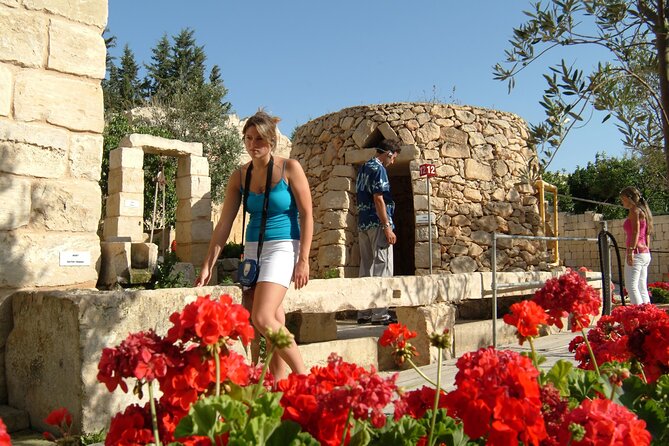
One of the most striking inclusions is access to the Punic tomb, dating back to 400 B.C. That is not a decorative detail. It is a direct time jump, and it makes the park feel more than an educational garden.
For you, this is likely the “stop I will remember” moment. When you visit a tomb area, you naturally slow down. You notice what is preserved, what is explained, and how the space feels. Even if you are not obsessed with ancient history, the age alone gives the visit weight.
If you are traveling with kids, this is one of the places that can turn a history story into something tangible. If you are traveling as a couple or solo, it can be your quiet highlight.
The main consideration is timing inside the park. Because your ticket is one-time entry only, you want to make sure you include this area during your visit and do not treat it as optional.
Live Stonework Demonstrations: The Part That Feels Like a Workshop
The ticket includes live stonework demonstrations. This is the moment where the park becomes a living lesson.
Even if you have no idea what you are watching, you will still benefit. Stonework is visual and rhythmic. You see tools, you see shaping, and you see how limestone is handled. That makes the geology content click in a practical way.
I’d plan to stop near the demonstration period rather than sprinting through. If you are flexible, hang around for the demo and use that time to absorb how the stone looks in real work, not just as an exhibit sample.
This is also where the family-run vibe shows. A demonstration tends to invite questions, and it gives the park energy, which helps a self-guided visit feel more social without needing a dedicated guide.
Citrus Garden and Farm Animal Park: A Needed Reset
Not every highlight is stone-related. You also get access to the citrus garden and the farm animal park.
This part matters because it changes the mood. After indoor museum time and geology reading, a garden area gives you a visual reset. The farm animal park adds a simple, universal appeal that keeps the visit from feeling too academic.
If you travel with children, this is a built-in reward zone. If you travel as adults, it is still useful. It helps you slow your pace and remember you are in a park, not a test.
Food and Shopping: Plan for Tea, Platter, and Ftira Extras
Before you leave, you can relax with tea or coffee and snacks, including a Maltese platter and Maltese tuna ftira. The key detail is that food and drinks are not included in the ticket price.
I like having that option because it lets you tailor the visit to your day. If you already planned a lunch elsewhere, you can just grab a drink. If you are turning this into a half-day stop, you can treat the snack offer as part of the experience.
There is also a shop where you can browse genuine Maltese goods and stone souvenirs. The good news here is that it is not a pressure situation. You can look around without feeling forced to buy.
Practical move: if you want a souvenir, set aside a bit of time near the end. It is easier to make decisions after you have learned the limestone story, because then the stone pieces feel more meaningful.
Price and Value: Is $10.43 Worth It?
At about $10.43 per person, this is priced like a value-focused ticket. You are not paying for a private guided tour or hotel transfers. Instead, you pay for access plus a lot of included content: audio-visual presentation, audio-guided walkthrough, indoor museum hall access, geology section access, the Punic tomb, citrus garden access, farm animal park access, and live stonework demonstrations.
Here is how I’d judge value for you:
- If you like self-guided learning that still feels structured, the audio setup is a strong match.
- If you care about hands-on demonstrations, that live element raises the usefulness of the ticket.
- If you are mainly after a quick photo stop, you might find you want less time than the park is designed for.
Since the stated duration is about 1 to 3 hours, consider this a timed visit. If you give yourself the full window, you are likely to feel like you got your money’s worth.
And one more detail that makes it feel like good value: the venue is open during specific weekday hours, which means it is easier to plan without fighting chaotic schedules.
Practical Tips for a Smooth Visit
A few things will help you have a stress-free day.
First, aim to arrive earlier rather than closer to the end. The last entry is 30 minutes before closing. If you show up late, you will spend your visit rushing instead of learning and watching.
Second, remember this is a one-time entry only ticket. You can use it on your booked day at any hour within opening hours, but you cannot re-enter if you step out.
Third, the venue is near public transportation. That’s useful if you are not renting a car. It also means you can pair this stop with other nearby activities without building in complex driving.
Fourth, opening hours are listed as Monday to Friday from 9:00 AM to 4:00 PM, and Saturday from 9:00 AM to 12:00 PM. It is closed Sundays and public holidays. If your Malta schedule is tight, build your visit around those windows.
Finally, the ticket is mobile. So you can store it on your phone and show it when needed. If you are the kind of traveler who worries about connectivity, consider having the ticket available offline.
Who This Entry Ticket Is Best For
This is one of those tickets that works across ages and travel styles.
You’ll likely enjoy it if:
- you like learning at your own pace (the audio does the talking)
- you want a Malta stop that is not just another monument photo
- you appreciate hands-on demonstrations
- you are traveling with kids who need visual breaks and animals
It may feel less ideal if:
- you only want a short, guided history walkthrough with a person explaining everything
- you are visiting on a Sunday or public holiday, since the venue is closed then
Should You Book This Ticket?
I think you should book if you want an educational Malta stop that still feels relaxed and outdoorsy. For the price, you get a full set of included experiences, plus live stonework demonstrations and access to the Punic tomb from 400 B.C. That combination is hard to beat for a standalone ticket.
If you hate self-guided activities, this is the one part to weigh. There is no guide included, so your “success” will depend on how comfortable you are following audio and walking your own route.
If you are choosing between a quick pass through history and a visit where you can actually notice details, this ticket leans toward the second option. And if you like the idea of limestone, stonework, gardens, and animals in one outing, you are probably going to have a very satisfying couple of hours.
FAQ
How long does the visit usually take?
The experience is listed as about 1 to 3 hours.
Where is The Limestone Heritage Park and Gardens located?
The venue is located in the traditional Maltese village of Siggiewi.
What is included with the entry ticket?
Your ticket includes entry to the park, an audio-visual presentation and an audio-guided walkthrough in 17 languages, access to the museum hall and geology section, access to the Punic tomb dating to 400 B.C., access to the citrus garden, access to the farm animal park, and live stonework demonstrations.
Is food and drink included in the ticket price?
No. Tea or coffee and snacks like Maltese platter and Maltese tuna ftira are available, but food and drinks are not included.
Are there live stonework demonstrations?
Yes. Live stonework demonstrations are included with the ticket.
Is the ticket audio-guided, and in how many languages?
Yes. The audio-visual presentation and the audio-guided walkthrough are both available in 17 different languages.
What are the opening hours?
The venue is open Monday to Friday from 9:00 AM to 4:00 PM. It is open Saturday from 9:00 AM to 12:00 PM. It is closed on Sundays and public holidays.
What is the last entry time?
The last entry is 30 minutes before closing time.
Can I re-enter after leaving?
No. The entry ticket is valid for one-time entry only, and re-entry is not allowed.
What is the cancellation policy?
Free cancellation is offered, with a full refund if you cancel up to 24 hours before the experience’s start time.
Just landed: new Mgarr pages






Historical Tours, compared.
Prehistoric Temples, Limestone Heritage & Blue Grotto
Read our review →
Maltese Islands History Audio-Visual Show and La Sacra Infermeria Tour
Read our review →
Self-Guided Historical Walking Tour (Audio Guide)
Read our review →
Wonderful Valletta, gastronomy, art, and history in the Mediterranean
Read our review →

Private Historical City Walking Tour with Rabat Town
Read our review →
The Limestone Heritage Park and Gardens (Entry Ticket)
Read our review →Browse the lists this tour appears in