
Reviewed · SCUBA DIVING
Malta: First Experience Scuba Diving Lesson
Malta makes your first scuba lesson feel real. I loved the calm, close coaching from instructors like Ema and Marcel, and I loved that you complete online theory first, so the whole experience runs smoother.
For me, the best part was how quickly you go from unsure to comfortable, without feeling rushed.
One possible drawback to know up front: this session does not give you a scuba certification. You leave with confidence and basics, then you book the next step if you want a licence.
It runs about 2.5 to 3.5 hours, and the group is kept tiny, up to 4 people. You’ll do two structured water sessions with a max depth of 12 m, plus all the equipment you need.
In This Review
- Key highlights you will feel right away
- First steps in Malta’s water: what your 2.5 to 3.5 hours really includes
- Online prep that makes the first moment easier (and safer)
- Meeting, gear, and safety briefing, with room for nerves
- Your first underwater training session: skills, comfort, and controlled depth
- Second shore session: relax time, fish watching, and a calmer pace
- Price and value: is $91 a good deal for a first-timer?
- Who this fits well, and who should look elsewhere
- Sustainability and responsible tourism in the real world
- What to bring, what not to bring, and a key flying rule
- Making your first scuba session go smoothly, even if you are nervous
- Should you book this first scuba lesson in Malta?
- FAQ
- How much does the Malta first scuba lesson cost?
- How long is the experience?
- What is included in the price?
- What is the maximum depth?
- Do I get scuba certification after this lesson?
- What is the minimum age to participate?
- What should I bring, and when can I fly after?
Key highlights you will feel right away
- Very small group size (up to 4), so your instructor can actually watch what you are doing
- Online theory before you go in your language, then safety and skills on land
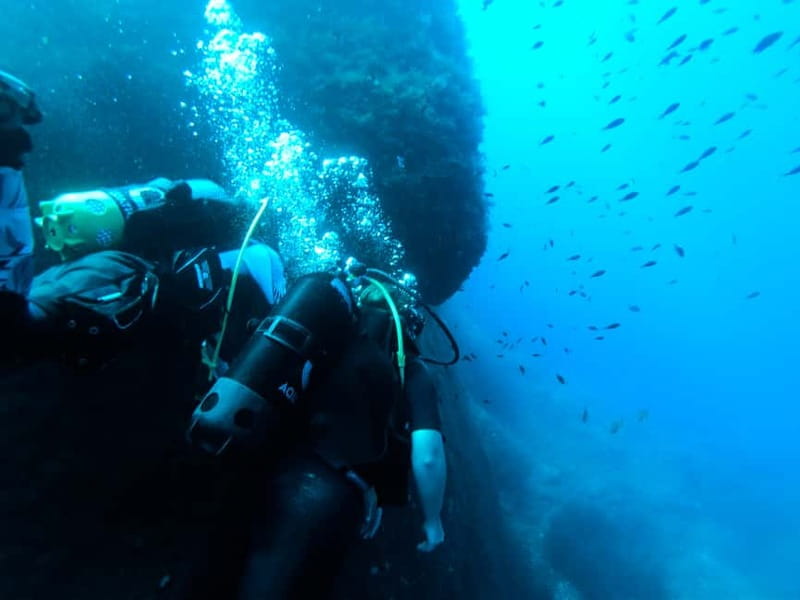
- Max depth 12 m with a training-focused first session and a calmer second shore session
- Patient instructors who help you go at your comfort level, including easing nervous beginners
- Sustainability-minded approach, with responsible tourism emphasized by the operator
- Real first-timer coaching cues, including help with staying comfortable underwater and equalizing
First steps in Malta’s water: what your 2.5 to 3.5 hours really includes
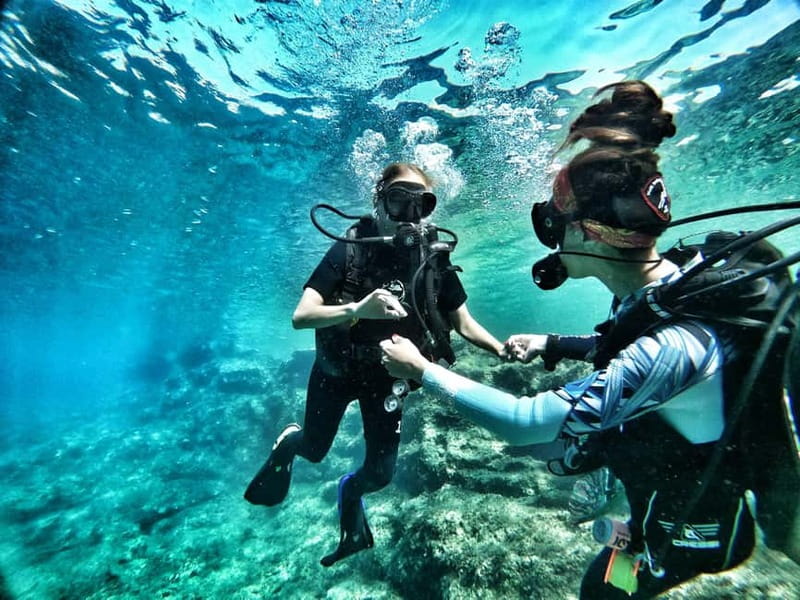
This is built as a true first-time scuba experience, not a quick photo opportunity. You start with online materials in your language, then you show up and move through a safety-first process that gets you breathing underwater in a controlled way.
Plan on about 2.5 to 3.5 hours total. The exact start time depends on availability, but the structure stays consistent: theory done before you arrive, an in-person briefing and equipment setup, then two short, guided sessions in the water.
Also, keep expectations grounded. You are learning the fundamentals of using scuba safely and comfortably. You are not being trained for certification during this half-day format.
More dive sites near St Paul S Bay:
Online prep that makes the first moment easier (and safer)
Before the day, you complete online theory materials in your language. That matters more than it sounds. When you already understand the basics, you spend less time mentally translating and more time focusing on your breathing, your body position, and following instructions.
You will also be asked to check restrictions before booking, including language needs, swimming ability, and health rules. This operator is very clear about safety priorities, and that starts with screening.
Tip that will save you stress: do the online forms and materials before you head out. If you show up without completing them, you lose the advantage of having the key ideas already organized in your head.
Meeting, gear, and safety briefing, with room for nerves
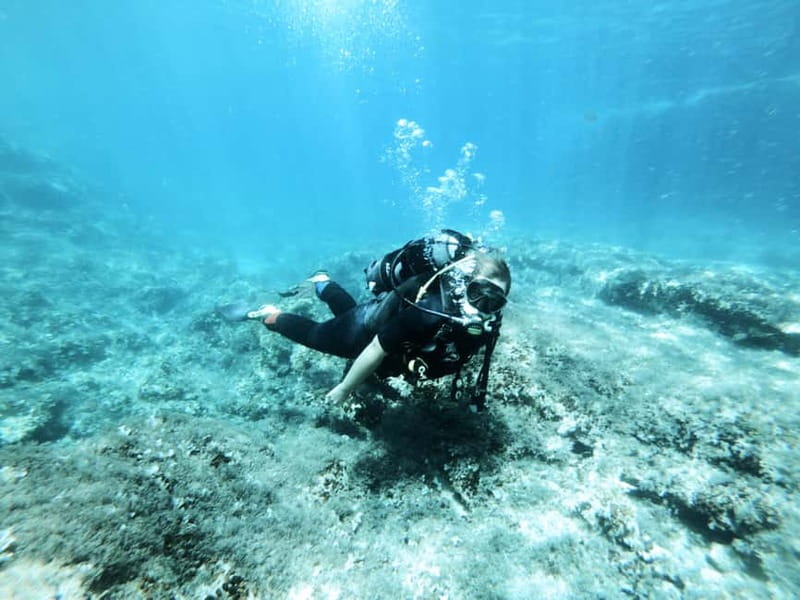
Your instructor is listed as English speaking, and the sessions are small, limited to 4 participants. In real life, that small group size is what turns a scary first water moment into a doable one.
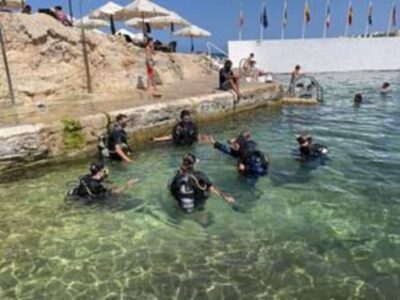
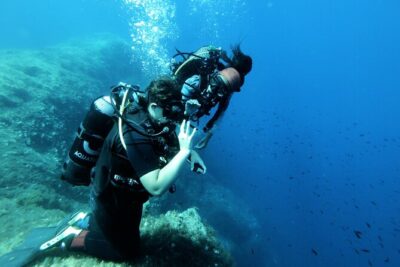
At the start, you get a full equipment setup and a safety briefing. Then you go through scuba skills and drills with your instructor, before you go underwater. Many first-timers find that part reassuring, because you practice the motions on land with guidance, instead of learning everything while weightless and anxious.
From the instructor style described in feedback, the common theme is patience. People who were worried or afraid of water repeatedly say the coaching stayed calm and supportive, with clear explanations and close monitoring.
Also note what you cannot bring: alcohol and drugs are not allowed, and cameras are not allowed. If you were planning to record your moment, adjust expectations now.
Your first underwater training session: skills, comfort, and controlled depth
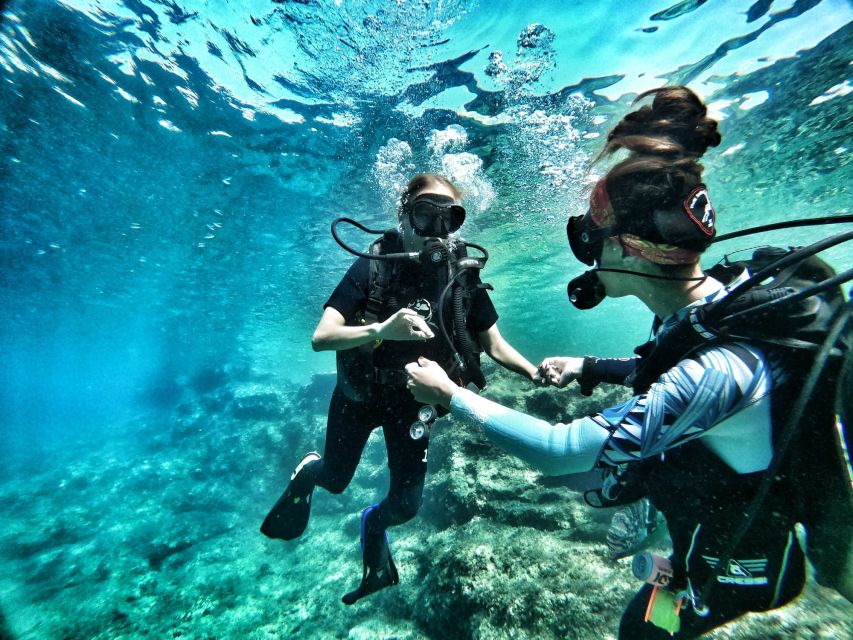
The first water session is the training one, with skills practiced before you just drift around. It stays within the program’s max depth of 12 m, and in practice, you can expect a beginner-friendly approach with shallow work first.
What you are practicing typically comes down to:
- learning to breathe steadily through the regulator
- getting your body position under control
- following safety cues quickly
- working on equalizing comfort as needed
Equalizing is a big deal for comfort. One first-timer described trouble equalizing enough and getting ear pain, and the instructor worked with them repeatedly until it improved, then adjusted how deep they went. That is exactly the kind of adaptive coaching you want for a first session.
If you feel discomfort, speak up early. Your instructor will be watching your breathing and body signals, but you still need to report what you are feeling right away.
Second shore session: relax time, fish watching, and a calmer pace
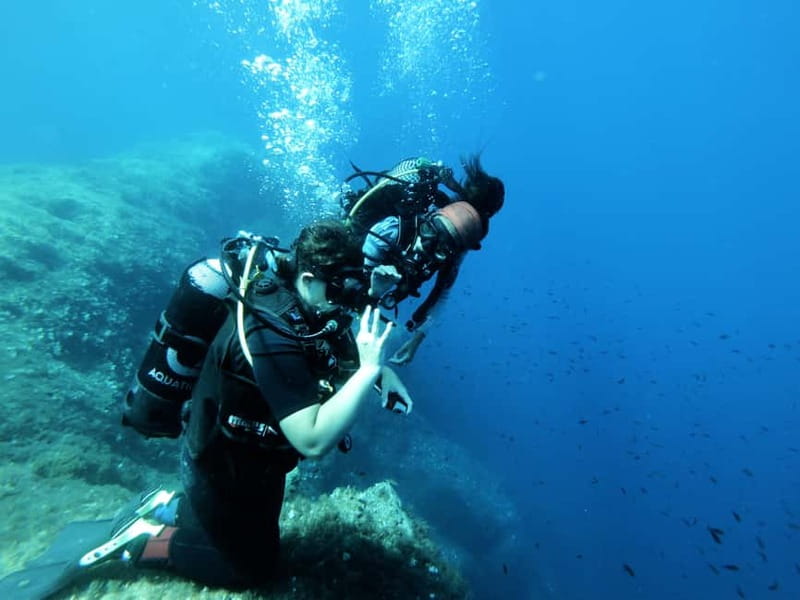
After the first session, you get a second underwater experience focused more on exploring and relaxing. It is still guided and still safety-led, but the vibe is usually calmer because you already proved to yourself you can do the basics.
The second session is described as a shore session, meaning you are working from land with a controlled setup. That can make things feel simpler for nervous beginners, compared with more complicated setups.
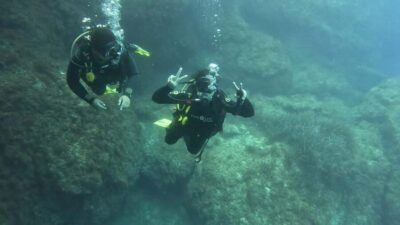
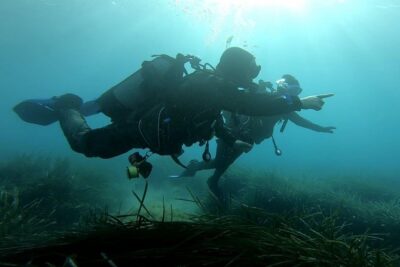
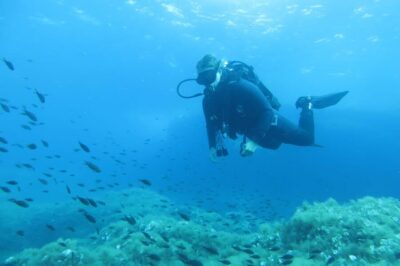
What you look for underwater depends on conditions and what the instructor thinks will be best for the group, but the overall point is clear: you get the thrill of seeing marine life and underwater scenery without turning the day into an endurance test.
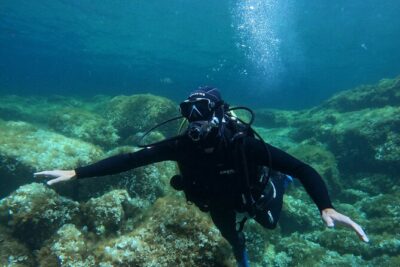
This is where you often notice the real Malta payoff. Mediterranean water visibility can be striking, and that clarity makes it easier to watch fish and feel like you are really part of the environment.
More hands-on sessions in St Paul S Bay:
- Malta: Chocolate Making Workshop★ 4.8 · 80 reviews
- Malta: Truffle Making Master Class★ 4.9 · 53 reviews
- Chocolate Making Workshop★ 5.0 · 47 reviews
- Gozo: Cooking Class and Market Visit★ 5.0 · 42 reviews
- Maltese Tile – Souvenir painting workshop with local★ 5.0 · 40 reviews
Price and value: is $91 a good deal for a first-timer?
At $91 per person, the question is not just the total cost. It is what you receive for that money.
In this package, you get:
- online theory materials (you must complete them before the activity)
- a safety briefing with your instructor
- the complete diving kit
- 1 training underwater session and 1 shore session, max depth 12 m
- transportation to and from the dive site if needed
Hotel pickup and drop-off are not included, so you should plan to get to the meeting point on your own. Also, meeting points can vary depending on the option you book, and the activity ends back at the meeting point.
For first-time learners, the value is usually best when an operator handles the heavy lifting: gear, instruction, and a structured plan that keeps you safe. With a small group capped at 4, you also get more attention per person than you would in a big group.
If you are trying scuba for the first time, this is a cost-effective way to decide whether you want more training later, without investing in a full certification course right away.
Who this fits well, and who should look elsewhere
This is a great match if you:
- are a confident swimmer (non-swimmers are not suitable)
- want a short, structured lesson, not a long multi-day course
- feel nervous but need patient coaching and time to settle in
- want a small-group experience (max 4 people)
It is not suitable for several groups, including pregnant women and people with specific medical limitations. The operator is explicit about health restrictions. They also require written medical approval from your physician if you have certain lungs, breathing, heart, or blood issues, and they list many other conditions where you should not participate.
Also avoid this if you have:
- respiratory issues
- epilepsy
- back problems
- heart problems
- had recent surgeries (within 12 months)
- certain eye, ear, nasal passage, or sinus problems
If you cannot contact your physician, the alternative offered is a snorkelling tour. That is a practical fallback that keeps you in the water and still lets you enjoy the Mediterranean without forcing a scenario that is medically risky.
One more real-world note: you need written medical approval before diving in cases that require it. Don’t try to wing it.
Sustainability and responsible tourism in the real world
This operator specifically mentions sustainability and responsible tourism. For you, that translates into a more careful, safety-forward day rather than a chaotic, high-pressure experience.
In practical terms, responsible operators usually mean they keep groups small, manage equipment and procedures carefully, and focus on minimizing unnecessary impact. Here, the small group limit of 4 helps with that kind of control.
If you care about how your travel affects marine environments, you will likely appreciate the operator’s stance before you even get in the water.
What to bring, what not to bring, and a key flying rule
Bring:
- swimwear
- a towel
Do not bring:
- cameras
A crucial timing rule: you must wait minimum 12 hours before flying after a scuba session. That matters if your Malta plan includes a flight the same day or early next morning. Build that buffer into your schedule.
You should also be ready for English-based instruction. English skills are required, and your instructor is listed as English speaking.
Making your first scuba session go smoothly, even if you are nervous
If you are anxious, you are not alone. Many first-timers say they were terrified at first, then felt calm once their instructor guided them step-by-step and let them settle gradually.
Here are the best habits to copy:
- Finish the online materials before the day, so you know what to expect.
- Tell your instructor how you are feeling early. Don’t wait until you are stressed.
- Move slowly in the water. If something feels wrong, pause and ask.
- If equalizing becomes uncomfortable, report it right away. The program is designed for beginners, and instructors adjust depth and pace based on your comfort.
And keep your expectations realistic. This is a first session. The goal is safe breathing, basic control, and a sense of accomplishment, not going straight to the most advanced underwater moves.
Should you book this first scuba lesson in Malta?
Book it if you want a structured first-time scuba experience in Malta, with small group attention, a clear safety process, and coaching that helps nervous beginners feel steady fast.
Skip it if you are chasing certification in one afternoon, if you cannot meet the swimming and medical requirements, or if you have recently had surgery or relevant health issues where written approval is required.
If you are flexible and want to try scuba the right way, this lesson gives you a solid start. You’ll come away knowing whether you actually love the underwater world, and you’ll know exactly what kind of next training step makes sense.
FAQ
How much does the Malta first scuba lesson cost?
The price is $91 per person.
How long is the experience?
It lasts about 2.5 to 3.5 hours, depending on the starting time available.
What is included in the price?
You get online theory materials (to complete before the activity), a safety briefing, the complete diving kit, 1 training underwater session and 1 shore session (max depth 12 m), plus transportation to and from the dive site if needed.
What is the maximum depth?
The maximum depth is 12 m.
Do I get scuba certification after this lesson?
No. This course does not provide scuba diving certification.
What is the minimum age to participate?
Minors must be at least 10 years old to participate, and if a minor joins alone they need a tutor or parental written consent.
What should I bring, and when can I fly after?
Bring swimwear and a towel. After the scuba session, you must wait at least 12 hours before flying.
Just landed: new St Paul S Bay pages
Scuba Diving, compared.
First scuba diving experience with instructor – Malta
Read our review →
Browse the lists this tour appears in