
Reviewed · SCUBA DIVING
First scuba diving experience with instructor – Malta
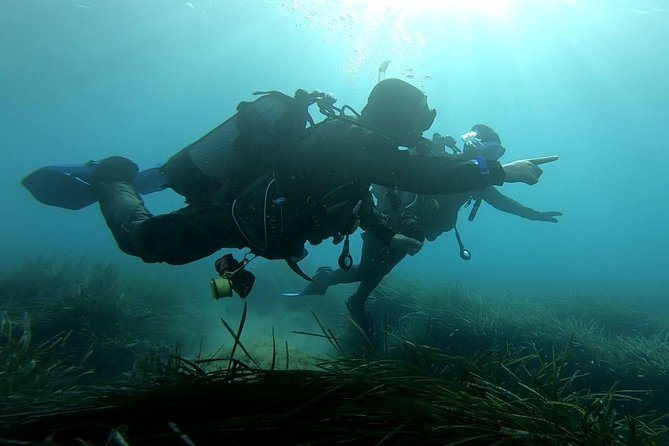
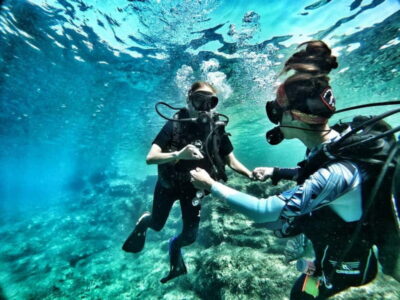
Under Malta’s waves, nerves turn to curiosity fast. This first-time scuba session in St Paul’s Bay is built for beginners, with a PADI instructor guiding you through the basics and helping you communicate underwater with simple hand signals. You also get time in both shallow and open-water conditions, so you do not just learn gear on the beach.
What I like most is the focus on real skills, like using equipment correctly, equalizing ear pressure, and staying comfortable while swimming with fins. I also like that it is small-group and private-focused, so you are not lost in a crowd. The main consideration is health and comfort limits, because it is not suitable for people with certain respiratory or heart and blood conditions, and you should plan to avoid flying for at least 12 hours after.
In This Review
- Key takeaways before your first Malta scuba session
- Entering St Paul’s Bay, and why the setting matters
- What happens in the 3 hours, without rushing you
- The instructor role, and why names like Antonio, Davide, and Georgia keep popping up
- The skills you practice, and how they help you enjoy Malta’s sea
- Malta’s marine life, what you can realistically expect to see
- Your PADI Discover Scuba Certificate of Achievement
- Price and value, what the $0 listing actually means for you
- Practical prep: what to bring, what to know, and health rules
- Getting comfortable fast: equalizing ears, breathing, and fin control
- After the session: flights, timing, and how to bounce back
- Should you book this first-time scuba session in Malta?
- FAQ
- Is previous scuba experience required for the Malta session?
- How long is the experience?
- Where does the experience start?
- What scuba equipment is included?
- Is diving insurance included?
- How soon can I fly after the session?
- Who is the experience not suitable for?
Key takeaways before your first Malta scuba session
- Beginner skills first: you practice equipment use, ear pressure equalizing, comfort underwater, and fin swimming.
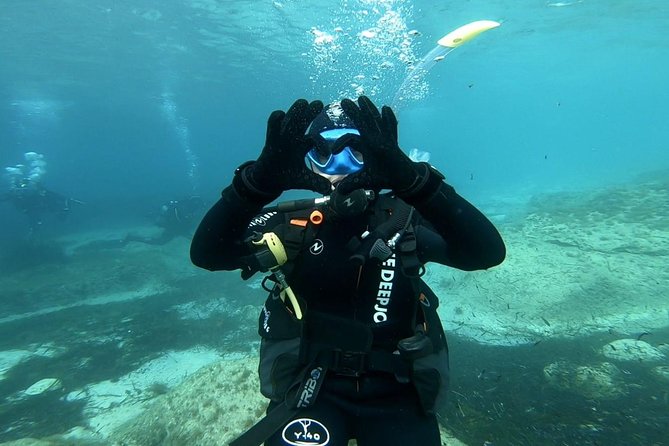
- Clear underwater communication: you learn hand signals so you can relax and follow instructions.
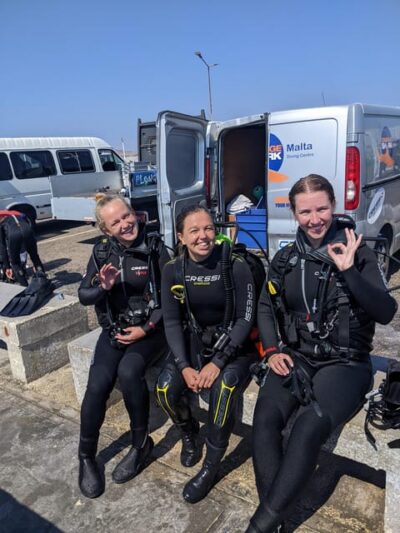
- Small group max 8: you get more attention, and instructors can move at your pace.
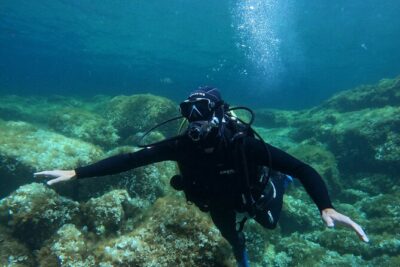
- Two water stages: you start calm and controlled, then move into open-water conditions.
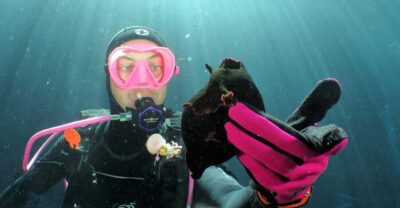
- Marine life viewing: you are set up to see local fish and even an octopus up close.
- A real certification step: you earn a PADI Discover Scuba Certificate of Achievement if you meet the requirements.
Entering St Paul’s Bay, and why the setting matters
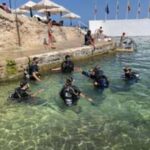
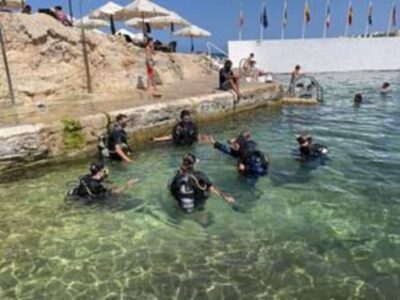
This experience starts in St Paul’s Bay, at 25 Islet Promanade (SPB 2506). That is a good sign for first-timers, because you are not trekking across the island with a full gear bag, and you can settle in without stress.
The program is designed for a calm environment, and that matters more than people think. Your first time is not about speed or bravery. It is about learning to breathe calmly, move without fighting your body, and get comfortable with the sensation of being underwater.
If you want a gentle start, this setup makes sense. You will do the training portion first, then you progress into the water time that is more like what you pictured when you signed up.
More dive sites near Malta:
What happens in the 3 hours, without rushing you
The total time is about 3 hours. That includes everything, like briefing, getting equipped, and the water sessions. If you show up prepared, you keep the whole flow smooth.
Here is the rhythm you should expect:
First, a briefing and fit check
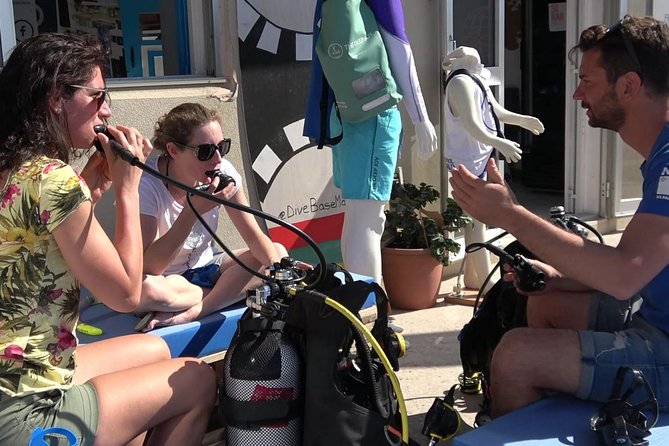
You go over how the equipment works and how the session will run. You also cover how to equalize pressure on your ears, which is one of the biggest beginner questions.
Then basic practice in calm conditions
You will work on breathing and comfort underwater, plus key movements like swimming with fins without wasting energy. This is where you build muscle memory, not where you try to be a hero.
Next, shallow and open-water experience
Once the basics are under control, the instructor takes you into the next phase. You get to apply what you practiced, while still staying with a safety-first approach.
Many first-timers end up spending around an hour actually in the water, once training is done. The exact pacing depends on how quickly you meet the session requirements, but the structure is consistent.
The instructor role, and why names like Antonio, Davide, and Georgia keep popping up
The experience is private by design, with personalized attention from a professional instructor. In real life, that means you are not just handed gear and sent off with a checklist.
From the instructor styles people talk about, a few names come up again and again: Antonio, Davide, and Georgia. The common theme is how clearly they explain things and how patient they are when your brain says something is impossible.
A good instructor does three important things for first-timers:
- They break down equipment use into small steps.
- They keep you calm when breathing feels unfamiliar.
- They help you communicate underwater so you are not guessing.
If you are nervous, this is exactly the right kind of support. Your job is to learn. Their job is to make the learning feel doable.
The skills you practice, and how they help you enjoy Malta’s sea
The session is not random sightseeing. You train specific abilities, and those abilities directly affect your enjoyment underwater.
Here is what you will learn during the program:
Equipment use, correctly
You practice handling the scuba equipment so it feels natural, not like a strange machine strapped to you.
Equalizing ear pressure
You learn how to manage pressure changes so you can stay comfortable. This is a must skill for new divers, because discomfort can snowball into panic if you do not understand what to do.
Feeling at ease underwater
You are guided on how to relax and stay in control of your breathing and posture.
Swimming with fins without effort
You learn fin technique that reduces wasted movement. When fins work with your body, you glide instead of thrash. That is when you start enjoying the view.
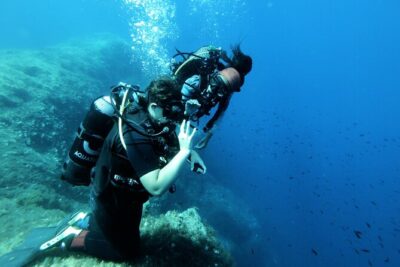
Hand signals for underwater communication
You learn how to communicate so you can ask for what you need and follow instructions calmly.
One detail worth taking seriously: if you get stuck, the instructor can keep you practicing until you meet the requirements for the certificate. That is part of why the experience works for first-timers.
Malta’s marine life, what you can realistically expect to see
Malta’s underwater world is popular for a reason: you can see plenty of local marine life without needing advanced skills. This program focuses on getting you down safely and comfortably, then letting you experience the surroundings.
Based on what people report from similar first sessions in Malta, the most common highlights are:
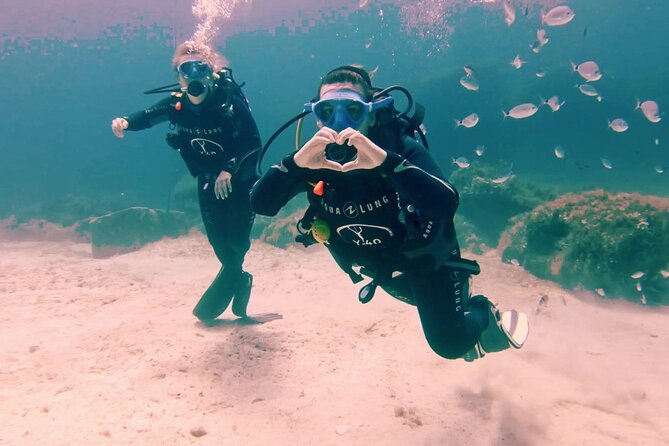
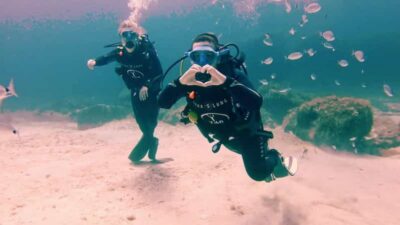
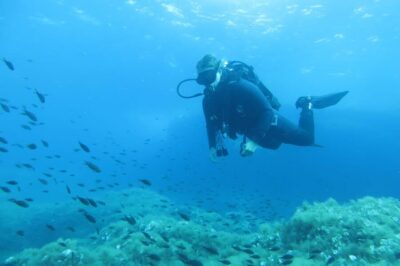
- local fish seen close up
- and the kind of surprise moment that makes you grin when you spot something unusual, like an octopus
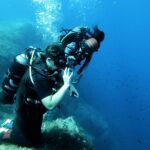
You are also there specifically to discover Malta’s marine flora and fauna from beneath the surface. That phrasing is not just marketing. The whole experience is structured around helping you notice what is around you, instead of focusing only on your breathing.
In practical terms: the more comfortable you are, the more you will actually look. If you feel rushed, you will stop noticing anything besides what is going wrong. This program is built to prevent that.
Off the same quay, a different boat:
- Malta: Gozo & Comino Islands, Blue Lagoon & Seacaves Tour★ 4.5 · 15,672 reviews
- Comino: Blue Lagoon, Crystal Lagoon, and Seacaves Tour★ 4.6 · 5,673 reviews
- Malta: Blue Lagoon, Beaches & Bays Trip by Catamaran★ 4.7 · 5,496 reviews
- Malta: Gozo, Comino, Blue & Crystal Lagoon, & Caves Cruise★ 4.6 · 5,092 reviews
- From Malta: Full-Day Gozo UTV Tour with Lunch and Boat Ride★ 4.6 · 4,408 reviews
Your PADI Discover Scuba Certificate of Achievement
If you complete the requirements of the experience, you receive a PADI Discover Scuba Certificate of Achievement. The certificate is valid and recognized worldwide.
This matters because it gives you a concrete next step. You are not just doing a one-off water day. You are building toward continued scuba training if you want to keep going.
You do not need previous scuba experience for this. You do need enough swimming skills and good general health, and the instructor will assess whether you can manage the required skills during training.
Price and value, what the $0 listing actually means for you
The price shown here appears as $0.00, so treat it as a placeholder in this request. What matters is what you get for the real cost at checkout.
Here is the value equation the inclusions support:
- Equipment is included, so you do not need to buy gear or rent multiple items separately.
- Scuba insurance is included, which reduces the risk side of planning a first experience.
- A PADI instructor is included, and instructor time is the real expense in a first-timer program.
- The program runs about 3 hours, including training and water sessions.
You will still want to budget for the basics that are not included: your own bathing suit, and a towel. (If you forget the suit, you will feel it immediately, because dry land is not what you signed up for.)
In my view, the value here is not just the activity. It is the chance to learn the core skills safely, with equipment and insurance handled, in a small group format.
Practical prep: what to bring, what to know, and health rules
You should come ready for a wet, physical learning session. The basics to bring are simple:
- your own swimsuit or swim shorts
- ideally a towel (since it is not included)
If you have a service animal, the experience allows service animals. The meeting point is also near public transportation, which helps if you are not renting a car in Malta.
Now the important part: health restrictions. This is not suitable for people with:
- respiratory problems, including active asthma
- blood and heart related problems
- or any surgery in the past year
A doctor’s statement might be requested in particular cases.
If you are unsure, do not guess. Plan to get a medical clearance if you think you might fall into a restricted category. You want to know before your session day, not after you have already made travel plans.
One small but real detail: arrive with the needed medical forms ready. If you show up without them, your schedule can get messy fast, and a first-timer needs calm timing.
Getting comfortable fast: equalizing ears, breathing, and fin control
The first time underwater is about sensations. Some feel strange. Your job is to treat those sensations like instructions, not like threats.
Ear equalizing is often the hardest part to learn. The session specifically teaches how to equalize pressure on your ears. If you follow the steps you are shown, you reduce discomfort and keep your confidence.
Breathing is another common sticking point. You do not need perfect breathing on day one. You need steady practice. If you struggle, instructors who are strong with beginners tend to slow the process down and keep you repeating until it clicks.
Then there is fin control. Many first-timers waste energy because they move too much. The training includes how to swim with fins without effort, and that is when you stop burning out and start enjoying the water.
After the session: flights, timing, and how to bounce back
After the dive is concluded, it is important to wait at least 12 hours before taking a flight. That is the kind of rule that people forget until the last minute, so put it on your travel plan now.
Plan a relaxed finish after your session day. Hydrate, eat something solid, and give your body time to settle. If your itinerary is packed with tight connections, consider shifting your flight later that day or the next day.
This is also when having a calm instructor style helps. When the learning portion feels controlled, your recovery day usually feels smoother.
Should you book this first-time scuba session in Malta?
Book it if:
- you are a first-timer who wants step-by-step instruction
- you want a small-group feel with professional support
- you want to learn practical underwater skills, not just float around
Skip it or think twice if:
- you have respiratory issues like active asthma
- you have blood or heart related problems
- you have had surgery within the last year
- you are not prepared for ear pressure and learning to breathe underwater calmly
If you do book, your best move is simple: show up ready, with your swimwear and towel, and take the training requirements seriously. If you do that, Malta’s marine life, like local fish and the occasional wow moment, becomes part of the experience instead of a distraction.
FAQ
Is previous scuba experience required for the Malta session?
No. Previous diving experience is not required. You do need sufficient swimming skills and to be in good health.
How long is the experience?
It runs for about 3 hours total, including briefing, equipment setup, and the water sessions.
Where does the experience start?
You meet at 25 Islet Promenade, St Paul’s Bay (SPB 2506), Malta. The activity ends back at the meeting point.
What scuba equipment is included?
Use of scuba equipment is included, along with a PADI instructor.
Is diving insurance included?
Yes. Diving insurance is included as part of the experience.
How soon can I fly after the session?
You should wait at least 12 hours after the dive is concluded before taking a flight.
Who is the experience not suitable for?
It is not suitable if you have respiratory problems including active asthma, blood or heart related problems, or if you have had any kind of surgery in the past year. A doctor’s statement might be requested in some cases.
Just landed: new Malta pages

Scuba Diving, compared.
Browse the lists this tour appears in