Reviewed · MALTA
Malta Multi Pass
One ticket, a lot of Malta. I like the unlimited hop-on hop-off bus option and the Captain Morgan harbour cruise, because they cut planning stress fast. You also get entry to a wide mix of Malta’s top historic sites, from UNESCO temples to major museums, in a self-guided way.
My only real caution is timing. A pass like this lives or dies on getting your scan working smoothly, and if your QR access is not valid when you first try it, you can burn time figuring it out.
In This Review
- Key things to know before you go
- Price and value: when this pass really pays off
- A smart Malta game plan: start in Valletta, then branch out
- Captain Morgan’s Grand Harbour Cruise: the water view that saves your time
- CitySightseeing Malta buses: how to use them without getting stuck
- UNESCO temples in Malta: Ħaġar Qim, Mnajdra, Tarxien, and the rest
- Ħaġar Qim and Mnajdra (the “don’t miss” pairing)
- Tarxien and the surrounding temple cluster
- Other UNESCO temple stops included with the longer passes
- Malta underground: catacombs, Domus Romana, and caves with Ice Age bones
- St Paul’s Catacombs
- Domus Romana
- Għar Dalam cave and museum
- Ta’ Bistra Catacombs
- A quick tip for this section
- Knights of St John and the forts: armour, palaces, and star-shaped defenses
- Valletta state rooms, with an important heads-up
- Palace Armoury
- Inquisitor’s Palace in Birgu
- Fort St Angelo, the Three Cities perspective
- Fort St Elmo and the National War Museum
- Maritime Museum in the Three Cities
- National museum mix in Valletta
- Malta’s major shows and the guided Sacra Infermeria tour
- The Malta Experience audio-visual show
- La Sacra Infermeria, guided in English
- Mdina Cathedral Museum: the quiet counterweight
- Esplora and the Malta National Aquarium for easy day breaks
- Esplora Interactive Science Centre
- Malta National Aquarium
- The two-islands day: Comino Blue Lagoon and Gozo with Captain Morgan ferries
- Blue Lagoon
- Gozo
- Gozo Heritage option: Cittadella, Ġgantija, windmills, and old prisons
- Gozo hop-on hop-off bus routes
- Gozo Museum of Archaeology
- Gozo Nature Museum
- Gran Castello Historic House
- Cittadella Visitors’ Centre
- Ġgantija Archaeological Park
- Ta’ Kola Windmill
- Old Prison in Victoria
- Price and logistics: how to avoid the most common headaches
- Should you book the Malta Multi Pass
- FAQ
- What is the Malta Multi Pass?
- How long is the pass valid?
- What does it include on the water?
- Does it include hop-on hop-off buses?
- What languages are included?
- Which UNESCO temple sites are included?
- Are all sites guaranteed to be open?
- Is Hal Saflieni Hypogeum included?
- How do you get into sites using the pass?
- What if the experience is cancelled due to weather?
Key things to know before you go
- Unlimited CitySightseeing buses on two routes from Valletta Harbour, so you can hop off, sightsee, then hop on later.
- A 90-minute Grand Harbour cruise on Captain Morgan’s catamaran with live commentary in English and German.
- Comino and Gozo by ferry with free time on land, plus a day plan that lets you choose order and duration.
- UNESCO temple access across several sites, including Ħaġar Qim and Mnajdra, plus more megalith giants around Malta.
- Valletta and the Knights of St John covered through major museums, armour, forts, and the Sacra Infermeria tour (guided in English).
- Gozo extras depend on your pass length, with additional heritage sites and a Gozo hop-on hop-off day option (optional with 4 and 7 day passes).
Price and value: when this pass really pays off
At about $88.72 per person, the Malta Multi Pass makes the most sense if you plan to do at least a few paid attractions in one trip. The big value comes from stacking: bus sightseeing plus major museums plus one or two boat experiences, then letting the pass cover the entry fees.
In plain terms, if you were going to pay separately for the hop-on hop-off buses, a harbour cruise, and several museums and heritage sites, you are already in the math zone where the pass starts winning. And one reason this works in Malta is that the island rewards slow, repeated visits to different areas. Valletta one day, the Three Cities and forts the next, then temples and catacombs when the sun is kinder.
One more value point I like: it is not just one museum stop. The pass spreads you across Malta’s eras, so you are less likely to feel like you “did history” and then got stuck in a routine.
Still on the island? These fill a morning in Malta:


A smart Malta game plan: start in Valletta, then branch out
You will get the best results if you anchor your days in Valletta first. The hop-on hop-off buses start from Valletta Harbour, and several of the must-see sites are concentrated in and around the city. That means you can get oriented early, then use the bus to hop to a museum or fort and avoid long taxi rides.
A practical approach:
- Morning in Valletta: do the indoor hits first, especially on hot days.
- Midday: hop on the bus or head to a nearby site.
- Afternoon: shift outward, or take the harbour cruise if it fits your schedule.
If you only use the pass for one side of the island, it can feel less “wow” per dollar. If you use it as a tool to create a full route across Valletta, the Three Cities, Malta’s prehistoric sites, and at least one boat day, it feels like a real bargain.
Captain Morgan’s Grand Harbour Cruise: the water view that saves your time
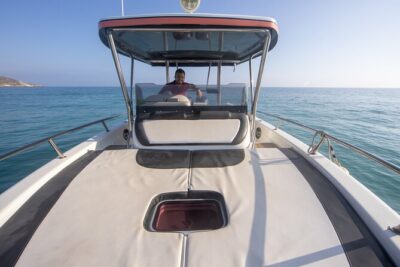
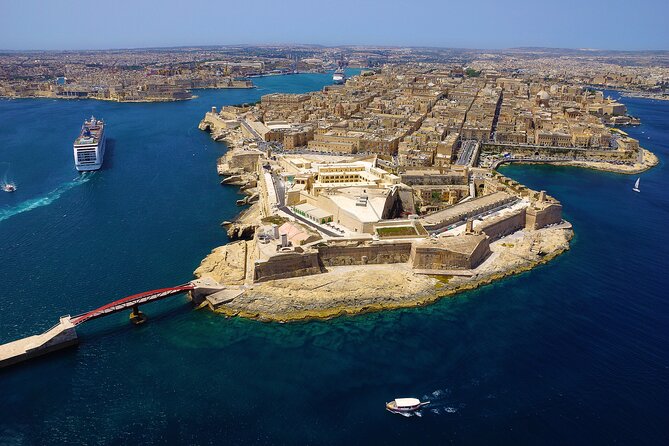
This is a 90-minute cruise around Malta’s Grand Harbour and Marsamxett Harbour, two natural harbours flanking Valletta. You ride on an eco-friendly catamaran ferry boat, and there is live commentary in English and German tied to the two Great Sieges of 1565 and 1942.
Here is why I consider it a “high value per minute” stop. You get the best perspective on the forts, battlements, and the skyline of Valletta and the Three Cities, without spending your whole day climbing hills or driving between viewpoints. It is also one of the few experiences where your photos feel instantly different, because the city looks the way it was meant to be seen, from the harbour.
Logistics you will appreciate:
- Multiple daily departure times.
- Sit indoors with air-conditioning or outdoors for photos.
- Free WiFi and restroom facilities on board.
- Food and drink are available to buy from vending machines.
CitySightseeing Malta buses: how to use them without getting stuck
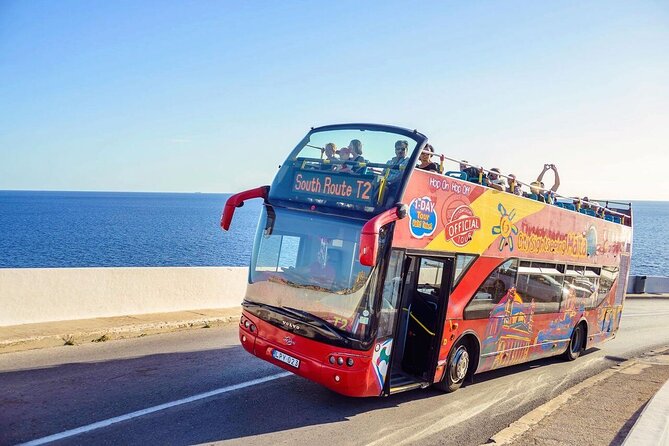
CitySightseeing Malta gives you two open-top hop-on hop-off routes that start at Valletta Harbour: a north route and a south route. The system includes multilingual audio commentary, and the routes are packed with stops tied to Valletta, Mdina, Mosta, the Three Cities, Marsaxlokk, Ta Qali Crafts Village, and more.
On paper, it is a flexible way to cover Malta’s highlights. In real life, treat it like sightseeing support, not a guaranteed taxi replacement. Malta traffic can slow things down, so I would build in buffer time when you are using the bus to connect to a timed museum or cruise.
A good way to make the buses work for you:
- Use the bus as a hop around Valletta and nearby areas.
- If you are heading far, anchor the day around a key site, then hop to secondary stops.
If you are the type who likes to keep your day tight, you might still find yourself relying on local transport. That is not a failure of the pass. It is just Malta’s rhythm.
UNESCO temples in Malta: Ħaġar Qim, Mnajdra, Tarxien, and the rest
If you want the island’s prehistoric side, this pass covers several of Malta’s UNESCO-listed temple sites. These stops are self-guided once you enter, so your time is yours.
Off the same quay, a different boat:
- Malta: Gozo, Comino, Blue & Crystal Lagoon, & Caves Cruise★ 4.6 · 5,092 reviews
- From Malta: Full-Day Gozo UTV Tour with Lunch and Boat Ride★ 4.6 · 4,408 reviews
- From Sliema: Comino, Crystal Lagoon, and Blue Lagoon Cruise★ 4.5 · 3,792 reviews
- From Sliema: Gozo, Comino and Blue Lagoon Cruise★ 4.5 · 3,461 reviews
- Malta: Comino, Blue Lagoon, Crystal Lagoon & Caves Cruise★ 4.7 · 2,882 reviews
Ħaġar Qim and Mnajdra (the “don’t miss” pairing)
These two sites are UNESCO-listed and built on a hilltop overlooking the sea for Ħaġar Qim and the southern coast for Mnajdra. The sites are megalith temple complexes, with multiple structures and apses, dating across prehistoric phases from around 3800 to 2200 BC.
One of the coolest things here is the way the stones line up with the sun. Mnajdra’s temples include architectural features aligned with solstices and equinoxes. If you like big-picture meaning, bring your curiosity. If you want simple, take your time here and let the location do the storytelling.
Tarxien and the surrounding temple cluster
Tarxien Temples include four megalithic structures built between 3800 and 2200 BC, plus later reuse between 2400 and 1500 BC. The South Temple is especially decorated, and there are hints of re-use as a cremation cemetery. There is also an elevated walkway so you can look down at what you are seeing from a slightly different angle.
Other UNESCO temple stops included with the longer passes
Depending on your pass length, you can also enter more temple and prehistoric sites such as:
- Borġ in-Nadur Prehistoric Complex: excavated in the 1920s by Margaret Murray, used from the late Temple Period into the Bronze Age.
- Ta’ Ħaġrat Temples: two well-preserved structures, known for its monumental doorway and a facade built entirely from local Upper Coralline Limestone.
- Skorba Prehistoric Site: two megalithic temple structures plus domestic huts, key evidence for how prehistoric life worked.
- The Hal Tarxien stop is the main Tarxien entry.
If you are short on days, you may want to prioritize the biggest-name pair and one additional temple site. You can always add more if your energy holds.
Malta underground: catacombs, Domus Romana, and caves with Ice Age bones
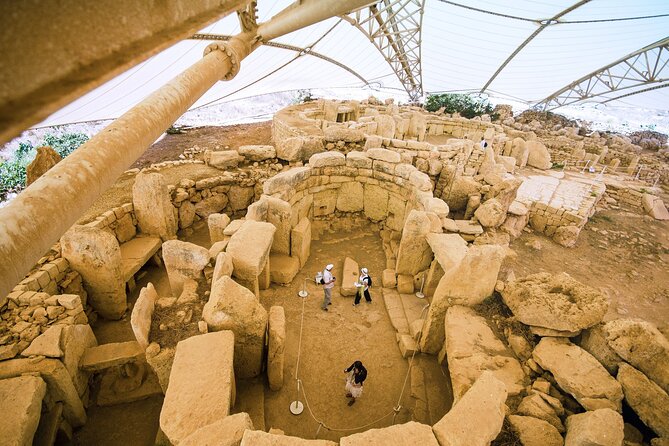
Malta’s subterranean stops turn the island into a time machine.
St Paul’s Catacombs
These are on the outskirts of the Roman capital Melite (today’s Mdina), with burial rules in the Roman world keeping burials out of the city. The catacombs served as burial grounds from Punic and Roman times up to the 7th century. Expect an interconnected network of underground cemeteries with many hypogea, plus main halls and rock tables linked to communal meals during festival times.
Domus Romana
This is a look into the private life of an ancient Roman aristocrat. The standout here is the mosaics and the household-style museum layout, with a highlighted set of marble statues of Emperor Claudius and his family, which you do not typically see in a private house context.
Għar Dalam cave and museum
Għar Dalam is Malta’s oldest prehistoric site, and it is famous for animal bones found in the cave, including evidence tied to elephants and hippopotami from long-ago layers. You also get a human timeline too, with early evidence of human presence, plus an ecological garden of indigenous plants.
Ta’ Bistra Catacombs
Ta’ Bistra is the largest set of tombs and catacombs accessible outside the ancient city area, and it includes the story of discovery and later investigation after a road covered part of it.
A quick tip for this section
These sites are spread across different parts of Malta. If you stack them back to back, your brain may need breaks. I prefer doing one underground stop per day, then using the rest of the day for museums or scenery.
Knights of St John and the forts: armour, palaces, and star-shaped defenses
The Malta Multi Pass covers a strong cluster of Knights of St John sites and fortresses, especially around Valletta and the harbour area.
Valletta state rooms, with an important heads-up
The Palace State Rooms are included, but they are temporarily closed until further notice. If you want them specifically, check status close to your trip.
Palace Armoury
The Armoury is built around the idea that armour was both defense and status. You can see lavishly decorated suits and notable artefacts, including armour owned by Grand Masters Alof de Wignacourt and Jean de La Valette, Ottoman weapons connected to the Great Siege of 1565, and artillery examples.
Inquisitor’s Palace in Birgu
This is one of the few surviving buildings of its kind. You can walk through historic reconstructions, including kitchen areas, private quarters, the Holy Office Tribunal setting, prison complex, and a torture chamber, plus a museum focus on Malta’s religious traditions under the Inquisition.
Fort St Angelo, the Three Cities perspective
Fort St Angelo sits above Grand Harbour and has a long string of uses, from the Order of St John to the Royal Navy command hub from 1906 to 1979, then further wartime action during World War II. Today you also get immersive displays and artillery examples, and you can enjoy panoramic views.
Fort St Elmo and the National War Museum
Fort St Elmo is star-shaped and associated with the Great Siege of 1565. The National War Museum inside includes items stretching across time, including Malta’s George Cross award, plus military armour from both the Order and the Ottoman Turks, and items like Roosevelt’s Jeep called Husky.
Maritime Museum in the Three Cities
If you want Malta as a seafaring crossroads, the Malta Maritime Museum is a standout. It is housed in the Old Naval bakery and covers 7000 years of maritime history with a collection of over 20,000 artefacts. Some headline pieces include a large Roman anchor, an early ex-voto, a major ship model, and large collections of cannons and boats.
National museum mix in Valletta
Depending on your pass length, you can enter:
- MUZA, The Malta National Community Art Museum: a story-based layout mixing older art and contemporary techniques with video and interactive elements.
- The National Museum of Archaeology.
- The National Museum of Natural History, inside the Auberge de Provence, with an elaborate Baroque setting.
If you only like one museum type, this is your moment to decide. Personally, I like how the mix keeps you from getting museum fatigue.
Malta’s major shows and the guided Sacra Infermeria tour
Two entries here help you understand the island quickly, especially if you like a guided narrative style.
The Malta Experience audio-visual show
This runs for 45 minutes in a purpose-built panoramic auditorium. It tells the story of 7000 years of Maltese history in 17 languages. Even if you do not catch every detail, it gives you a map in your head for what you will see next.
La Sacra Infermeria, guided in English
This is a guided tour in English of the Holy Infirmary. You learn how the Knights of St John began with care for the sick, then how the site shifted over time, including during British control when it became the General Hospital. The Great Ward is known for its long timber ceiling and once held hundreds of beds in emergencies.
If you are the kind of visitor who wants a professional guide to put names and timelines on the walls, this guided portion is worth building your schedule around.
Mdina Cathedral Museum: the quiet counterweight
Mdina Metropolitan Cathedral and its adjacent museum give you a calmer, more “stand and look” kind of visit. St Paul’s Cathedral in Mdina was built in 1702, and the cathedral museum includes fine silverware, rare coins, prints and engravings by Albrecht Dürer, Maltese objects d’art, and more.
This is a great break from fortifications and temples, and it pairs well with the hop-on bus routes because Mdina sits right in that sightseeing orbit.
Esplora and the Malta National Aquarium for easy day breaks
If your travel crew includes kids, or you just want something lighter between heavy history days, these are easy wins.
Esplora Interactive Science Centre
Esplora is a hands-on science centre at Bighi with multiple interconnected exhibition areas and gardens, plus an Activity Centre for workshops and science shows. The planetarium is a major pull, including a 10.7 meter diameter theatre structure and a colour space 4K theatre system.
Malta National Aquarium
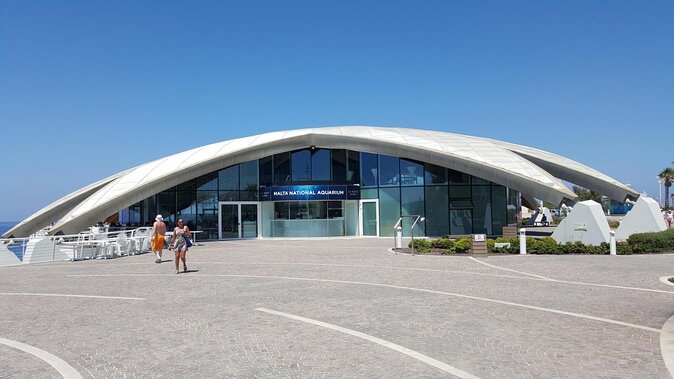
The aquarium is family-friendly, with 41 tanks and a tunnel for close-up viewing of fish swimming around you. There is also a landscaped promenade outside, plus views of St Paul’s Islands.
These are good for heat management too. You can spend the day inside, then return to the forts when the evening cools down.
The two-islands day: Comino Blue Lagoon and Gozo with Captain Morgan ferries
This is your water day, and it is built to be flexible once you are on the islands.
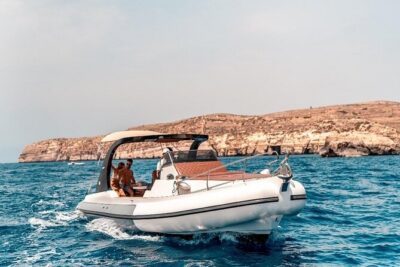
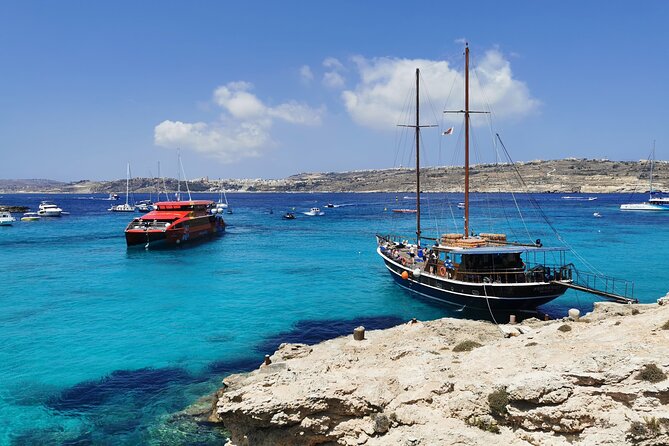
The pass can include one round-trip on Captain Morgan’s Two Islands ferries to Comino’s Blue Lagoon and Gozo, with free time on land. You can choose the order, Comino then Gozo or Gozo then Comino, with roughly 2 hours on each. If you pick only one island, you get about 4 hours.
A few practical things matter a lot here:
- You need to return to the embarkation point at least 15 minutes before departure.
- Afternoon ferry times between Comino and Gozo, plus possible return-time amendments, will be communicated on board the morning ferry.
- Have a phone screenshot habit ready, since schedules can change and you need the latest info.
Blue Lagoon
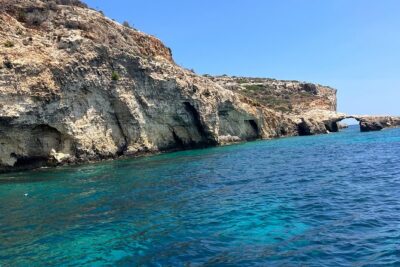
Blue Lagoon is famous for turquoise, crystal-clear water. Your time there is designed for swimming, sunbathing, relaxing, and exploring on foot.
Gozo
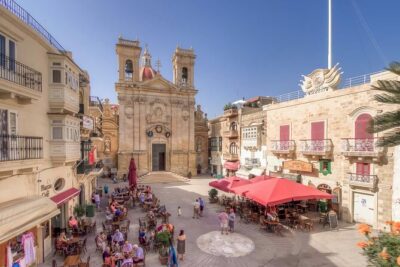
Gozo is the quieter sister island. The pass gives you a chance to wander and decide what you want to see during your free-time window. If you want more structure on Gozo, your longer pass can also add a Gozo Heritage entry option.
Gozo Heritage option: Cittadella, Ġgantija, windmills, and old prisons
With 4 and 7 day passes, you can add a 1 day Gozo Heritage option that includes City Sightseeing Gozo buses on two routes, plus entrances to several Gozo sites.
Gozo hop-on hop-off bus routes
You ride with multi-lingual audio guide and two routes. Route 1 includes stops like Mġarr Ferry Terminal, Xewkija, Victoria, Ta’ Pinu, and Xlendi. Route 2 includes places like Ġgantija, Ramla, Nadur, and Marsalforn. If you want a structure for a free-time island day, this is the simplest way to manage it.
Gozo Museum of Archaeology
This museum covers prehistory to the early modern period in three main sections. It includes Classical-era artefacts and also follows the story through Knights of St John arrival.
Gozo Nature Museum
This focuses on geology, minerals, evolution, and marine life, with highlights including fossil and moonstone information linked to Apollo II.
Gran Castello Historic House
A historic house reconstruction with an audio-visual component, plus details about service staff areas and domestic crafts like lace-making and weaving.
Cittadella Visitors’ Centre
Built in old water reservoirs, it uses interactive touch screens and a surround theatre video. The site covers military history, ecclesiastical history, civil history, and nature.
Ġgantija Archaeological Park
This is a UNESCO World Heritage site older than the pyramids of Egypt, with two structures and a preserved state that lets you understand how communal ritual life might have worked. It also includes bone evidence tied to communal feasting.
Ta’ Kola Windmill
A working-looking glimpse at village flour production during the Knights’ period. You can see the wooden milling mechanism and the grinding stones.
Old Prison in Victoria
A walk through Gozo’s oldest surviving prison site, with surviving cell blocks and a look at historical graffiti casts.
If you are trying to fit Gozo into a quick Malta trip, this Gozo Heritage add-on is the difference between just arriving and actually feeling like you saw the island’s identity.
Price and logistics: how to avoid the most common headaches
This pass is designed for easy scanning at each site. The key is to treat it like a plan you activate, not like a random email attachment.
What helps:
- Save your pass and tickets where you can access them fast. I like keeping screenshots on my phone so I am not hunting for emails mid-queue.
- If your scan does not work the first time, ask on site and try again. One theme from real-world feedback is that activation can be unclear, and the quickest fix is often just getting to the right staff member.
- Build in slack time on bus days. Hop-on hop-off is great for flexibility, but Malta is not a place where you should assume everything runs like a metronome.
Also note the closures:
- Palace State Rooms are temporarily closed until further notice.
- Fortress Builders Interpretation Centre is also temporarily closed.
Plan your “must-see list” around what is open and keep one alternate site ready.
Should you book the Malta Multi Pass
Book it if you want a structured way to see Malta without doing ticket math every day. It is especially smart for travelers who like mixing indoor museums with outdoor scenery, and who want one cruise and at least one island boat day.
Skip or reconsider if you are the type who hates flexible plans. If your schedule is razor-tight, you may prefer buying a smaller set of timed tours. Also, if you care deeply about one specific closed attraction, check current status first.
If you do book it, I’d aim to build at least one full day around the harbour cruise plus Valletta museums, then add one UNESCO temple-heavy day, then finish with Comino and Gozo by ferry if your pass length includes it.
FAQ
What is the Malta Multi Pass?
It is a multi-day Malta pass that combines CitySightseeing Malta hop-on hop-off buses, Captain Morgan harbour and two-islands ferry experiences, and entry to multiple museums and heritage sites depending on your pass length.
How long is the pass valid?
The pass is sold for multi-day durations, including options between 3 to 6 days, and the included information also references 3, 4, 6, and 7 day pass packages. It is valid for consecutive days once activated.
What does it include on the water?
You get Captain Morgan’s Grand Harbour Cruise (90 minutes). For some pass lengths (4 and 7 day passes), you also get a round-trip on Captain Morgan’s Two Islands ferries to Comino Blue Lagoon and Gozo, with free time on land.
Does it include hop-on hop-off buses?
Yes. CitySightseeing Malta hop-on hop-off buses include North (blue) and South (red) routes starting from Valletta Harbour, and a Gozo hop-on hop-off option can be included with a 1 day Gozo Heritage add-on for 4 and 7 day passes.
What languages are included?
The pass is offered in English. The harbour cruise includes live commentary in English and German. The CitySightseeing bus routes include 12+ multi-lingual commentary channels, and La Sacra Infermeria is guided in English.
Which UNESCO temple sites are included?
The pass includes entry to Ħaġar Qim and Mnajdra for 6 and 7 day passes. The longer passes also include additional UNESCO prehistoric temple sites such as Borġ in-Nadur, Ta’ Ħaġrat, Skorba, and Hal Tarxien.
Are all sites guaranteed to be open?
Not necessarily. The Palace State Rooms are temporarily closed until further notice, and the Fortress Builders Interpretation Centre is also temporarily closed, based on the information provided.
Is Hal Saflieni Hypogeum included?
Hal Saflieni Hypogeum is not included, and it requires separate tickets and advanced reservations.
How do you get into sites using the pass?
You scan the multi-day pass for single entry admission at each attraction, using the pass and its QR access.
What if the experience is cancelled due to weather?
The experience requires good weather. If cancelled due to poor weather, you are offered a different date or a full refund. You can also cancel up to 24 hours in advance for a full refund.