
Reviewed · MEGALITHIC TEMPLE TICKETS
Malta Prehistoric Temples Tour
Prehistory on Malta starts underground. This half-day tour strings together Ghar Dalam (7,400-year human traces) and the UNESCO temple giants of Hagar Qim and Mnajdra, so you get both the science and the stonework in one morning. I love that entrance fees are included, and I love how the tour moves at a pace that leaves real time at each site. One thing to consider, though, is that the exact flow depends on your pickup stop, so you may spend more time on the bus than you want.
Guides can make a big difference here, and when you get someone like Mario, Mark, or Miriam, the story clicks fast. You’re not just looking at old buildings, you’re learning why they matter, including temple alignments tied to the sky. The main drawback I’d watch for is the common trade-off with popular sites: if the group is big, it can feel harder to get your own quiet viewing moments.
This is a strong choice if you want Malta’s early chapters without a full day on the move. It’s also a smart add-on if you’re basing yourself in Mellieha, St. Paul’s Bay, Sliema, or Valletta and want a tight prehistoric hit.
In This Review
- Quick Highlights
- Ghar Dalam Cave: Why Malta’s earliest story starts in darkness
- Hagar Qim and Mnajdra: UNESCO temples with a calendar mind
- The tour’s real value: story + efficiency, not just sightseeing
- Pickup timing in Mellieha and beyond: how to avoid feeling rushed
- How the pacing works at each stop
- What’s included in the price, and what you should bring
- Who this tour fits best (and who should choose something else)
- Should you book the Malta Prehistoric Temples Tour?
- FAQ
- What time does the Malta Prehistoric Temples Tour start?
- How long is the tour?
- What sites do we visit?
- Is entrance to the sites included?
- Is food included on the tour?
- How many travelers are on the tour?
- When is the tour available?
Quick Highlights
- Ghar Dalam Cave: 7,400-year traces and some of the earliest human evidence on Malta
- Temple astronomy at Mnajdra: structures aligned with equinoxes and solstices
- UNESCO-listed stops: Hagar Qim and Mnajdra in one efficient route
- Tickets included: you pay once, then focus on the sites
- Pickup from multiple towns: Cirkewwa, Mellieha, Valletta, Sliema, and more
- Small-group feel: capped at 40 travelers, which helps with pacing
Ghar Dalam Cave: Why Malta’s earliest story starts in darkness
If you like your history with a little grit, start at Ghar Dalam. The cave is where archaeologists have uncovered traces of human activity going back about 7,400 years, including animal bones that represent some of the earliest human evidence found on the island. That matters, because Malta’s prehistoric story is not only about impressive stone temples. It’s also about what people were doing long before those temples rose.
What I find most valuable here is the way the cave is presented as a layered timeline. Instead of one dramatic find that gets all the attention, you see evidence that builds up over time, layer after layer. It’s a simple idea, but it changes how you look at the cave. You stop thinking of it as one place and start thinking of it as many time periods stacked together.
You’ll also get a nearby garden planted with indigenous species and trees. That is a nice breather after the enclosed cave. Even if you’re not a plant person, it helps you reset your senses before you head to bright limestone and open skies at the temples.
Practical tip: wear shoes with solid grip. You’ll be walking inside and around the cave area, and comfort matters when the tour stays time-efficient.
How long to plan for
You typically get about an hour at Ghar Dalam, including admission. That’s enough to see the museum/cave presentation and take in the main viewing areas. If you like slow reading, you may skim a bit and return later on another day, but for a half-day tour this is a reasonable fit.
More megalithic temples to walk around:


Hagar Qim and Mnajdra: UNESCO temples with a calendar mind
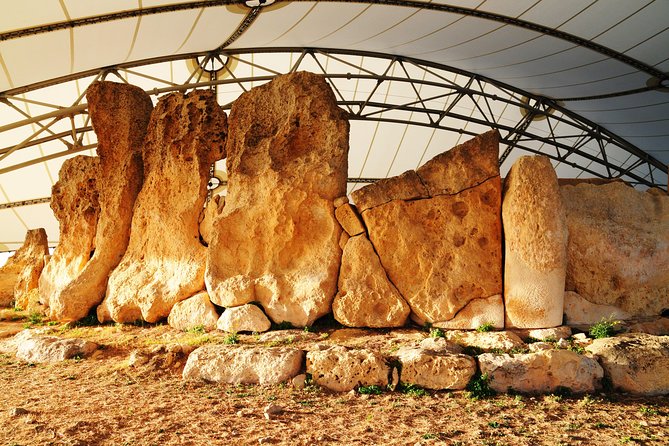
After the cave, the tour jumps from “earliest evidence” to “architectural ambition.” Hagar Qim and Mnajdra are UNESCO-listed and among the oldest religious sites on Earth. That line gets thrown around a lot, but here it actually works because the sites are real, the scale is real, and the details are visible even in a short visit.
Hagar Qim: megalithic religion made visible
Hagar Qim is the megalithic temple complex you’ll visit first. It’s the kind of place where your brain asks the obvious questions: How did they build this without modern tools? Why this location? What did “worship” look like here?
The key point to notice at Hagar Qim is how the complex feels intentionally designed. You’re looking at limestone structures set with purpose, not random stone piles. With a good guide, the explanations make the architecture feel like language rather than just rock.
Mnajdra: where the sky becomes part of the site
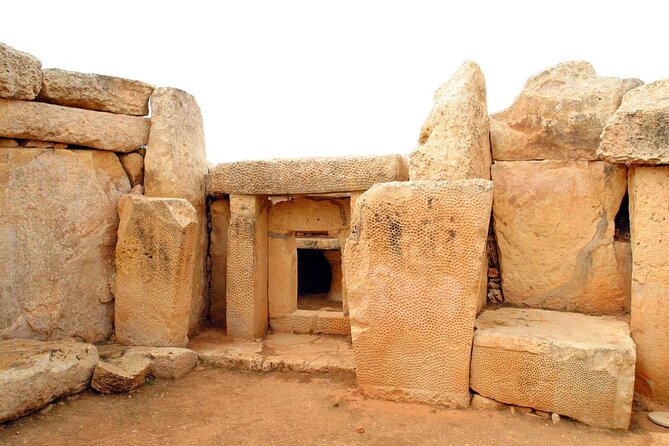
Then you move to Mnajdra, where the architecture takes on an extra layer of meaning. Mnajdra includes limestone temples linked to equinoxes and solstices. In other words, the site is tied to the way sunlight moves across the year.
This is one of the reasons this tour earns strong marks. When your guide connects the stonework to the calendar, the visits stop feeling like a checklist. It turns into a “stand here at this angle and imagine the sun” kind of experience.
Practical tip: expect walking between temple sections. There’s also a bit of climbing and uneven footing. Bring water if you can, and take short pauses so you enjoy the views instead of racing to beat the clock.
How long to plan for
You’ll usually have about one hour total at Hagar Qim and about one hour at Mnajdra. That can feel quick, but it’s built for a half-day format. For most people, that means seeing the core temple areas and getting the main story without getting stuck in one spot too long.
If you’re the type who wants to photograph every stone detail, you’ll feel the time limit. If you want a smart overview that makes you want to come back, the timing is right.
The tour’s real value: story + efficiency, not just sightseeing
This tour is priced at $59.91 per person, and the best way to judge the value is to look at what’s included. Entrance tickets are included for Ghar Dalam, Hagar Qim, and Mnajdra. You also get live commentary on the bus, plus pickup and drop-off at select hotels.
So you’re not just paying for transport. You’re paying for interpretation, and that’s what tends to make a difference at sites like these. Without context, prehistoric temples can blur together. With context, they become meaningful landmarks you can place in your own mental map of Malta.
What I also like is the structure. Four to five hours is short enough that you don’t burn a whole day, but it’s long enough to cover three major stops properly. You get the cave first, then the temples, then you’re back. It’s a clean arc.
Guide impact
From the guides I’ve seen referenced for this route, names like Mario, Mark, Marc, and Miriam come up often. The consistent theme is clarity and organization. When that happens, the day feels smooth, and you spend your energy looking at the sites instead of wondering what to do next.
Heads-up from real-life logistics
Even with good guides, time can get squeezed by how pickup and drop-offs line up. Some people find that the bus time stretches depending on where you board. If you prefer minimal riding, check your pickup point carefully.
Pickup timing in Mellieha and beyond: how to avoid feeling rushed
This tour runs at 8:30 am, and pickup times vary by area. Examples include:
- Cirkewwa at 0830 hrs
- Mellieha at 0840 hrs
- St. Paul’s Bay at 0900 hrs
- Sliema at 0855 hrs
- Valletta at 0840 hrs
That means your day can start earlier or later depending on where you are. It also explains why some guests feel like they spend more time on the bus than at the temples. If you’re picked up at a later stop, you can still end up with a similar schedule, but your “quiet time” at the sites remains the same, so the total feel of the tour can change.
My practical advice: arrive ready to move. If you’re staying near a later pickup time, don’t count on the morning going slowly. Use that first bus ride time to read any basic notes you bring about Malta’s prehistoric era, so you start absorbing the story the moment the guide begins speaking.
Also consider that you may transfer buses along the route. That’s not guaranteed, but it’s something you can plan for. If you hate uncertainty, keep your phone charged, have your mobile ticket ready, and keep your most important items with you at all times.
How the pacing works at each stop
Here’s the realistic rhythm of the day, in plain terms:
- Ghar Dalam: around one hour, with admission included
- Hagar Qim: about one hour, with admission included
- Mnajdra Temples: about one hour, with admission included
Then you return to the original departure point.
This pacing works if your goal is to see three key sites and learn how they connect. It’s not designed for long lingering. The sites are spread across hilly areas, and moving takes time.
Where it can feel tight is the practical side of sightseeing: restrooms, gift shops, and slow photo stops. Some people even prefer to skip the extra shopping time because the schedule is focused on temples and cave time.
My tip for a smoother experience: do a quick toilet check at each stop, then spend the remainder of your time looking. If you’re traveling with anyone who needs extra breaks, I’d keep that in mind because the tour is moderate physical fitness friendly, not fully slow and easy.
Other ways to spend a sunny hour in Mellieha
- Mellieha: Popeye Village Entry Ticket★ 4.6 · 2,070 reviews
- Mellieha: Popeye Village Malta Filmset Entry Ticket★ 4.6 · 1,802 reviews
- Comino & Gozo: Blue & Crystal Lagoons Cruise with Sea Caves★ 4.8 · 1,536 reviews
- Malta National Aquarium Entrance Ticket★ 4.0 · 643 reviews
- Mellieha: Popeye Village with Optional Private Transfers★ 4.6 · 551 reviews
What’s included in the price, and what you should bring
Included:
- Local taxes
- Live commentary on board
- Pickup and drop-off at hotel or nearest point (select areas)
- Mobile ticket
- Tickets for Ghar Dalam, Hagar Qim, and Mnajdra
Not included:
- Food and drinks
So, come prepared. The morning runs from about 8:30 am for a half-day style schedule. That’s plenty of time for a snack stop of your own, but the tour does not include food.
What I recommend you bring:
- A small bottle of water (especially if it’s warm)
- Comfortable walking shoes
- Sun protection (temples are outdoors and bright)
- A light layer if you get cool in the early morning
- Your mobile ticket saved offline if your signal is spotty
Small detail that matters: there may not be time for a long gift shop visit. If that museum shop is part of your fun, plan for a quick look rather than a browsing session.
Who this tour fits best (and who should choose something else)
This is best for:
- You if you want Malta’s prehistoric story in one compact outing
- You if you enjoy archaeology plus a bit of astronomy framing (Mnajdra’s equinox and solstice alignments are a highlight)
- You if you want pickup and included admission so you don’t waste time planning
It may not be ideal if:
- You hate bus time and want to spend every minute on site
- You strongly dislike crowds and want a long quiet visit
- You need a very flexible pace, since time at each stop is set for the half-day format
What about physical effort?
The tour calls for moderate physical fitness. That mostly translates to walking between and within temple areas, plus the cave visit. It is not described as strenuous, but it is not “sit the whole time” either.
Should you book the Malta Prehistoric Temples Tour?
If you want a smart, efficient way to see Ghar Dalam, Hagar Qim, and Mnajdra together, this is a strong yes. The big reason is value: you’re paying for transport plus admission plus live commentary, which is exactly what helps prehistoric sites click.
Book it if:
- You’re on Malta for a short time and want maximum payoff for your morning
- You like learning why sites were built, not just where they are
- You want a guided overview that still leaves time to roam the main temple spaces
Skip or compare if:
- Your biggest priority is deep, slow exploration at one site (this tour is paced for three stops)
- You’re very sensitive to delays or pickup confusion, because morning logistics can shape your experience
Bottom line: for most first-time Malta visitors who care about prehistory, this half-day tour hits the sweet spot between meaning and efficiency, as long as you show up ready for a timed schedule.
FAQ
What time does the Malta Prehistoric Temples Tour start?
The tour start time is 8:30 am.
How long is the tour?
It runs about 4 to 5 hours in total.
What sites do we visit?
You visit Ghar Dalam Cave and Museum, Hagar Qim, and Mnajdra Temples.
Is entrance to the sites included?
Yes. Tickets to Ghar Dalam, Hagar Qim, and Mnajdra are included.
Is food included on the tour?
No. Food and drinks are not included.
How many travelers are on the tour?
The tour has a maximum of 40 travelers.
When is the tour available?
The tour is available every Saturday.
Just landed: new Mellieha pages





Megalithic Temple Tickets, compared.


Gozo Full-Day Tour with Guide, Temples, & Train
Read our review →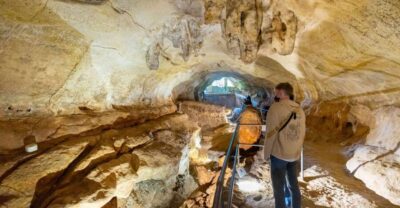
Prehistoric Temples, Limestone Heritage & Blue Grotto
Read our review →
Gozo Guided Day Trip Incl. Ggantija Temples and Lunch
Read our review →
Prehistoric Temples and Highlights of the South
Read our review →
Gozo Full Day visiting Ggantija Temples, Salt Pans & Dwejra
Read our review →Gozo Full Day visiting Ggantija Temples, Salt Pans, Dwejra
Read our review →Browse the lists this tour appears in