Reviewed · MALTA
Small Group: Valletta and Central Highlights
Baroque art meets Malta’s WWII miracle. This small-group day pairs Valletta’s grand Knights of St. John sights with two places that feel totally different, Mosta Rotunda and Mdina, both with strong atmosphere and memorable views. I like how the pacing gives real time for big stops, not just photo stops, and I like that you also get a guided art-and-history thread through the day, from co-cathedral chapels to medieval city walls.
One possible drawback is that it is a lot of walking on uneven stone, especially in Valletta and the Silent City of Mdina, so you should plan on comfortable shoes and a steady pace. You’ll still have transport between areas, but the charm is earned on foot, and that means you feel the cobblestones.
In This Review
- Key highlights you’ll actually feel during the day
- Valletta on foot, starting at Christ the King
- St. John’s Co-Cathedral chapels and the art that drives the story
- Republic Square lunch break and a final Valletta walk
- Mosta Rotunda and the WWII miracle under Malta’s dome
- Rabat street life, Roman roots, and a pastizzi tasting at Is-Sirkien
- Mdina, the Medieval Silent City, and walls for far-reaching views
- Price and logistics, and whether $151 feels worth it
- Who this Valletta and Central highlights tour fits best
- Should you book Valletta and Central Highlights?
- FAQ
- How long is the Valletta and Central Highlights tour?
- What sites are included in the tour?
- Is the guide English-speaking and licensed?
- What is included with the ticket price?
- Is lunch included?
- Where does the tour start and end?
- What is the cancellation policy?
Key highlights you’ll actually feel during the day
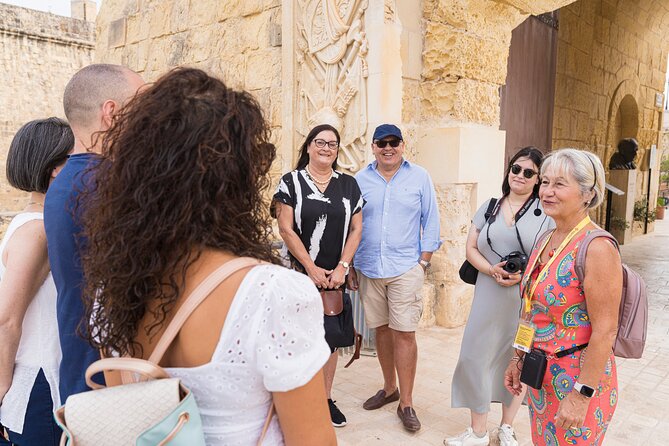
- Max 12 people with a licensed, English-speaking guide, so the explanations stay clear and personal
- St. John’s Co-Cathedral entry includes the chapels and the famous Baroque artwork inside
- Mosta Rotunda includes the story of the WWII bomb that fell into the church during a service, plus a visible replica
- Is-Sirkien pastizzi tasting gives you a quick, local food moment without turning lunch into a whole mission
- Mdina walls and views wrap up the day with a “slow down and look” finish from above
Valletta on foot, starting at Christ the King
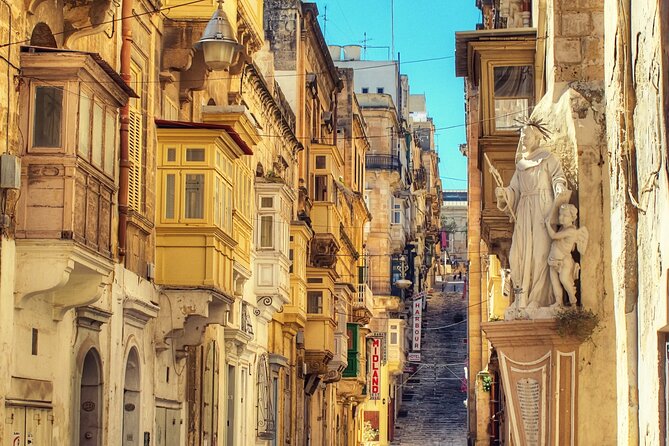
The tour begins at Christ the King in Valletta, and the first leg is a walk that helps you understand what makes the city feel so deliberate. You get to see how Valletta is both grand and practical, with Baroque power on display in the Auberge de Castille and the Grand Master’s Palace area, then modern details like the Triton Fountain and the Parliament building.
I like this start because it helps you make sense of Malta’s identity as you move. The guide connects the dots between the Knights of St. John in the 16th century, Malta’s later role under British rule, and the island’s modern Republic-era identity, so the buildings stop being random backdrops.
You have about two hours in this first Valletta section, which is enough time to cover the core sights without turning it into a sprint. If you’re the type who likes to look up at doors, cornices, and balconies, you’ll do fine here, because the route is built for street-level attention.
Still on the island? These fill a morning in Malta:

St. John’s Co-Cathedral chapels and the art that drives the story
Next comes St. John’s Co-Cathedral, one of Malta’s most important interiors, and the part of the day with the strongest payoff for art lovers. Admission is included, and you’ll be guided through the co-cathedral’s chapels, where the Baroque style shifts from solemn to flashy in a way that feels very intentional.
What I like is that you’re not just seeing one grand room. The stop is set up to move through multiple chapels so you get a sense of how the Order of St. John expressed devotion through display, craft, and patronage.
The co-cathedral is known for major works by artists like Caravaggio and Mattia Preti, and the guide’s pacing matters here. Inside a church like this, the difference between a quick look and a guided look is understanding what you’re looking at, which symbols and artists are why.
The allocated time is about 50 minutes. That’s long enough to slow down, take a few photos, and actually absorb at least several chapels without feeling rushed, but short enough to keep your energy for the rest of the day.
Republic Square lunch break and a final Valletta walk
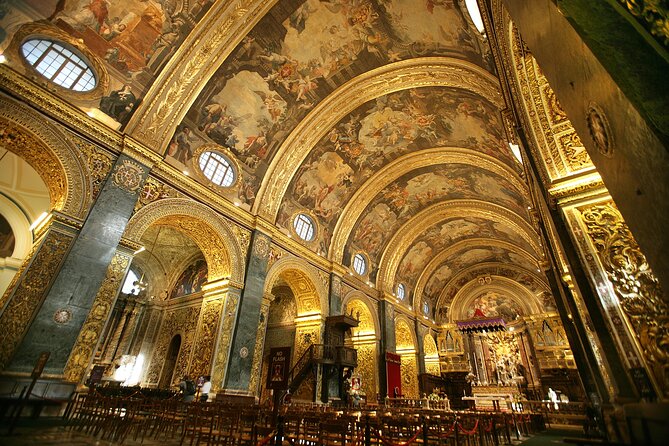
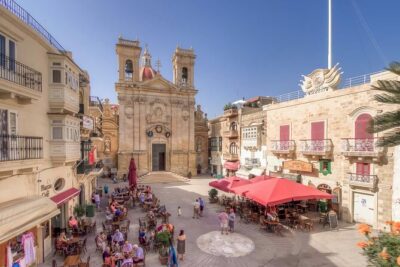
After St. John’s Co-Cathedral, you get free time in Republic Square for a lunch break. This is one of those smart built-in pauses, because Valletta is not a place where you want to ignore food logistics, then realize you’re hungry later.
A separate segment follows along Republic Street, the city’s main thoroughfare, leading to transportation for the next part of the tour. It’s a quick way to transition out of the Valletta core while still finishing the “capital on foot” feeling.
I like that these in-between blocks are structured. You are not stuck in a rigid timeline with no breath, but you also are not drifting alone with nothing to anchor you, because your guide keeps the day flowing.
Mosta Rotunda and the WWII miracle under Malta’s dome
The heart of central Malta is Mosta, and the main stop is Mosta Rotunda, also called the Mosta Basilica. You’ll ride in the air-conditioned vehicle from Valletta, with about 30 minutes of travel, then have around 30 minutes at the church.
This is a must for anyone who wants a story that is more than just pretty architecture. The Rotunda has a famous dome described as one of the largest unsupported domes in the world, but locals often focus on the WWII miracle story.
During WWII, a bomb pierced the dome and fell inside the church during a service, but it failed to explode. The tour includes a chance to see a replica of the bomb during your visit, so you’re not only hearing the tale, you’re seeing a physical reminder of it.
The time here is tight on purpose, and that’s fine, because the dome and the miracle story do the heavy lifting. If you’re the kind of visitor who reads every plaque, you might want to keep your expectations realistic, since 30 minutes goes quickly in a busy interior.
Rabat street life, Roman roots, and a pastizzi tasting at Is-Sirkien
After Mosta, the tour moves to Rabat, a short ride away, about 20 minutes. Rabat is where the day shifts tone, from capital-city grandeur to older town textures and everyday local rhythms.
You’ll explore Rabat by walking along the main street lined with typical village-style architecture. You’ll notice the details: traditional doors and balconies, small local shops, and band club premises that hint at local community life.
This is also where the guide connects Rabat to Roman-era roots and to Saint Paul’s story after he was shipwrecked on his way to be tried in Rome. Even if you don’t know the timeline, having that framing makes the town feel more grounded than a quick stop for photos.
The food moment is a tasting experience at Is-Sirkien, where you try pastizzi, those diamond-shaped pastries filled with either mashed peas or ricotta cheese. This is a smart included snack because it’s specific, it’s local, and it doesn’t require you to commit to a full sit-down meal during a busy day.
The Rabat portion runs about 55 minutes, so you get enough time for the walk and the tasting without losing the momentum that keeps this tour from feeling like a series of interrupted drives.
Off the same quay, a different boat:
- Malta: Gozo, Comino, Blue & Crystal Lagoon, & Caves Cruise★ 4.6 · 5,092 reviews
- From Malta: Full-Day Gozo UTV Tour with Lunch and Boat Ride★ 4.6 · 4,408 reviews
- From Sliema: Comino, Crystal Lagoon, and Blue Lagoon Cruise★ 4.5 · 3,792 reviews
- From Sliema: Gozo, Comino and Blue Lagoon Cruise★ 4.5 · 3,461 reviews
- Malta: Comino, Blue Lagoon, Crystal Lagoon & Caves Cruise★ 4.7 · 2,882 reviews
Mdina, the Medieval Silent City, and walls for far-reaching views
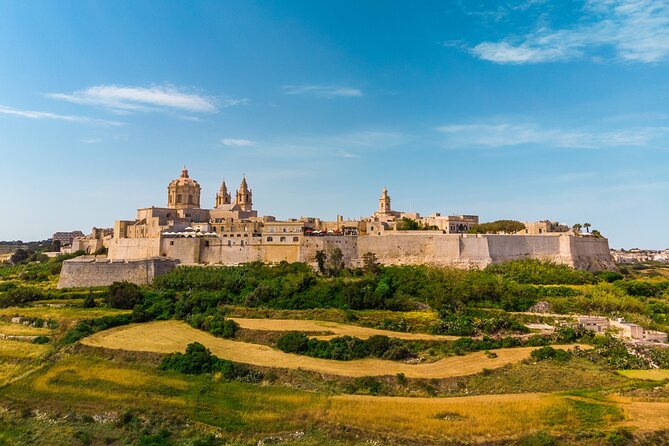
The final stop is Mdina, the Medieval Silent City, and it’s one of the best ways to end this itinerary. You’ll travel from Mdina back toward Valletta at the end, and the tour assigns about 70 minutes in Mdina itself.
Mdina sits on a plateau in the center of the island, and that elevation is part of why it feels so dramatic. The old Baroque buildings, cathedral, and the fortifications dominate the skyline, and once you start walking the narrow lanes, it feels separate from the rest of the island.
You’ll also learn how Mdina used to be Malta’s capital before Valletta was built in 1566. The city has had multiple names through different periods, like Melite under Roman influence and Medina during Arabic influence, so the guide gives you the sense that Mdina’s identity has kept shifting while its stones stayed put.
What makes Mdina worth the time is the way it changes as you move. The streets are narrow and the streetscape is quiet in feel, so you can really look around, and the high bastion walls deliver far-reaching views. This is where you’ll want to slow down, because the views are the point.
As with Valletta, you should expect walking on stone streets. There is no deep museum component here, just a strong urban atmosphere, and that means your enjoyment is tied to how comfortable you are with a walking-first finale.
Price and logistics, and whether $151 feels worth it
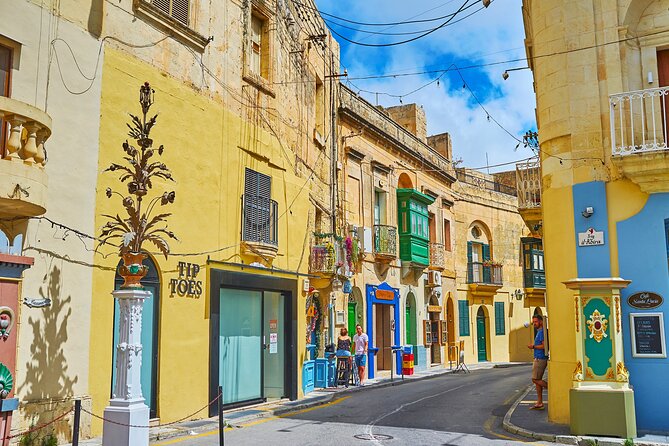
At $151 for about 8 hours, the value depends on what you want from your Malta day. This isn’t just a sightseeing bus loop, because the itinerary includes a licensed English-speaking guide, air-conditioned transport, and entry fees for two key interiors: St. John’s Co-Cathedral and Mosta Rotunda.
You also get a tasting experience with pastizzi at Is-Sirkien, plus snacks included. For a day that covers four major areas, the included entry fees and the guide’s explanations are what make the price feel more reasonable than paying separately and trying to piece together timings on your own.
The small group size, capped at 12 people, matters too. When a day includes church interiors and specific stories like the WWII miracle, a larger group can mean standing and waiting instead of listening. With a tighter group, you’re more likely to catch the details the guide is giving, and you get a better pace in the more crowded spots.
Who this Valletta and Central highlights tour fits best
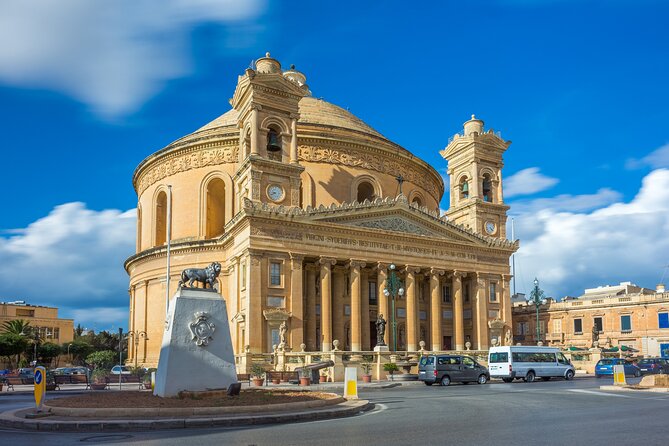
This tour is ideal if you want a guided Malta overview that mixes three different moods: capital-city architecture, a dramatic WWII-connected church, and medieval street-and-wall ambiance. If your interests include the Knights of Malta, Baroque art, or how Malta’s history shows up in physical spaces, you’ll find the day satisfies that.
It also works well if you prefer structure. The day includes free time for lunch in Republic Square, planned transport segments, and clear time blocks, which helps if you’re juggling limited time on the island.
If you’re traveling solo or as a couple, the group size feels manageable. If you’re in a family group, Most travelers can participate, but you should still be realistic about cobblestones and the amount of time spent on foot in Valletta and Mdina.
Should you book Valletta and Central Highlights?
I’d book it if you want a single, well-sequenced day that hits the big interior sites with a real guide, not just scenery. The combination of St. John’s Co-Cathedral plus Mosta Rotunda’s WWII story and the finishing views from Mdina walls makes the day feel like more than a checklist.
Skip it if you hate walking or if you only want one or two neighborhoods and a slow pace. This itinerary is designed for movement, with the most “stand still” time reserved for cathedral and church interiors and a short tasting stop.
If you’re in Malta for a shorter visit and want meaningful highlights across the island’s center, this one is a strong choice.
FAQ
How long is the Valletta and Central Highlights tour?
It runs for about 8 hours.
What sites are included in the tour?
You visit Valletta, St. John’s Co-Cathedral, Republic Square and Republic Street, Mosta Rotunda, Rabat, and Mdina.
Is the guide English-speaking and licensed?
Yes. The tour is accompanied by an English-speaking licensed tourist guide.
What is included with the ticket price?
Entrance fees are included for St. John’s Co-Cathedral and the Mosta Rotunda. Snacks are included, and there is also a tasting experience of locally made street food at Is-Sirkien (pastizzi).
Is lunch included?
Lunch is not included, but free time is allocated for you to eat in Valletta.
Where does the tour start and end?
It starts at Christ the King, Valletta, Malta, and ends back at the same meeting point.
What is the cancellation policy?
Free cancellation is available up to 24 hours before the experience starts for a full refund. If you cancel less than 24 hours in advance, the amount paid is not refunded.