Reviewed · MALTA
Spend Perfect Time in Mosta, Crafts Village – Malta
Mosta’s dome makes the day feel bigger than Malta. This tour strings together three standout stops, starting with the Rotunda church in Mosta and its world-famous scale, then moving to Ta Qali Crafts Village where artisans work in front of you. It is a great way to see different sides of the island without cramming a car rental into your schedule.
I especially like that you get two “wow” experiences in the same block of time. First, the Mosta Dome is the third largest unsupported dome in the world, so you can really understand size instead of just hearing it. Second, Ta Qali gives you hands-on energy watching glass art and silver filigree jewelry being made.
One thing to consider is that the day depends on good weather. If skies turn, parts of the experience may be changed or rescheduled, and you will want to plan for walking in the sun or waiting indoors at the crafts stalls.
In This Review
- Key points at a glance
- How the 8-Hour Route Comes Together (Pickup, Timing, Group Size)
- Mosta Rotunda: Looking Up at the Third Largest Unsupported Dome
- Ta Qali Crafts Village: Glass, Silver Filigree, and Handmade Everything
- Mdina on Foot: Narrow Lanes, High Walls, and the Old Capital Feel
- Valletta After Mdina: A World Heritage City with 16th-Century Buildings
- Price and Value: Is 122.17 USD Worth It?
- Practical Tips So You Enjoy Every Stop
- Who This Tour Fits Best
- Should You Book This Mosta, Ta Qali, Mdina and Valletta Tour?
- FAQ
- What time does the tour start?
- How long is the experience?
- Where does the tour begin and end?
- Is pickup offered?
- Is the admission ticket included?
- What is the group size limit?
- What if the weather is bad or I need to cancel?
Key points at a glance
- Mosta Rotunda Dome is the third largest unsupported dome in the world, and it is visually hard to forget.
- Ta Qali Crafts Village is built around watching artisans make glass, silver filigree jewelry, and other handmade pieces.
- Mdina on foot means narrow streets and high bastion walls, with a slower, more atmospheric pace.
- Valletta as the finish brings you into a World Heritage city with buildings from the 16th century onward.
- Small groups (max 15) make it easier to ask questions and keep moving without chaos.
How the 8-Hour Route Comes Together (Pickup, Timing, Group Size)
This is an 8-hour tour that runs starting at 9:00 am in Mosta. The day is designed as a smooth loop, with the activity ending back at the meeting point, so you are not stuck figuring out transport at the end.
Pickup is offered, which matters because Malta days can pile up fast. Even when distances are not huge, hopping between Mosta, Mdina, and Valletta is easier with a set plan and a small group rhythm.
The group stays under 15 travelers. That is not a guarantee of a personal guide vibe, but it usually means you spend less time waiting and more time looking, listening, and moving at a human pace.
You also get a mobile ticket, and you will receive confirmation at booking. If you like simple logistics, this one fits that style.
Still on the island? These fill a morning in Malta:



Mosta Rotunda: Looking Up at the Third Largest Unsupported Dome
Mosta is famous for its Rotunda church, and the headline is the dome. The Mosta Dome is listed as the third largest unsupported dome in the world. Standing in the right viewing angle, you feel the difference between a roof that is “big” and a dome that is structurally daring.
What I like is that Mosta is not just a stop to check off a building. It gives you something to understand with your eyes. You are seeing scale and engineering at once, and the tour does not rush past that.
A review detail that makes this stop memorable is the wartime connection. You can see a bomb dropped during the Second World War displayed at the church, along with the story attached to it, which points to the idea that no victims were harmed. Whether you treat it as faith, local history, or both, it adds weight to what could have been a simple architecture photo stop.
If you plan to visit churches in Malta, think about timing and your mood. Early morning light and cooler temperatures help, and Mosta works well for that first “wow” moment of the day before you head into the more winding old-city lanes later.
Ta Qali Crafts Village: Glass, Silver Filigree, and Handmade Everything
After Mosta, Ta Qali Crafts Village changes the tone. Instead of stone and sacred space, you get workshops and the pace of people working with their hands.
In Ta Qali, you can watch local artisans making glass art pieces, including elaborate items, and you can also see silver filigree jewelry production. There are other handmade goods too, including items made from wood and stone, and the whole place feels oriented toward craft rather than souvenir theater.
One detail I find especially interesting is the location’s past. A review describes how Ta Qali was abandoned wartime land after the Second World War, then later became a lovely paved area with newer buildings where you can buy beautifully handcrafted items made on the premises. That transformation is part of the charm here. You are shopping, yes, but you are also seeing a working tradition take shape in a real production setting.
Practical tip: treat this stop like a mini art class. If you see a step that catches your eye, linger. Ask questions if your guide mentions language details for the workshops, because artisans usually explain the basics without making it complicated. Even if you do not buy anything, watching the process is the point.
Also, budget a little flexibility. If you fall for one glass piece or a small silver item, you may want to buy on the day rather than “decide later” and forget about it.
Mdina on Foot: Narrow Lanes, High Walls, and the Old Capital Feel
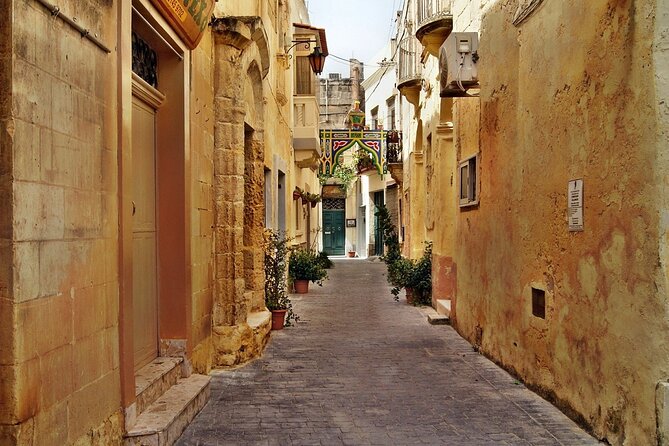
Mdina is where the tour turns quieter. You explore on foot, moving through quaint alleys and narrow streets, with the high bastion walls framing the experience.
This is the kind of place that rewards slow walking. Even if you are not a full-time photo person, Mdina gives you corners that feel like different decades. The walls do more than look pretty. They help you understand why this city was designed to defend, and why strolling its edges feels different from walking a normal town.
The best part of doing Mdina as part of a day tour is pacing. You are not trying to “win” at sight-seeing all morning. You can wander, catch your breath, and then get pulled back into the story as you move toward the next section of town.
You should also plan for comfort. Old street layouts mean uneven pavement in spots and lots of turns. Wear shoes you can trust for 8-hour walking days, especially if the weather is warm.
Valletta After Mdina: A World Heritage City with 16th-Century Buildings
At the end of the route, you head into Valletta, Malta’s capital city and a World Heritage Site. Valletta is known for buildings dating from the 16th century onward, and this stop gives you a different Malta vibe than Mdina.
If Mdina feels like a protected old shell, Valletta feels like living history in action. You walk through bustling streets and see that the city is more than museum pieces. It is working, people-moving, daily-life Malta, which is exactly why pairing it with Mdina works.
What to expect here is a city walk that adds texture to your day. You will not just stare at one landmark and move on. You are meant to cover ground, get your bearings, and feel the older architecture around you while you transition between neighborhoods.
Practical thought: if you are sensitive to crowds, aim to be selective about what you stop for in Valletta. You can still enjoy the streets without trying to “do it all.” Let the walking set the pace, not the wish list.
Off the same quay, a different boat:
- Malta: Gozo, Comino, Blue & Crystal Lagoon, & Caves Cruise★ 4.6 · 5,092 reviews
- From Malta: Full-Day Gozo UTV Tour with Lunch and Boat Ride★ 4.6 · 4,408 reviews
- From Sliema: Comino, Crystal Lagoon, and Blue Lagoon Cruise★ 4.5 · 3,792 reviews
- From Sliema: Gozo, Comino and Blue Lagoon Cruise★ 4.5 · 3,461 reviews
- Malta: Comino, Blue Lagoon, Crystal Lagoon & Caves Cruise★ 4.7 · 2,882 reviews
Price and Value: Is 122.17 USD Worth It?
The price is listed at $122.17 per person for about 8 hours. That is not a bargain by sheer numbers, but it can make sense if you value a structured route, transport between key areas, and a small group pace.
Here is where the value usually lands for me:
- You save planning time. Mosta, Ta Qali, Mdina, and Valletta do not sit next to each other in a way that makes self-guided hopping painless for a first visit.
- Admission ticket is listed as free. If the covered entry fees are truly included, that helps the budget feel less “nickel-and-dime.”
- Pickup is offered (when available), which cuts friction.
- Max 15 travelers keeps the day from turning into a long line of people.
What might not be included (and you should plan for) is your own meals and drinks. A craft and old-city route tends to mean you will want a sit-down at some point, so bring spending flexibility.
So I see this tour as best for people who want a guided flow and a “best of” day that still includes time to look, not just sprint from one spot to another.
Practical Tips So You Enjoy Every Stop
This day works best when you treat it like three mini experiences, not one long grind.
Wear good walking shoes. Mdina alone can eat through time, and Valletta adds city pavements and turns. If your shoes are even slightly worn out, you will feel it by midday.
Bring water and sun protection. The tour requires good weather, and Malta sun can get serious once you are outside. Even if it starts cool, it can warm up quickly once you’re in open streets.
Use Ta Qali as your shopping time. If buying handmade items matters to you, do it here rather than later. You can compare pieces and watch production, which makes your decision feel more grounded.
Be ready to pause in Mosta. That dome and the wartime display connection make this church a longer-stop type location. Plan for quiet moments, not just a quick look and move.
Who This Tour Fits Best
This tour is a strong match if you:
- Want a first-timer-friendly route that includes Mosta, crafts, Mdina, and Valletta.
- Like a mix of architecture plus hands-on craft viewing.
- Prefer small group touring where you can ask questions without a crowd bottleneck.
It might be less ideal if you are chasing a single theme all day, like beach time, deep museums only, or a very slow, rest-heavy pace. This itinerary moves, and it does it on purpose.
Should You Book This Mosta, Ta Qali, Mdina and Valletta Tour?
I would book it if you want the day to feel varied, with two very different “aha” stops. Mosta gives you engineering scale and a moving wartime story tied to the church. Ta Qali gives you real craft observation, glass and silver work, and the satisfying sense that the items you see are made right there.
I would think twice if weather is a tight concern for you or if you hate walking long stretches in old streets. The tour requires good weather, and a lot of the experience is outside, especially in Mdina and Valletta.
If you are staying in Malta and you want one guided day that covers the island’s recognizable highlights with enough time to actually look, this route makes practical sense.
FAQ
What time does the tour start?
The tour starts at 9:00 am.
How long is the experience?
It runs for about 8 hours.
Where does the tour begin and end?
It starts in Mosta, Malta, and ends back at the meeting point.
Is pickup offered?
Yes, pickup is offered.
Is the admission ticket included?
The experience is listed with an admission ticket free feature.
What is the group size limit?
The tour has a maximum of 15 travelers.
What if the weather is bad or I need to cancel?
The experience requires good weather. If it is canceled due to poor weather, you will be offered a different date or a full refund. You can cancel for free up to 24 hours in advance for a full refund.