
Reviewed · WALKING TOURS
The Original Valletta Walking Tour
Valletta comes at you fast. This walking tour is a smart way to get your bearings, then start exploring with real context. I like that it is built around the classic highlights of Malta’s UNESCO capital, with time for viewpoints instead of rushing past them.
I especially enjoyed the small-group size and the way the guide keeps the story moving from one landmark to the next. Stopping for St. John’s Co-Cathedral and the harbour views from the Upper Barrakka Gardens gave me both the art and the big-picture Malta.
One thing to plan for: there can be a fair bit of standing while the guide explains details, and the meeting point area can be confusing if you rely on a wandering map route. Wear comfy shoes, and arrive a few minutes early so you are not guessing.
In This Review
- Key highlights worth planning around
- Why this Valletta walk feels like the best first step
- Price and what you actually get for $26.60
- Valletta City Gate to the New Parliament Building: start with the contrast
- Pjazza Teatru Rjal and Our Lady of Victories: ruins and a buried hero
- Il-Berga ta’ Kastilja and the Knights’ architectural language
- Upper Barrakka Gardens: the best payoff for your walking effort
- Auberge d’Italie and Palazzo Parisio: optional stops, real variety
- St. John’s Co-Cathedral, St. George’s Square, and the Grand Master’s Palace
- Fort St Elmo and the Great Siege story: why Valletta feels defensive
- A word on guides, pacing, and how to avoid common headaches
- Where the tour ends, and how to keep exploring after
- Should you book the Original Valletta Walking Tour?
- FAQ
- How long is the Valletta walking tour?
- How big is the group?
- What is included in the price?
- Do I need hotel pickup?
- Where do I meet the guide?
- Are the tour stops in English?
- Can I cancel for a full refund?
Key highlights worth planning around
- Up to 25 people keeps the tour from feeling like a queue
- UNESCO Valletta orientation tied to the Knights of St John era
- Icon stops like St. John’s Co-Cathedral, Auberges, and St. George’s Square
- Upper Barrakka Gardens for Grand Harbour views and a culture-era story
- Fortress and siege landmarks like Fort St Elmo and siege monuments
- Mobile ticket and a clear central meeting point on Republic St
Why this Valletta walk feels like the best first step
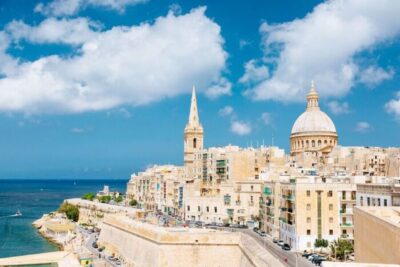
Valletta is compact, but it still feels like a maze when you first arrive. I love that this tour starts you at a major orientation point and then moves through the city’s key power centers, religious sites, and lookout spots in a logical order.
You also get the kind of context that changes how you look at the same stones later. Valletta was shaped by the Knights of St John starting in 1565, and the tour repeatedly connects that era to what you can see today. It is one of those places where names matter, because many buildings are competing for attention, and the stories help you sort them out.
The small group does real work here. With up to 25 people, the guide can keep an eye on the group and answer questions without the tour turning into a lecture with a hard stop.
More Guided Walks in Valletta

Price and what you actually get for $26.60
At $26.60 per person, you are mostly paying for the guide and the organized route through the old town. That is a good value if you care about why buildings look the way they do, not just what they are called.
The tour includes the professional guide, but it does not automatically include admission for every major site. Some stops list admission as not included, which means you may still want to budget for optional entry if you want to go inside certain places. The upside is that you choose how deep you go instead of paying for everything up front.
A practical way to think about it: if you want an efficient primer that helps you explore on your own afterward, this is the kind of ticket that earns its cost fast. If you already know Valletta inside out and want only photos, you might feel you could walk the same route without paying for a guide.
Valletta City Gate to the New Parliament Building: start with the contrast
The tour begins at the Valletta City Gate, where you are basically placed at the city’s historic boundary. From there, you shift toward the modern side with the stop at the New Parliament building, using it as a bridge between eras.
The City Gate moment is useful because it gives you a mental “center” for the day. Valletta’s streets can loop and slope, so knowing what landmark anchors your walk helps you later. Then the New Parliament stop reminds you Valletta is not a museum piece. It is still a living capital, just layered on top of centuries of architecture.
In a morning slot, this section also tends to be calmer. You are walking in daylight before the streets get crowded, which makes the first impressions smoother.
Pjazza Teatru Rjal and Our Lady of Victories: ruins and a buried hero
Next comes Pjazza Teatru Rjal, a spot tied to the story behind famous ruins. The guide frames what you see by explaining how the site connects to Malta’s cultural life and later historical shifts.
Then you head to Our Lady of Victories Church, where the key detail is the burial connection. You get the answer to the tour prompt about a famous hero of Malta’s history being buried here. Even if you do not catch every name the first time, you will understand why this church is treated like more than just a pretty facade.
The drawback to these stops is simple: they are short but story-heavy. If you prefer skimming and moving fast, you may feel the tour slows down for explanation. If you enjoy learning what the place is “for,” these are some of the most rewarding stops early on.
Il-Berga ta’ Kastilja and the Knights’ architectural language
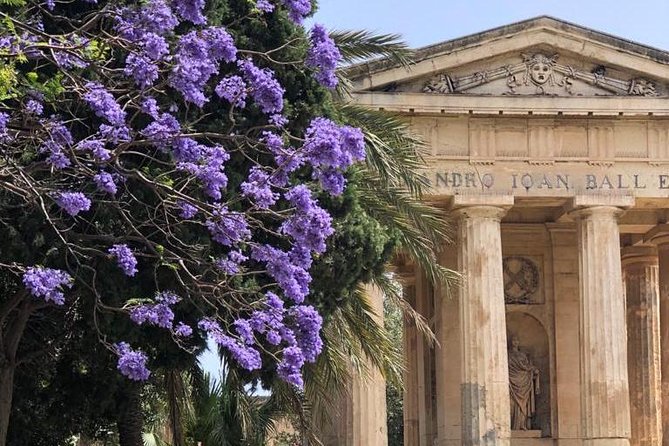
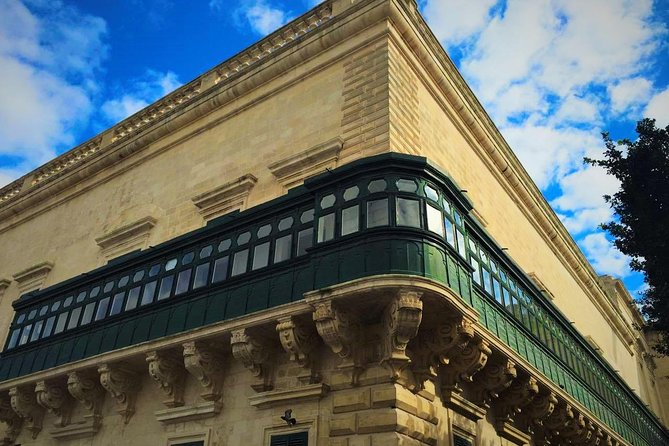
At Il-Berga ta’ Kastilja, you get the feel of the Knights’ world through stone and symmetry. This stop is about admiring the stunning facade of an important edifice tied to the Knights of St John.
Why it matters for you: Valletta’s Baroque architecture can look similar at a glance. A good guide points out the features you would otherwise miss, like what to notice on the facade and how the building’s style fits into the city’s overall design logic.
This part of the tour also helps you understand the city’s “power geography.” The monuments and churches are not random. They sit where they do because Valletta was planned for authority, defense, and ceremonial life.
Off the same quay, a different boat:
- From Malta: Full-Day Gozo UTV Tour with Lunch and Boat Ride★ 4.6 · 4,408 reviews
- From Malta: Full-Day Gozo Quad Tour with Lunch and Boat Ride★ 4.8 · 1,419 reviews
- Gozo Full-Day Jeep Tour with Private Boat to Gozo & return★ 4.5 · 1,048 reviews
- Valletta: City Walking Tour in a Small Group★ 4.9 · 957 reviews
- Valletta Food Tour★ 5.0 · 711 reviews
Upper Barrakka Gardens: the best payoff for your walking effort
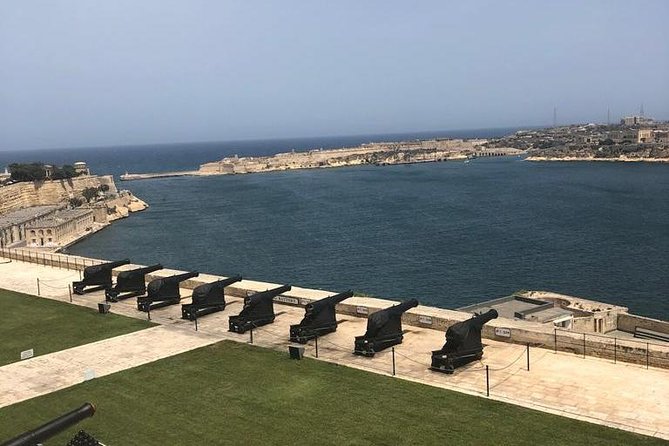
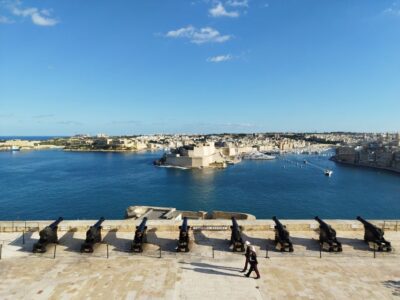
The tour then swings toward Upper Barrakka Gardens for a long viewpoint stop, and that is exactly the kind of break Valletta walking tours should include. You are looking down over the Grand Harbour, which is one of the best reasons to stay in Valletta at all.
This is where you start to feel the city’s setting. Valletta is shaped by sea access and defense needs. When you can see the harbour, things like fortress sites and siege memorials make more sense later in the walk.
A nice bonus from the experience pacing: you often get a short moment to step out, stretch, and grab a coffee around the middle of the tour. That break helps if you are doing this on a day when you also have other plans.
Auberge d’Italie and Palazzo Parisio: optional stops, real variety
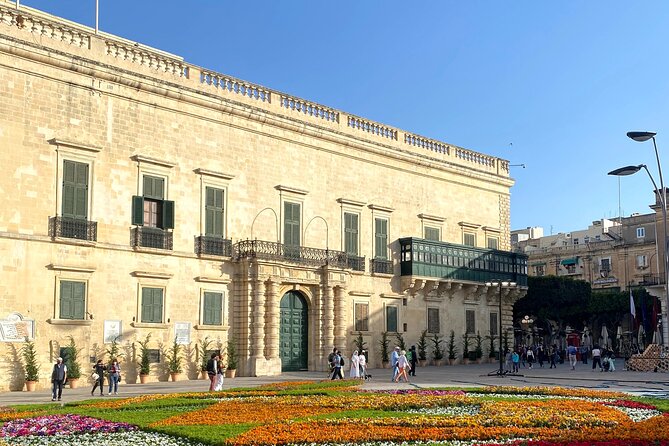
The walk continues past Auberge d’Italie, which is linked to the new Museum of Fine Arts. Admission is listed as not included, so you can decide whether to step inside or keep moving with the group.
Then you pass Palazzo Parisio, where the tour connects the building to a world-famous historical figure who spent time living here. You are not required to purchase entry to benefit. Even just seeing the exterior and hearing the story makes later city exploration less confusing.
What I like about this portion is that it adds texture. You get more than one type of landmark, from religious sites to cultural and civic buildings. It keeps Valletta from feeling like one long church parade.
If you want to maximize value, note which places list admission not included. If you are the type who likes interiors, plan for at least one paid entry during the day, since the walk gives you the context to choose wisely.
St. John’s Co-Cathedral, St. George’s Square, and the Grand Master’s Palace
This is the trio that most people come to Valletta for, and the tour threads them together in a way that helps you remember what you saw.
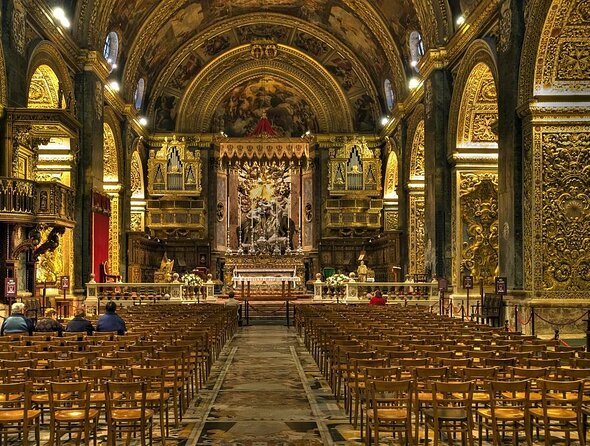
First, St. John’s Co-Cathedral. Admission is not included, but the guide focuses on the stories behind the famous artists whose works are depicted there. Even if you do not go inside, you leave knowing what you are looking for and why the art matters in a Knights-built power center.
Next is St George’s Square, the city’s main square. It is a natural place to reset mentally. After so many facades and smaller stops, the square gives you a broader sense of where everything connects. It also helps you later when you are trying to navigate back without checking your phone every five minutes.
Finally, you move to the Grand Master’s Palace, with the guide explaining how important the building was across centuries. That big-picture framing is the difference between “I saw a palace” and “I understand what the palace controlled.” If you plan to do any self-guided wandering after the tour, this is a strong anchor stop to remember.
Fort St Elmo and the Great Siege story: why Valletta feels defensive
Even though not every major defense site is a listed numbered stop, the walk includes siege history landmarks like the Great Siege Monument, the Siege Bell Memorial, and Fort St Elmo.
This matters because it connects Valletta’s buildings to a reason for being there. When you understand the siege era and the role of fortifications, the city stops looking like pure decoration. You start to see how protection, signal systems, and strategic placement shaped what got built and what got preserved.
The practical side: these points tend to work well for photos, but they also work well for comprehension. The guide’s explanations make the terrain and structures more legible.
A word on guides, pacing, and how to avoid common headaches
The quality of guides on this tour is a major selling point. Names like Mario, Matthew, Giulia, and Carmal come up repeatedly with the same theme: clear English, good pacing, and the kind of answers that help you keep going after the walk ends.
Pacing is also mostly reasonable. Multiple people mention it is not physically demanding and that the tour includes a break at some point in the middle. Still, it is a walking tour with many stops, so you should expect some standing during explanations.
If you are coming from a cruise port, there is a simple tip that can save time. One route described in feedback involves taking an elevator up, walking through the gardens, then turning right through an arched gate toward the square. The key point: do not trust a map that sends you far away. Zoom in on the meeting area around Republic St so you know you are going to the right New Parliament Building entrance.
Where the tour ends, and how to keep exploring after
The walk ends in central Valletta at St George’s Square. That is convenient because it places you near the kind of places you will likely want next: more walking options, restrooms, cafes, and easy onward navigation.
If you take the tour seriously as an orientation, you can do the best kind of follow-up: slow wandering. You can choose your next church, your next view, or your next museum because you now know what matters and why.
My advice is to pick one extra indoor stop based on what you cared about most. If you focused on art during the cathedral portion, add an interior visit. If you liked siege history and fortifications, spend your remaining time around the defensive corners and viewpoints while the context is still fresh.
Should you book the Original Valletta Walking Tour?
Book it if you want the fastest way to understand Valletta’s landmarks and you like a guided route that adds meaning to what you see. The combination of UNESCO context, Baroque architecture stops, harbour views, and siege-history pieces makes this a strong first or second day activity.
Skip it if you already feel comfortable navigating Valletta on your own and you prefer to pick only one or two sites. This tour is a lot of stops in a single morning window, so it may feel busy if you are hoping for a slower, pick-your-own-adventure style.
If you do book, arrive early, wear shoes made for uneven old streets, and treat the tour as your map for later. You will finish at a central square, with enough context to explore without constantly searching.
FAQ
How long is the Valletta walking tour?
The tour runs about 3 hours.
How big is the group?
The group is limited to a maximum of 25 travelers.
What is included in the price?
You get a professional guide. The tour description also notes that some sites have admission not included.
Do I need hotel pickup?
No, hotel pickup and drop-off are not included.
Where do I meet the guide?
The meeting point is the New Parliament Building on Republic St, Valletta.
Are the tour stops in English?
Yes, the tour is offered in English.
Can I cancel for a full refund?
Yes. You can cancel up to 24 hours in advance for a full refund, but within 24 hours there is no refund.
Just landed: new Valletta pages


Walking Tours, compared.

Guided Walking Tour with Optional Cathedral Tour
Read our review →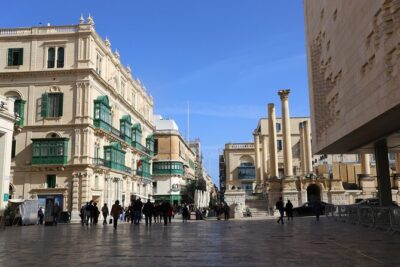
The Valletta Street Food and Culture Walking Tour
Read our review →
Browse the lists this tour appears in