
Reviewed · HISTORICAL TOURS
Heritage Pass in Malta
Three days, 20+ heritage stops, one ticket. This Malta Heritage Pass is built for people who want to stack the highlights fast, from Fort Saint Elmo and MUŻA to St Paul’s Catacombs and the southern-coast temples. What I like most is that it’s one entry path to 20+ attractions, and it comes with cruises that include free Wi-Fi on board, so travel time feels less wasted.
One thing to keep in mind: the pass only works if you understand the timing. You’ll need to scan the QR code for each site’s opening times, and some places (like the Presidential Palace State Rooms) can be closed at short notice. Also, hop-on hop-off bus stops can be easy to miss if you do not get on and off at the same location.
In This Review
- Key things that make this pass worth watching
- Price and value for a Malta hit list
- How the transport mix helps you avoid Malta fatigue
- Fort Saint Elmo and the Knights’ world: star forts, siege stories, and armor
- Valletta Harbor to Birgu museums: maritime clues and Roman comfort
- MUŻA and Natural History in Mdina: a pause that still teaches
- Temple power on the southern coast: Ħaġar Qim and Mnajdra
- Megaliths beyond the coast: Ta’ Ħaġrat, Skorba, and Tarxien
- Underground chapters: St Paul’s Catacombs and Għar Dalam Cave
- A realistic 3-day approach that keeps the pass feeling fair
- Should you book the Heritage Pass?
- FAQ
- What is the Heritage Pass in Malta?
- How much does the Malta Heritage Pass cost?
- How long is the pass valid?
- Which major attractions are included?
- Is Wi-Fi included on the cruises?
- What are the operating hours?
- Do I need good weather for the experience?
- Can I get a refund if I cancel?
Key things that make this pass worth watching
- Fort St Elmo plus Birgu forts: Great Siege history, star forts, and harbor views.
- UNESCO megaliths in one sweep: Ħaġar Qim, Mnajdra, Ta’ Ħaġrat, Skorba, and Tarxien.
- Underground Malta included: St Paul’s Catacombs galleries and Għar Dalam’s ancient cave history.
- Hop-on hop-off bus and two cruise styles: Valletta and the Three Cities, plus a coastal route to Comino and Gozo.
- On-board convenience: free Wi-Fi on the cruises helps you plan on the go.
Price and value for a Malta hit list
At $92.69 per person, this pass is priced for serious sight-seekers. The key question is simple: will you actually use it for the number of sites it’s designed to cover? If you’re the type who plans a packed day, then it can feel like a bargain because most of the listed stops are “one-and-done” admissions that add up quickly if you pay separately.
The best value is not just the ticket math. It’s the time saved. Instead of hunting for individual admissions, you can focus on sequencing your day, using the bus and cruises to connect far-flung places. And because your cruise options include free Wi-Fi on board, you can check timing before you hop back into the next stop.
If you only want one or two big attractions, I’d skip the pass and pay as you go. That’s when these multi-stop products start to feel like work.
More History Tours in Valletta
How the transport mix helps you avoid Malta fatigue
This pass is built around three movement modes: a hop-on hop-off bus, a harbor cruise (Valletta and the Three Cities), and a coastal pass route that takes you toward Comino and Gozo. That mix matters because Malta can feel compact on a map, but slow on foot when you’re zig-zagging across bays.
A practical strategy is to treat the bus and cruises like your “distance tool,” not your entire itinerary. For example, you can use the harbor cruise to soak up Grand Harbour views and save energy for the sites around Valletta and Birgu. Then use the bus to jump between areas you want to explore without overthinking each ride.
Also, keep the hours in your head: it runs daily from 8:00 AM to 6:00 PM. If you’re trying to chase several out-of-the-way stops, you’ll want a buffer day and a realistic end time.
Fort Saint Elmo and the Knights’ world: star forts, siege stories, and armor
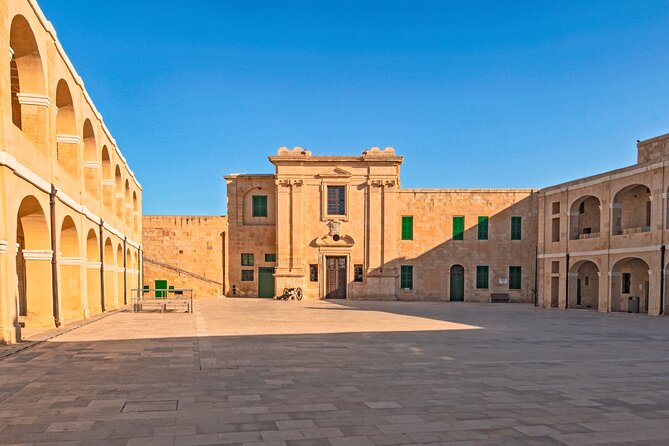
Your pass starts in Valletta at Fort Saint Elmo, a star fort on the seaward shore of the Sciberras Peninsula. It guarded the entrances to both harbors during the Great Siege of Malta in 1565, and you can feel that defensive purpose in the layout. If you like military history, forts here are not just buildings, they are the reason Valletta exists the way it does.
From there, the logic of the “Knights of St John” theme continues. You’ll also get in at the Palace Armoury, a showcase of the Order of St John’s power, with armor suits associated with Grand Masters Alof de Wignacourt and Jean de Valette, plus Ottoman armor and weapons and artillery pieces. This is the kind of museum stop that helps you understand what those forts were meant to protect.
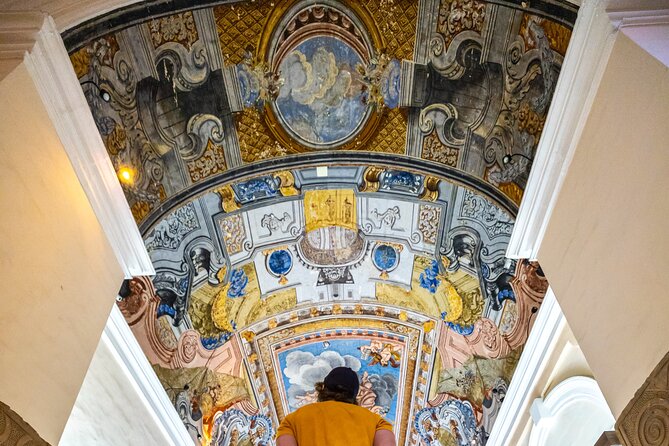
Then there are the State Rooms at Malta’s Presidential Palace. This is a political and ceremonial space that traces back to the early days of Valletta, founded after the 1565 siege. Just know one catch: these rooms can be closed at short notice by order of the President. If this is a must-see for you, build flexibility into your plan.
Finally, don’t miss Fort Saint Angelo in Birgu. It’s another bastioned fort at the center of the Grand Harbour, originally built as Castrum Maris in medieval times and rebuilt by the Order in the 1530s through the 1560s. If Fort St Elmo is the outer defense, Fort St Angelo feels like the headquarters story.
Valletta Harbor to Birgu museums: maritime clues and Roman comfort
After forts and uniforms, Malta turns its page into ships, kitchens, and everyday life.
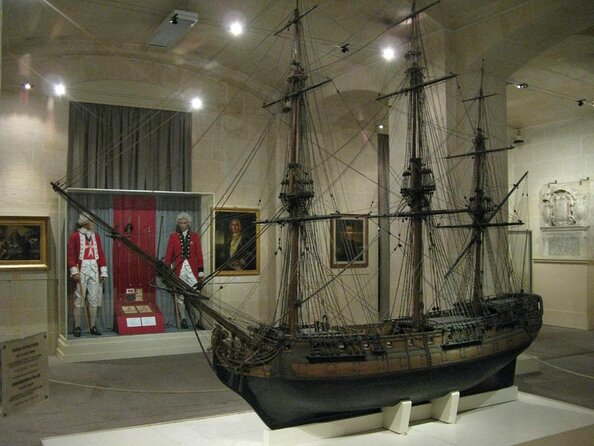
The Malta Maritime Museum in Birgu is one of the biggest museum stops on your list. It’s housed in the former Royal Naval Bakery built in the 1840s for the Mediterranean Fleet, and it holds a collection of over 20,000 artifacts, described in the context of Malta’s maritime history from prehistory to the present. Even if you are not a ship person, the scale here makes it a solid “learn fast” stop between walks.
Then head back into time even deeper with Domvs Romana, which focuses on the private life of an ancient Roman aristocrat. The domus itself survives only in parts, but the surviving mosaics and artifacts give you a direct window into what a wealthy household might have felt like. If you like when a museum connects to how people actually lived, this is a good counterweight to the fortress energy.
Between these two, you get a nice push-pull: Malta as a defensive island power, and Malta as a place with long, layered civilian life.
MUŻA and Natural History in Mdina: a pause that still teaches
Not every Heritage Pass stop is ancient stone. You also get art and nature, and that balance is useful because it stops your days from turning into constant walking and constant dust.
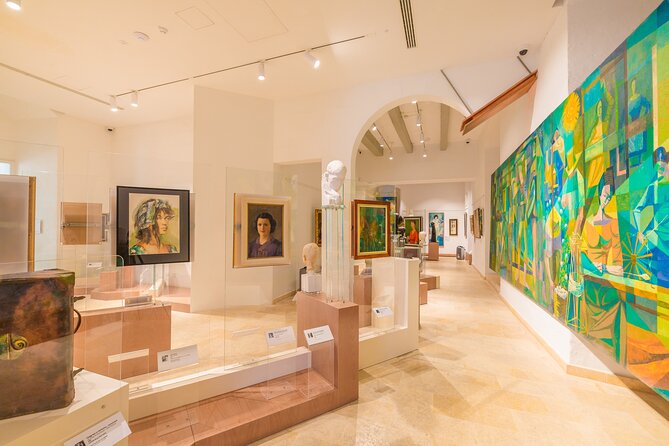
MUŻA, The Malta National Community Art Museum, is located at Auberge d’Italie in Valletta. It centers on works by Maltese and foreign artists, representing major European styles. Think of it as a way to reset your brain after forts and archaeology, while still staying in the “Malta identity” frame.
For a change of pace that feels very Malta-specific, the National Museum of Natural History sits in Mdina’s Palazzo Vilhena. It’s run by Heritage Malta and focuses on Maltese ecosystems, including endemic plants and birds. It also features minerals, fossils, insects, reptiles, birds, mammals, fish, plus sections on geology and palaeontology. If you want a museum that gives you both the story of the island and the science behind it, this is a strong stop.
Off the same quay, a different boat:
- From Malta: Full-Day Gozo UTV Tour with Lunch and Boat Ride★ 4.6 · 4,408 reviews
- The Original Valletta Walking Tour★ 5.0 · 2,719 reviews
- Valletta: 3-Hour Walking Tour★ 4.7 · 1,605 reviews
- From Malta: Full-Day Gozo Quad Tour with Lunch and Boat Ride★ 4.8 · 1,419 reviews
- Valletta: Guided City Walking Tour★ 4.8 · 1,256 reviews
Temple power on the southern coast: Ħaġar Qim and Mnajdra
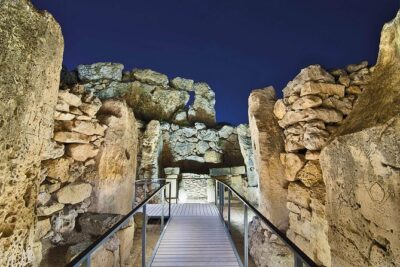
When most people picture Malta, they picture stone temples. This pass is efficient because it includes multiple UNESCO temple sites, and the southern coast pair is a standout: Ħaġar Qim and Mnajdra.
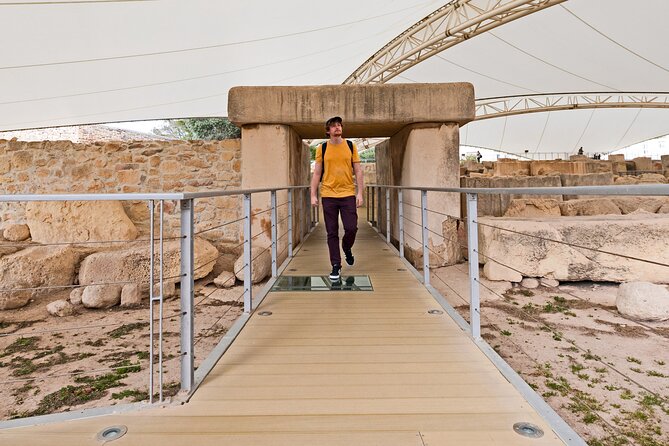
Ħaġar Qim sits on a ridge on the southern edge of the island, built using limestone found locally. Mnajdra is about 497 meters from Ħaġar Qim, also on the southern coast, built around the fourth millennium BCE. UNESCO recognized Mnajdra and four other structures as World Heritage in 1992.
One interesting practical note is that Mnajdra has had a protective tent put in place (completed work in 2009). That matters if you dislike weather-driven plans or if you are trying to photograph stonework without it feeling like a constant battle with the elements. You’ll still want a flexible schedule, but this is evidence the site is managed for long-term viewing.
Megaliths beyond the coast: Ta’ Ħaġrat, Skorba, and Tarxien
This pass does not only do the classic southern-coast monuments. It also threads in other megalithic sites that show how wide Malta’s Neolithic story really is.
At Ta’ Ħaġrat in Mġarr, you’re visiting a UNESCO-listed complex among the world’s oldest religious sites. The larger temple is dated to the Ġgantija phase (3600–3200 BCE), while the smaller is dated to the Saflieni phase (3300–3000 BCE). This site is a strong “big time” stop where you can compare different phases of temple building in one place.
Skorba Temples, on the northern edge of Żebbiegħ, are another UNESCO-listed megalithic site. The key detail here is that it was excavated only in the early 1960s, later than other major Maltese temple sites that were studied much earlier. If you like archaeology that feels like it still has fresh context, this makes the site interesting beyond the stones themselves.
Then there’s Hal Tarxien (Tarxien Temples), made up of three attached temple structures. It’s famous for its decorated slabs, and for the fact that some were moved indoors for protection at the museum in Valletta. The dates are around 3100 BCE for the main temple and about 3000 BCE for the middle temple, with the east temple around 3100 BCE as well, plus an additional older, smaller temple dated around 3250 BCE visible further east. If you like symbolism and style changes over time, Tarxien gives you that feeling.
Add Borġ in-Nadur to round out prehistoric context. It’s an archaeological site in open fields overlooking St George’s Bay and includes a Tarxien phase megalithic temple and the remains of a Bronze Age village, including what’s described as the earliest fortification in Malta. It’s the kind of stop that helps you see the shift from ritual spaces to organized settlement.
Underground chapters: St Paul’s Catacombs and Għar Dalam Cave
Two of the most memorable experiences on your pass are the underground sites, because they flip the Malta story from sunlight stone to dark human remnants.
St Paul’s Catacombs are among Malta’s prominent features of early Christianity archaeology. The underground galleries and tombs date from the third to the eighth centuries CE. There are over 30 hypogea across the St Paul’s and St Agatha’s complex, with more than 20 open to the public. If you want a place where Malta’s ancient religious life becomes physically real, this stop is a must.
Then there’s Għar Dalam Cave and Museum, a 144 meter long phreatic tube cave or cul-de-sac near Birżebbuġa. It contains bone remains of animals that became extinct in Malta at the end of the Last Glacial Maximum, and the cave also lends its name to the Għar Dalam phase in Maltese prehistory. This is a different kind of “underground time travel,” where geology and extinction history show up in the bones.
Because these are underground, you might find it cooler and dimmer than outside. Bring a light layer and plan for slow walking, especially if you want time to look closely.
A realistic 3-day approach that keeps the pass feeling fair
This pass works best if you treat it like a flexible framework, not a rigid checklist. Here’s how I’d make your days feel smooth:
First, start with your “anchors.” Pick one fort or palace site for the morning, then pair it with one museum stop in the afternoon. That keeps your day from turning into backtracking.
Second, group by geography. Valletta and the Grand Harbour area fit well together. Mdina fits as a separate block because it’s its own vibe and you’re swapping harbor energy for walled-city quiet. The south-coast temples work best as a single stretch rather than random scatter.
Third, check openings the day you go. Scan the QR code for the opening times of each place. This matters because some sites can be closed at short notice, and you do not want to discover that after you’ve already traveled across the island.
Finally, plan for bus reality. People can get turned around at stops, especially around Valletta waterfront pick-ups. If it’s your first hop-on hop-off day, stay consistent: get on and off at the same stop first, then learn the rhythm.
If you want human help, the pass sellers and reps you might run into can be genuinely useful. Names that show up in the wild include Diane Zammit (at DB San Antonio), Sandra Fenech (helping map out the best way to fit trips), and Monalisa at the Corinthia St George. The practical takeaway is to ask for a short routing check before your first day, not after you’ve already missed a connection.
Should you book the Heritage Pass?
Book it if you want a fast overview of Malta through forts, palaces, UNESCO temples, and underground history, and you’re comfortable using the bus and cruises to connect the dots. The free Wi-Fi on board is a small comfort perk that helps you stay on schedule, and if you actively target many of the included sites, the price can feel fair.
Skip it, or at least buy with your eyes open, if you only want a couple stops, hate self-planning, or you’re traveling at a time when closures could derail key picks like the State Rooms. For best results, treat the QR-code opening times as part of your plan, not an afterthought.
FAQ
What is the Heritage Pass in Malta?
It is a 3-day heritage and attractions pass based in Valletta, Malta, that includes entry to 20+ attractions, unlimited hop-on hop-off bus use, a harbor cruise of Valletta and the Three Cities, and a coastal pass route to Comino and Gozo.
How much does the Malta Heritage Pass cost?
The price is $92.69 per person.
How long is the pass valid?
The pass is listed as lasting 3 days (approx.).
Which major attractions are included?
The highlights listed include Fort St Elmo, the Hagar Qim Temples, and St Paul’s Catacombs. The pass also includes other sites such as Fort St Angelo, Malta Maritime Museum, Ta’ Ħaġrat, Għar Dalam Cave and Museum, and several more.
Is Wi-Fi included on the cruises?
Yes. Both cruises include free Wi-Fi on board.
What are the operating hours?
The hours are 8:00 AM to 6:00 PM, Monday through Sunday.
Do I need good weather for the experience?
Yes. The experience requires good weather, and if it is canceled due to poor weather, you will be offered a different date or a full refund.
Can I get a refund if I cancel?
Yes. You can cancel up to 24 hours in advance for a full refund. If you cancel less than 24 hours before the experience starts, the amount paid will not be refunded.
Just landed: new Valletta pages


Historical Tours, compared.
Prehistoric Temples, Limestone Heritage & Blue Grotto
Read our review →
Maltese Islands History Audio-Visual Show and La Sacra Infermeria Tour
Read our review →
Self-Guided Historical Walking Tour (Audio Guide)
Read our review →
Wonderful Valletta, gastronomy, art, and history in the Mediterranean
Read our review →

Private Historical City Walking Tour with Rabat Town
Read our review →
The Limestone Heritage Park and Gardens (Entry Ticket)
Read our review →Browse the lists this tour appears in