

Reviewed · MDINA & THE SILENT CITY
Mdina and Rabat Private Walking Tour with local pastizzi
Mdina walks better with a guide. This private 2.5-hour stroll strings Mdina and Rabat together, with the kind of street-level storytelling that makes Malta feel personal fast. You also get to taste pastizzi, Malta’s favorite snack, without hunting around for it.
What I like most is how the route is built around real landmarks, not random corners. Expect key stops such as Palazzo De Vilhena, Xara Palace and Council’s Square, Cathedral Square, and Greens Gate, so you get a sense of how the town’s power, faith, and everyday life all fit together.
One thing to consider is time and pace. You’re walking a lot during a short half-day, so comfortable shoes matter, and the price is set per group (up to 4), which can feel steep if you’re traveling solo.
In This Review
- Key things to know before you go
- Why Mdina and Rabat click in one 2.5-hour walk
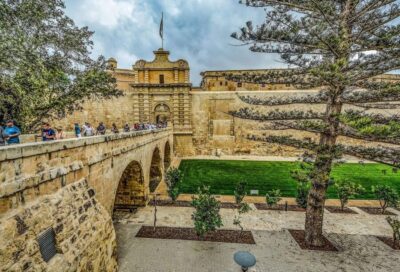
- Meeting at Mdina’s Main Gate, and how the tour gets you oriented
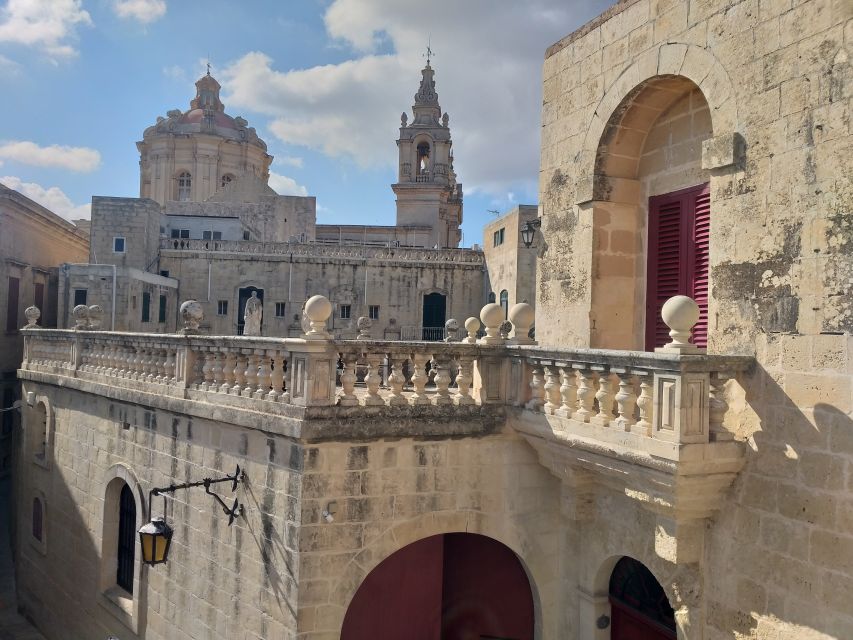
- Mdina’s big sights, from Palazzo De Vilhena to Cathedral Square
- Palazzo De Vilhena
- Xara Palace and Council’s Square
- Main street, then Cathedral Square
- Bastions viewpoints: when the “Silent City” suddenly opens up
- Mesquita Square and the Greeks Gate, seeing Mdina’s layers
- Mesquita Square
- The Greeks Gate
- Rabat on foot: from fortified stillness to everyday streets
- The pastizzi break at a local coffee shop
- Price and value: $324 per group up to 4
- Optional add-ons: Wignacourt Museum, Roman catacombs, Saint Paul’s Grotto
- Who this tour fits best
- Should you book this Mdina and Rabat with pastizzi?
Key things to know before you go
- A true private route that covers Mdina and Rabat in 2.5 hours without hopping around
- Mdina highlights on a single loop including Cathedral Square, Bastions stops, and Greeks Gate
- Viewpoints from the Bastions with a panorama over two thirds of the island
- Pastizzi stop at a local coffee shop so you eat the snack in the right setting
- Optional extensions if you want Wignacourt Museum, Roman catacombs, and Saint Paul’s Grotto
Why Mdina and Rabat click in one 2.5-hour walk

Mdina is Malta’s best lesson in how a fortified town shapes daily life. You feel it immediately when you step inside the walled streets, where sightlines, squares, and palaces all funnel your attention. Then Rabat takes over with more street life and a different rhythm, so the contrast feels natural, not forced.
This is a tour that works well because it balances two styles of seeing. You’re not just reading plaques or snapping photos from one spot. You’re walking through the places, and your guide connects them with stories that help you remember what you saw, and why it mattered.
And yes, the pastizzi part matters too. It’s not a random food add-on. It’s a quick local break that turns the walk into an experience, not a checklist.
More Guided Walks in Mdina

Meeting at Mdina’s Main Gate, and how the tour gets you oriented
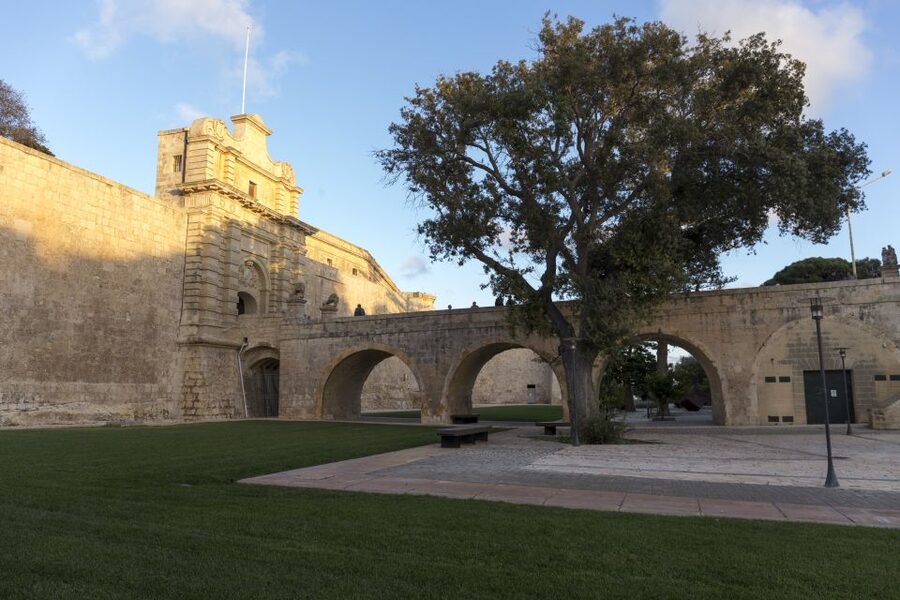
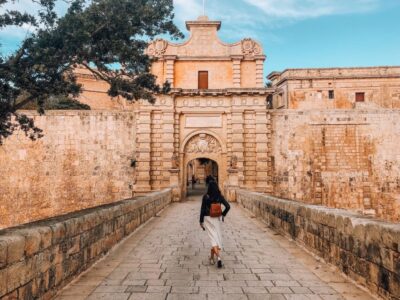
You meet your guide along the bridge at the Main Gate of Mdina. That’s a smart start, because it places you right where Mdina’s layout makes sense. You’ll get a brief introduction to the city’s historical past, then you’re on your feet right away.
Private tours have a real advantage here. You can ask practical questions as you go, like how the different squares connect, or what role certain palaces played in town life. With a live guide in multiple languages, including French, English, German, Italian, and Spanish, you’re not stuck translating on your phone while the view changes.
The timing is also friendly. At 2.5 hours, you get a full sense of both towns without burning an entire day.
Mdina’s big sights, from Palazzo De Vilhena to Cathedral Square
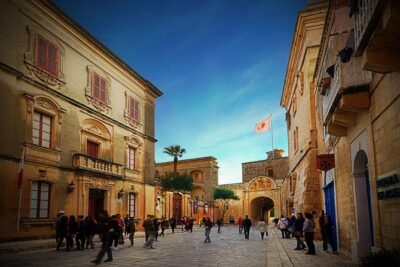
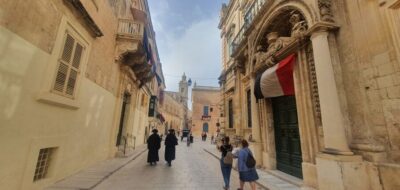
Once you’re inside Mdina, the tour moves along the typical street pattern, past picturesque squares and toward the bastions. I like this approach because it keeps the walk logical. You don’t zigzag just to chase photos. You follow the town’s flow, so each landmark lands in context.
Here’s what you can expect as the route builds:
Palazzo De Vilhena
Palazzo De Vilhena is one of those stops that helps you understand Mdina’s character beyond the walls. Your guide points out how the architecture signals status and authority, so you start noticing details instead of just admiring facades.
Xara Palace and Council’s Square
Next up is the area around Council’s Square, paired with Xara Palace. This is where the tour shifts from pure visual beauty to civic life. You’ll get a clearer picture of how leadership and daily order shaped the city’s layout.
More of Mdina and the Silent City:
- Malta: Mdina and Rabat Tour with Local Guide★ 5.0 · 408 reviews
- Mdina and Highlights of Malta Full Day Guided Tour Incl. Lunch and Transfers★ 4.0 · 299 reviews
- Mdina, Rabat, Dingli cliffs, San Anton gardens, Ta’ Qali & Mosta guided tour★ 4.0 · 248 reviews
- Mdina: St. Paul’s Cathedral and Mdina Museum Entrance Ticket★ 4.5 · 89 reviews
- Malta: Tuk Tuk Tour around Rabat, Dingli and Mdina★ 5.0 · 89 reviews
Main street, then Cathedral Square
Walking through the main street section gives you a strong sense of Mdina as a planned, protected town. Then you reach Cathedral Square, a natural focal point. If you’ve ever wondered why some places feel like the center of everything, squares like this are usually the reason.
One practical tip: take a moment in each square to look around in a full 360 degrees. The tour is short, and the layout is easy to miss if you only keep your eyes on the building in front of you.
Bastions viewpoints: when the “Silent City” suddenly opens up
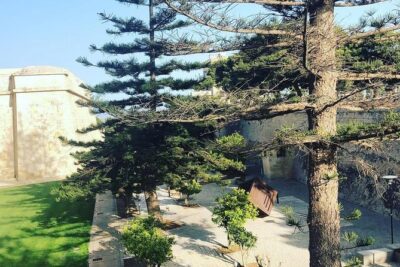
One of the best parts of this tour is that it includes stops along the bastions for views over two thirds of the island. Mdina can feel closed-in as you walk the walls, and then suddenly the horizon appears. It’s the moment where the fortified town stops feeling like a movie set and starts feeling like a real place that had strategic importance.
Your guide uses these viewpoints to connect the city’s position to Malta’s geography. Even if you’re not a map person, it helps you place Mdina in relation to the broader island.
Also, don’t rush the views. The tour packs in a lot, and it’s easy to keep walking without soaking it in. If you time it right, the viewpoint stops become your “anchor memories” for the whole walk.
Mesquita Square and the Greeks Gate, seeing Mdina’s layers
After Cathedral Square and the bastions, the tour continues into other key points that show Mdina’s layered identity.
Mesquita Square
Mesquita Square is a stop that adds cultural texture. Instead of only focusing on palaces and church-centered landmarks, the route takes you through a place that helps explain how different influences became part of the town’s story.
The Greeks Gate
Then you reach Greeks Gate, which is a natural transition point. Gates always feel like more than just entries, because they’re about movement: where people came from, how access was controlled, and what areas were meant to connect or stay separate.
This is also where your guide’s explanations make a big difference. When someone points out what you’re looking at, the streets stop being a maze and become a map you can understand.
Rabat on foot: from fortified stillness to everyday streets

Once Mdina wraps up, Rabat feels like the “real world” version of the same area. You’ll walk Rabat’s typical streets and stop at places that make the town’s rhythm easier to picture.
Your Rabat segment includes:
- A walk through the typical Rabat streets
- A stop at Square of the Conversion of Saint Paul
I like this portion because it slows the mood. In Mdina, everything is compact, fortified, and set up for dramatic views. In Rabat, you get more human scale, and that shift helps you understand why the two towns are often paired together.
If you’re traveling with kids or someone who needs breaks, Rabat is usually the easier half of the walk. It’s still historic, but it feels more comfortable to linger for a minute and then keep going.
The pastizzi break at a local coffee shop
This tour includes a stop at a local coffee shop in Rabat where you taste pastizzi. That’s a big deal for two reasons.
First, pastizzi is one of those foods where you can order it wrong if you’re guessing. Here, you get to experience the snack as locals actually treat it as street food.
Second, it’s the right kind of pause. Instead of a long sit-down break, you get a snack break that keeps your energy up for the last stretch. In a short half-day tour, that matters.
Practical move: when you sit down, look at how people order and what they choose. Even without getting fancy about it, you’ll learn how simple the ordering can be.
Price and value: $324 per group up to 4
The price is $324 per group, up to 4 people, for about 2.5 hours. That can sound high if you’re comparing it to a group bus tour. But private walking tours have a different job: they deliver the full route with a licensed guide and built-in pacing that works for where you’re standing.
Here’s when it’s good value for you:
- You’re traveling with 2 to 4 people and can split the cost
- You want a guide who can answer questions as you walk
- You want the pastizzi experience included, not added later as an afterthought
- You want to cover both towns in one outing without doing the planning yourself
If you’re a solo traveler, the per-person cost effectively rises because it’s priced per group. In that case, you might prefer to book only if the guide and food inclusion are the main reason you want this exact format.
My best advice: treat this as paying for time saved and context gained. Mdina and Rabat can be pretty, but a good guide is what turns that into understanding.
Optional add-ons: Wignacourt Museum, Roman catacombs, Saint Paul’s Grotto
If you want to stretch the day beyond the walk, the tour can optionally include extra stops like:
- Wignacourt Museum
- Roman catacombs
- Saint Paul’s Grotto
This is useful if you’re the type who likes to connect monuments to the larger story. The walking route gives you the town layout and landmark sequence. The add-ons can deepen the historical angle, especially for religious and ancient layers.
One caution: optional add-ons can turn a neat 2.5-hour plan into a longer commitment. If you have dinner reservations or a packed itinerary, plan your time window carefully.
Who this tour fits best
This private Mdina and Rabat walk is ideal if you want:
- A structured route with major landmarks, not a random wander
- A guide available in several languages
- A real snack included (pastizzi) instead of searching on your own
- A compact time frame that still covers enough ground
It’s also listed as wheelchair accessible, which is a positive if mobility is a concern. Still, because you’re walking through historic streets, it’s smart to bring a mobility plan you’re comfortable with.
In terms of vibes, it’s a good match for couples, small friend groups, and families who want the history without turning the day into a museum marathon.
Should you book this Mdina and Rabat with pastizzi?
Book it if you want the best of both towns in one organized, private outing. The mix of Mdina’s walled-city landmarks, bastions viewpoints, and the Rabat street experience makes the 2.5 hours feel purposeful. Add in the included pastizzi stop, and you get a taste of local culture without extra planning.
Skip it or consider other options if you hate walking for any reason, or if you’re traveling solo and the per-group price will feel hard to justify. Also, if you’re determined to see only churches or museums, you might want a tour that spends more time on entrances and indoor stops, since entrance fees are not included here.
If your goal is simple: walk smart, see key sights, and eat pastizzi in the right moment, this is a strong choice.
Just landed: new Mdina pages




Mdina & the Silent City, compared.
Highlights of Malta & Mdina Full Day Tour with Lunch
Read our review →
Mdina, Dingli Cliffs and San Anton Botanical Gardens
Read our review →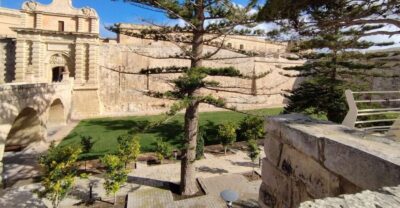


Mdina and Rabat Walking Tour inc. Catacombs and St. Paul’s Grotto
Read our review →Browse the lists this tour appears in