
Reviewed · BLUE GROTTO BOAT RIDES
Mdina and Rabat Walking Tour inc. Catacombs and St. Paul’s Grotto
Underground Malta plus silent Mdina.
This guided walk links Mdina’s medieval calm with Rabat’s story-packed streets, then drops you underground for St. Paul’s world.
I especially like how you get architecture you can actually point to, like the Cathedral of Saint Paul and the big palaces. And I like the small-group feel, max 25 people, so the guide can keep the flow and answer questions.
One thing to plan for: parts of the visit are underground, so expect stairs and uneven floors in the catacombs.
In This Review
- Key highlights at a glance
- Mdina and Rabat together: the Malta story in one loop
- Starting at Mdina Gate, then learning the city’s “rules”
- Mdina’s palaces and Cathedral of Saint Paul, up close
- Fortifications and Greeks Gate: the practical history you can see
- Rabat in the middle, churches and convents on quiet streets
- Wignacourt Museum underground: catacombs, WWII shelters, and St. Paul’s Grotto
- Walking comfort and weather reality in Malta
- Price and value: why $30.85 can still feel like a deal
- Who should book this tour, and who might want a different plan
- Should you book the Mdina and Rabat Walking Tour with catacombs and St. Paul’s Grotto?
- FAQ
- How long is the Mdina and Rabat walking tour?
- How much does the tour cost?
- Is the tour in English?
- What attractions are included at Wignacourt Museum?
- Will there be stairs during the tour?
- Where do I meet and where does the tour end?
Key highlights at a glance
- Small group touring (up to 25 people) keeps the pace easy to follow
- Cathedral of Saint Paul and key palaces in Mdina give you clear “what am I looking at” context
- Greeks Gate and the fortifications help you understand how Mdina protected itself
- Rabat’s churches and convent streets shift the mood without adding big travel time
- Wignacourt Museum underground stops include catacombs, WWII shelters, and St. Paul’s Grotto, with entry included
Mdina and Rabat together: the Malta story in one loop
Mdina and Rabat feel like two halves of the same sentence. Mdina is the island’s old seat of power, quiet and enclosed. Rabat breaks that mood with active streets and more churches and convents, so the culture keeps moving even when the big walls stay still.
What I like about combining them is that the guide can connect the dots fast. You’re not just seeing random buildings. You’re seeing how power, religion, and daily life overlapped on Malta over centuries, then shifting into the underground world tied to St. Paul.
Also, this is a walking format designed to keep you oriented. You start at Mdina Gate, then you work outward and back, so your brain builds a map as you go. That matters in Mdina, where lanes can look similar until someone points out what’s important.
More Guided Walks in Mdina

Starting at Mdina Gate, then learning the city’s “rules”
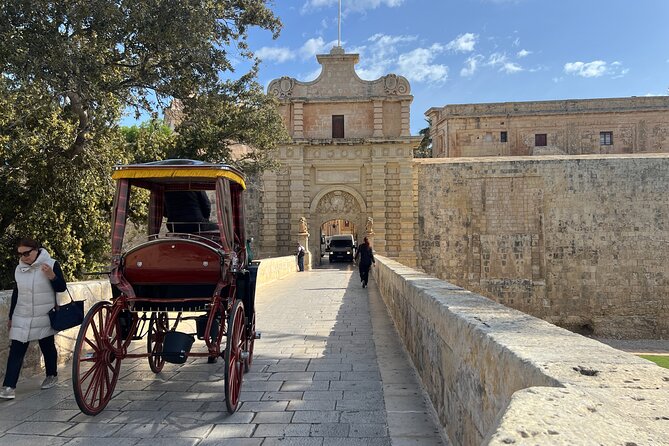
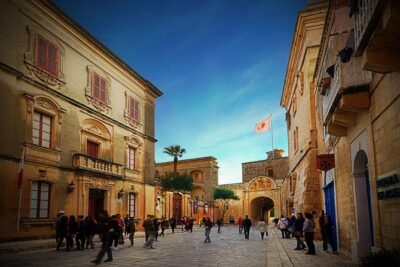
Your tour begins at Mdina Gate, a Baroque gateway that sets the tone right away. Even before you get into the tight streets, you’re basically being told how Mdina works: where visitors enter, where authority sits, and how the city’s medieval planning shapes your walk.
From there, you move through Mdina’s main highlights with a guide doing more than listing dates. A big reason people rate this tour so highly is communication. Guides in this program, including names like Mario, Matthew, Carmel, Ian, and Dylan, tend to explain Malta’s layers in plain language, not academic fog. You’ll hear about how Mdina has been inhabited since the Bronze Age and was Malta’s capital until the 16th century, which gives the buildings meaning instead of just good photo angles.
One practical note: there’s no hotel pickup or drop-off. So you’ll want to be at the meeting spot a few minutes early and use the public-transport-friendly location. The tour ends in central Mdina, which also helps if you want to keep wandering on your own afterward.
Mdina’s palaces and Cathedral of Saint Paul, up close
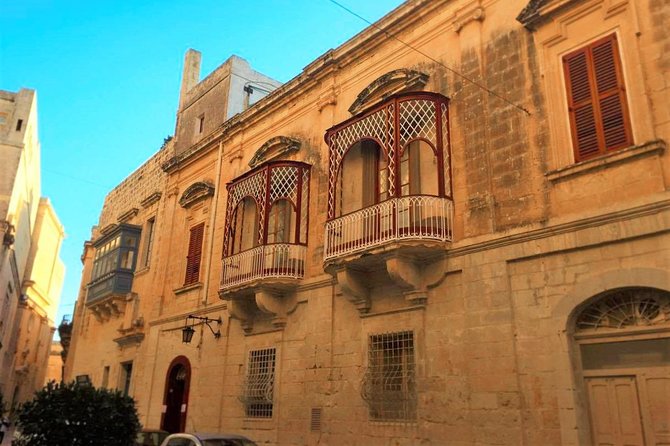
Mdina is famous for its “silent city” vibe, but the real magic is the way the architecture shows different eras side-by-side. On this walk, you pass major landmarks where styles and power signals are easy to spot once the guide frames them.
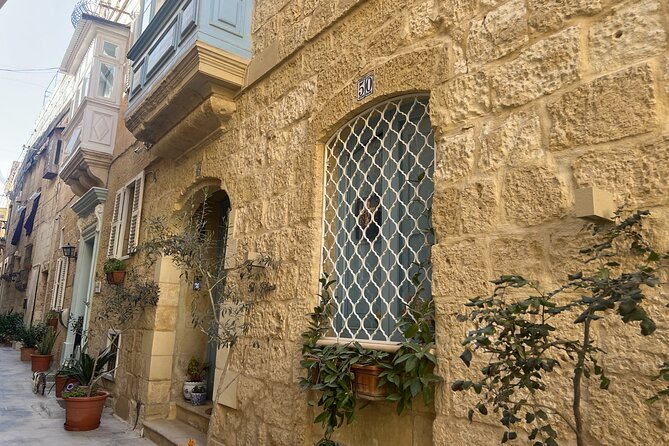
You’ll see the grand 13th-century Palazzo Falzon, which helps explain why Mdina looks like a capital even when it feels calm and sleepy. You’ll also admire Palazzo Santa Sofia, known for its elaborate façade and as one of Mdina’s oldest buildings. These stops are great because you can look up, notice details, and then hear the story behind them without needing to research on your phone.
Then comes the Cathedral of Saint Paul, a centerpiece stop. It’s one of those places that feels bigger than expected once you understand its role in Mdina’s religious life and identity. If you like architecture with context, this is the part that usually makes the tour feel worth it, even if you only have a short time in Malta.
You may also catch smaller “pause and notice” moments, like the Chapel of Saint Agatha, and viewpoints that connect the city to the wider island. One review even highlighted a rampart view over much of the island, and that kind of perspective is exactly why a guided route beats solo wandering.
Fortifications and Greeks Gate: the practical history you can see
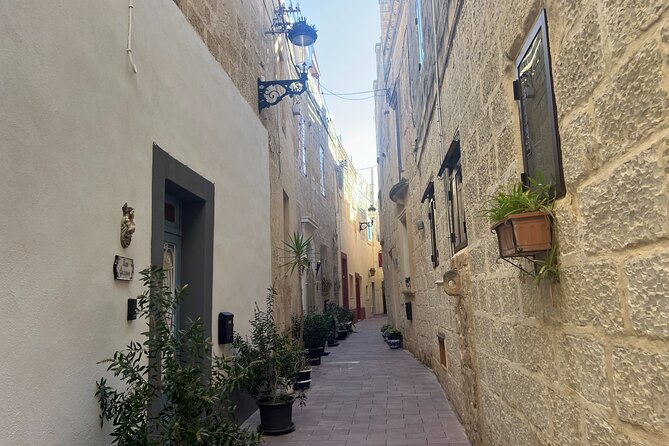
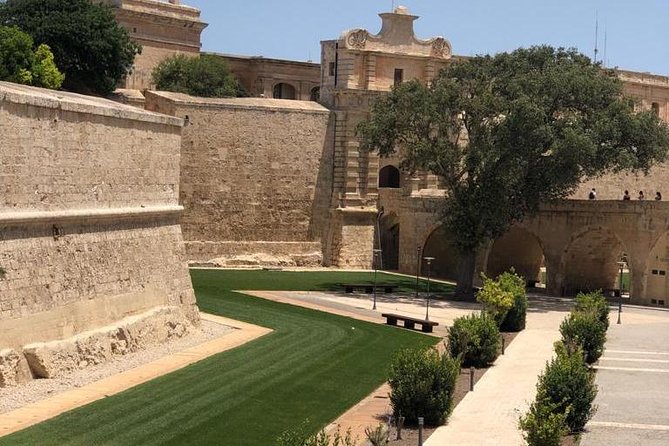
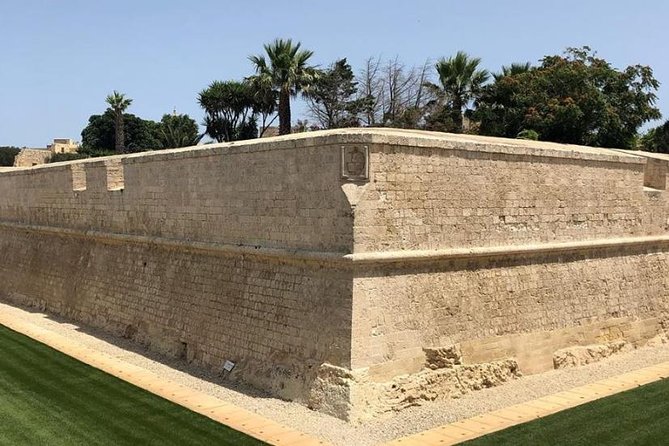
Mdina’s medieval fortifications are not just a background. They are part of why the city still feels like a stronghold instead of a museum set.
As you walk the area around the walls, the guide points out defensive logic and city layout. The highlight here is the Greeks Gate. Even if you’ve heard the name before, seeing it in context helps you understand how entrances were controlled and how movement into the city was managed.
This is the stop where the tour shifts from “pretty old buildings” to “how did this place survive?” And it’s also where the walking pays off. Views over the surrounding area, plus the sense of scale from the fortifications, help you picture the city’s importance when it mattered most.
If the weather is good, you’ll likely want a quick extra minute at the viewpoints. If it’s rainy, the guide should help you keep moving and still hit the meaningful photo points.
Rabat in the middle, churches and convents on quiet streets
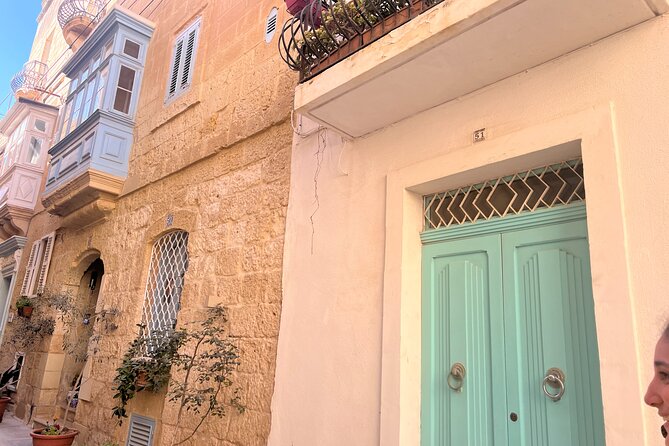
Right after you leave Mdina’s core mood, the walk heads into Rabat. This is a smart pacing move. Mdina is enclosed and quiet. Rabat is active with religious buildings, which means you get a cultural change without needing extra transportation.
In Rabat, you’ll walk through streets lined with churches and convents. It’s not just scenery. This part helps explain how communities lived and practiced faith around Mdina, especially across the religious geography that Malta is known for.
Rabat also sets you up for the underground portion, because the story of St. Paul connects the surface world to the caves below. So even though the Rabat walking portion is shorter, it works like a bridge. You go from streets and façades to tunnels and grottoes without the tour feeling random.
More Blue Grotto runs:
- Blue Grotto & Sunday Market at Marsaxlokk Fishing Village★ 3.6 · 803 reviews
- Malta: Marsaxlokk, Blue Grotto, and Qrendi Guided Tour★ 4.1 · 547 reviews
- Malta: Prehistoric Temples, Limestone Heritage & Blue Grotto★ 4.2 · 412 reviews
- Malta: Blue Grotto, Dingli, Rabat, Mdina, Ta Qali & Mosta★ 4.2 · 75 reviews
- Blue Grotto and Sunday Market at Marsaxlokk Fishing Village Tour★ 3.0 · 65 reviews
Wignacourt Museum underground: catacombs, WWII shelters, and St. Paul’s Grotto
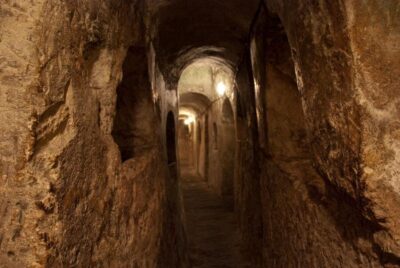
This is the real reason many people choose this tour. You don’t just stroll Malta’s surface landmarks. You enter Wignacourt Museum and visit underground spaces tied to three different chapters: the catacombs, WWII shelters, and St. Paul’s Grotto.
What makes this stop powerful is the contrast. Catacombs are tightly human in scale and atmosphere, WWII shelters bring a totally different survival story, and St. Paul’s Grotto adds religious meaning to the underground setting. When a guide explains how these pieces connect, it can change how you perceive caves that might otherwise feel like a novelty attraction.
A few practical things you should know before you go in:
- The underground areas involve stairs and moving in tighter spaces.
- The catacombs can feel small and have uneven floors, so comfortable footwear matters.
- It’s not designed as a “crawl slowly and look at everything forever” experience. You follow the group and the guide’s pace, which keeps it manageable but means you might not get unlimited time in each chamber.
If you like history with atmosphere, this is the portion that usually lands hardest. And in this tour, the guides tend to be passionate about what you’re seeing, so the underground doesn’t turn into a checklist.
Walking comfort and weather reality in Malta
A walking tour in Malta can be perfect, or it can be a slog, depending on the day. Here’s what to plan around based on the nature of the stops.
First, you’ll be walking through both cities, plus you’ll go underground. That means you need shoes with grip. The catacombs in particular can have uneven flooring, so sandals are a risk unless you’re very comfortable on rough surfaces.
Second, rain can change the experience. One common theme in feedback is that Mdina feels especially beautiful even when the weather isn’t ideal, but rain can also reduce how long you want to wander on your own. If it’s wet or cold, you’ll still get the guided highlights, but you may want to schedule extra time later if you care about unhurried wandering.
Third, the tour ends in central Mdina. That’s convenient. It also means if you want the full Mdina effect, plan a little extra time before or after the tour so you can slow down outside of the guided window.
Price and value: why $30.85 can still feel like a deal
At $30.85 per person for about 2 hours 30 minutes, this tour is priced for a short but structured day. The big value point is what’s included.
You’re paying for:
- a professional guide
- and included entry into the Wignacourt Museum portion covering catacombs, WWII shelters, and St. Paul’s Grotto
That included admission matters because it would cost extra if you tried to mix and match sights on your own. You also get the “interpretation layer” from the guide, which is often the difference between seeing underground rooms and understanding why they matter.
You still need to budget for food and drinks since nothing is included, and you’ll do your own wayfinding to the meeting point (no hotel pickup). But if you want a tight route that covers surface icons plus a serious underground visit, the price is reasonable for what you get.
Who should book this tour, and who might want a different plan
I think this tour is a great fit if you:
- want a guided overview of Mdina and Rabat without renting a car
- like history explained in a way you can actually use while looking at buildings
- care about the St. Paul connection and want it tied to real underground spaces
It’s also a good choice if you prefer small groups. With a maximum of 25 people, the route stays manageable and the guide can keep you together.
You might want to think twice if:
- you have mobility limitations with stairs, since the underground portion includes them
- you get uncomfortable in tight spaces with uneven footing, since the catacombs can feel cramped
- you hate walking and prefer long sit-down museum time instead of moving between multiple stops
If your main goal is just to linger in Mdina for hours, you’ll probably still love the sights, but you may want an extra block of personal time so the day doesn’t feel rushed.
Should you book the Mdina and Rabat Walking Tour with catacombs and St. Paul’s Grotto?
Yes, if you want a compact Malta day that mixes “pretty old city” with “wow, underground history.” This tour hits the essentials in a way that’s easy to follow, and the underground stops are the type you remember.
I’d book it especially if:
- you’re excited by architecture like Palazzo Falzon and Palazzo Santa Sofia, plus the Cathedral of Saint Paul
- you want the fortifications angle, including Greeks Gate
- you want Wignacourt Museum included, not added later
Before you go, do two small prep steps: wear shoes you trust on uneven ground, and bring a light rain layer just in case. If you do that, you’ll get the full Mdina-and-Rabat feeling, plus the underground part that turns the whole trip from sightseeing into a story you can picture.
FAQ
How long is the Mdina and Rabat walking tour?
The tour lasts about 2 hours 30 minutes.
How much does the tour cost?
The price is $30.85 per person.
Is the tour in English?
Yes, the tour is offered in English.
What attractions are included at Wignacourt Museum?
Entry is included for the catacombs, WWII shelters, and St. Paul’s Grotto.
Will there be stairs during the tour?
Yes. The catacombs, WWII shelters, and St. Paul’s Grotto are underground, so expect stairs.
Where do I meet and where does the tour end?
You meet at Mdina Gate in Mdina and the tour ends at Greek’s Gate in Mdina.
Mdina and the Silent City
- Malta: Mdina and Rabat Tour with Local Guide
★ 5.0 · 408 reviews - Mdina and Highlights of Malta Full Day Guided Tour Incl. Lunch and Transfers
★ 4.0 · 299 reviews - Mdina, Rabat, Dingli cliffs, San Anton gardens, Ta’ Qali & Mosta guided tour
★ 4.0 · 248 reviews - Mdina: St. Paul’s Cathedral and Mdina Museum Entrance Ticket
★ 4.5 · 89 reviews
Just landed: new Mdina pages




Blue Grotto Boat Rides, compared.
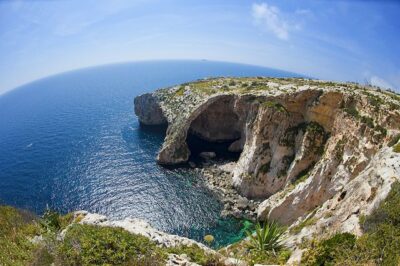
Blue Grotto & Sunday Market at Marsaxlokk Fishing Village
Read our review →
Marsaxlokk, Blue Grotto, and Qrendi Guided Tour
Read our review →
Prehistoric Temples, Limestone Heritage & Blue Grotto
Read our review →
Blue Grotto, Dingli, Rabat, Mdina, Ta Qali & Mosta
Read our review →
Blue Grotto and Sunday Market at Marsaxlokk Fishing Village Tour
Read our review →
Blue Grotto and Marsaxlokk Half-Day Tour from Valletta
Read our review →
Malta Private tour: 5hr Mosta Dome, Mdina, Dingli Cliff’s & Blue Grotto
Read our review →
Southern Malta: Blue Grotto, Hagar Qim, and Marsaxlokk Tour
Read our review →Browse the lists this tour appears in