
Reviewed · MDINA & THE SILENT CITY
Medina, Rabat and the pastizzi experience
A sleepy stone city hides serious history. This walking tour threads together Mdina and Rabat, then finishes with one of Malta’s best-loved snacks, pastizzi. It is a simple plan if you want big payback in a short afternoon.
What I like most is how the guide makes the sites feel connected, not like a checklist. You’ll spend your time in places that helped shape Malta from ancient times to early Christianity, and you’ll get the stories behind them while you’re still walking.
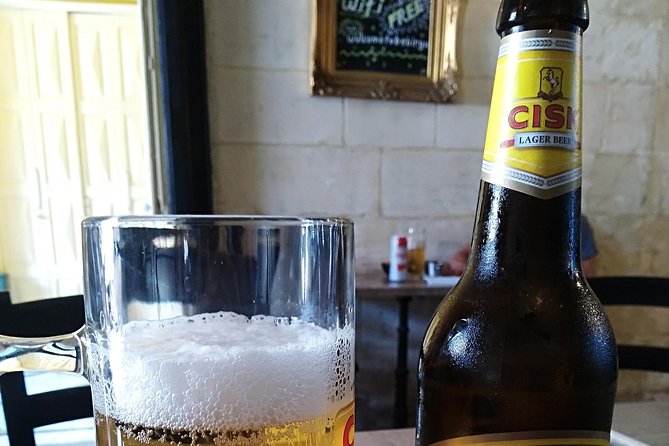
The second big win is the food at the end. The tour includes a pastizzi stop at Is-Serkin, and you can pair it with a hot drink or a cold beer depending on the season. The main thing to consider is that it’s a walking tour and the experience is said to need good weather, so wind and cold can make you work for every photo.
In This Review
- Key things that make this tour a smart Mdina to Rabat pick
- Mdina Gate, then Saint Paul’s Cathedral: where the story starts
- The old Universitas law courts and the fine-arts museum house
- Malta’s only Roman museum stop, and how it ties to Rabat
- Rabat and the catacombs: Melita, Christianity’s cradle, and burial sites
- Is-Serkin Crystal Palace Bar: pastizzi that feel like a local shortcut
- Guide energy and pace: why Julia stands out on this route
- Price and time value for a 2.5-hour Mdina and Rabat plan
- Who should book this tour, and who should rethink it
- Should you book the Medina, Rabat and Pastizzi tour?
- FAQ
- Where does the tour start?
- What time does it begin?
- How long is the experience?
- Is pastizzi included, and what do I drink with it?
- How many people are in a group?
- Is the tour affected by weather?
Key things that make this tour a smart Mdina to Rabat pick
- Mdina Gate to Rabat in one flowing route, so you do not need to shuffle between areas
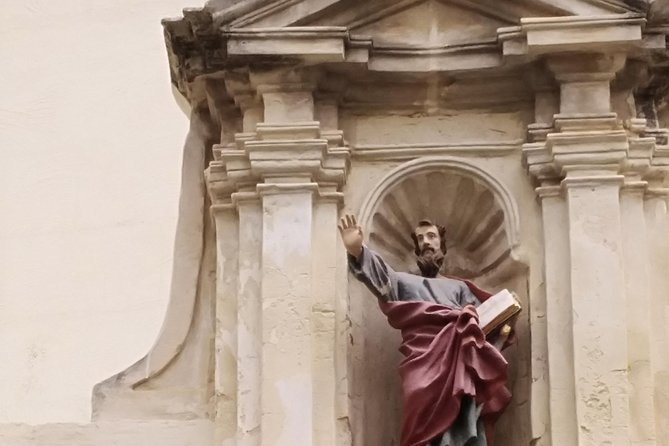
- St. Paul’s Cathedral site with ancient roots, occupied since the 9th century B.C.
- The only Roman museum in Malta, which gives Rabat’s Roman link more weight
- Rabat catacombs and early Christian context, including the fact that most burial sites are found in Rabat
- Is-Serkin pastizzi stop with drink pairing, with pastizzi and time to enjoy it
- Small group size (max 6), which helps questions and keeps the pace comfortable
Mdina Gate, then Saint Paul’s Cathedral: where the story starts
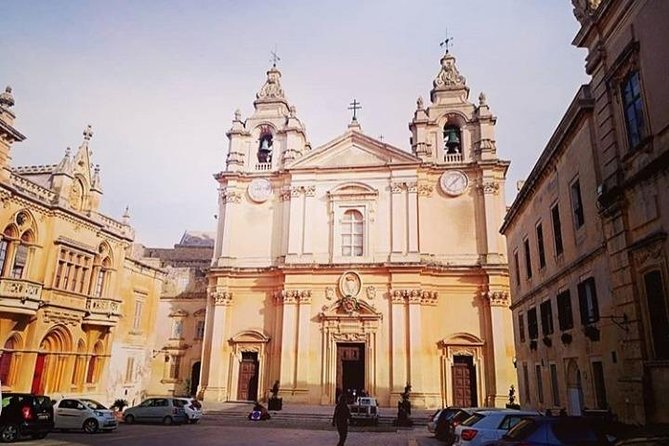
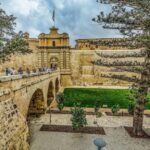
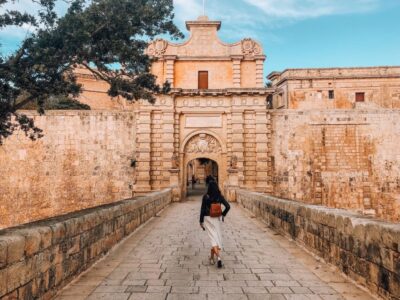
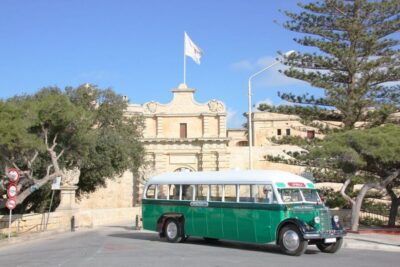
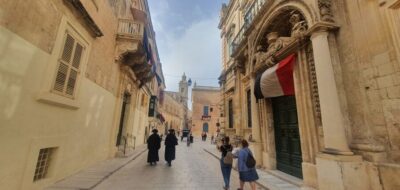
Your tour begins at Mdina Gate, right by the old city entry where you can quickly get your bearings. From there, you work your way into Mdina’s quieter rhythm. This is not a chaotic stop-and-go kind of day. It is more like a guided walk through a layered city, where each turn explains another era.
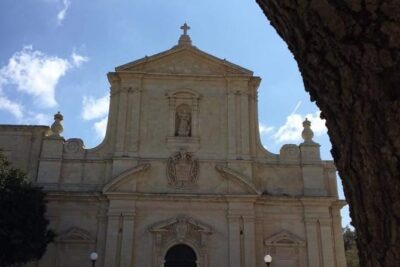
The first major stop is St. Paul’s Cathedral, described as the most important church among Malta’s 365 churches. What matters here is the continuity of place. The same site has been occupied since the 9th century B.C., so when you look around, you are seeing a long timeline of settlement and power, not just a pretty facade.
If you like history that makes sense in real space, this opening is a good move. You start with a landmark people recognize, then the guide uses that anchor to point out how Malta’s religious and civic life changed over time.
One small practical note: because Mdina is compact but stone-heavy, wear shoes that handle uneven ground and slick patches if the weather is iffy.
More of Mdina and the Silent City:
The old Universitas law courts and the fine-arts museum house
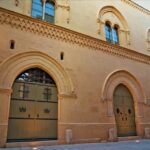
After St. Paul’s, you continue to a spot tied to governance: the old law courts of the Universitas. In medieval times, the Universitas was the feudal government setup, so this is where you can connect daily life to power structures. Even if legal history is not your usual topic, this stop gives you a way to understand why towns like Mdina worked the way they did.
Next comes an older house in Mdina, noted as one of the oldest, now used as a museum for fine art collections. I like this transition because it shifts the focus from authority and politics to everyday people and cultural life. A museum inside a historic house also helps you picture how space was used, rather than treating the building like a postcard.
At this stage of the walk, you can also start noticing how Mdina’s layout shapes movement. The guide’s pacing makes it easier to slow down long enough to take in details, then move on without feeling rushed.
Malta’s only Roman museum stop, and how it ties to Rabat
You then reach one of the tour’s standout claims: the only Roman museum in Malta. That alone is a reason to care, but the bigger value is how it supports what you will see later in Rabat.
Both Mdina and Rabat are linked to the Roman city of Melita. When you get to the Roman museum while you are still in Mdina, Rabat’s later Roman and early Christian story makes more sense. You are not just hearing names. You are building context in the order the tour gives it to you.
If you enjoy artifacts and labels, this stop is your chance to slow down and actually look. If you prefer the human story side, the museum still helps because it gives evidence behind the guide’s narrative.
A possible drawback here is that museum time is never as long as you might want. The tour is built to cover multiple sites in about 2 hours 30 minutes, so think of this as the highlights version, not a full, museum-day experience.
Rabat and the catacombs: Melita, Christianity’s cradle, and burial sites
Next you move to Rabat, described as Mdina’s suburb. The tour positions both places as part of Roman Melita, then flips to Rabat’s later role in religion. Rabat is called the cradle of Christianity in Malta, and you feel the focus shift as you move from Mdina’s civic-religious centerpiece into Rabat’s sacred landscapes.
The Rabat stop is 45 minutes, and admission is noted as free for this portion. That matters for value. You are paying for the guide and the walking plan, while at least one chunk of the time comes with admission-free entry.
From there, you visit the Christian catacombs of Rabat. The catacombs are where burial places are found, and the tour information notes that the vast majority of these burial sites are located in Rabat. This is one of those moments where the guide’s tone really matters. You are not just passing another attraction. You are learning how early communities honored the dead and why Rabat became so important.
Practical advice: catacombs can involve stairs and dimmer spaces. Even if you are comfortable, plan for slow movement. If the day is hot, you might also want a bottle of water, since you spend time between stone stops and streets.
Is-Serkin Crystal Palace Bar: pastizzi that feel like a local shortcut
The finale is at Is-Serkin Crystal Palace Bar, where you get a chance to experience pastizzi as a proper local snack. Pastizzi is described as the most delicious snack in Malta and also the cheapest way to eat. The tour also frames Is-Serkin as the place to get the best version.
This is not a random stop for marketing reasons. It is built into the logic of the day. The morning and early afternoon are heavy on old buildings, ancient occupation, Roman links, and early Christianity. Pastizzi gives you the opposite. It is quick comfort, a real taste of Malta, and it’s included.
The pastizzi segment is about 20 minutes, and admission is included. The tour also sets you up with a drink pairing, described as a seasonable glass of tea, coffee, or beer. That means in winter you can go hot with tea or coffee, and in summer you can go cold with beer.
I like that the tour gives you a short, clear window to eat and reset. You are not rushed out after one bite, and you get a moment to enjoy something you can repeat later on your own.
Off the same quay, a different boat:
- Malta: Gozo & Comino Islands, Blue Lagoon & Seacaves Tour★ 4.5 · 15,672 reviews
- Comino: Blue Lagoon, Crystal Lagoon, and Seacaves Tour★ 4.6 · 5,673 reviews
- Malta: Blue Lagoon, Beaches & Bays Trip by Catamaran★ 4.7 · 5,496 reviews
- Malta: Gozo, Comino, Blue & Crystal Lagoon, & Caves Cruise★ 4.6 · 5,092 reviews
- From Malta: Full-Day Gozo UTV Tour with Lunch and Boat Ride★ 4.6 · 4,408 reviews
Guide energy and pace: why Julia stands out on this route
The success of a walking tour depends on the guide. In this case, the guide quality is one of the tour’s strongest points, with Julia singled out as polite, friendly, kind, understanding, and very well informed. She is also described as funny and easy to keep up with, which is exactly what you want when you are moving through compact historic areas.
There’s also mention of Silvia as a guide, and since the experience provider is Silvia from Excursiones en Malta, you are in good hands if you value smooth guiding and clear explanations. The overall vibe from the information you have here is that you get more than dates. You get culture context, plus practical notes on how Maltese people connect food, daily life, and places.
What this means for you: a small group of up to 6 travelers makes it easier for the guide to match the pace to the group and answer questions without losing the flow of the route. If you worry you’ll be left behind on stairs or tight streets, this tour design helps.
Also, because the time is scheduled for the afternoon (start time 2:30 pm), it can be a nice way to balance your day. You get history without using your whole travel day, and you still have enough energy to keep exploring afterward.
Price and time value for a 2.5-hour Mdina and Rabat plan
At $65 for about 2 hours 30 minutes, the value comes from three things working together: the number of sites, the guide attention, and the included food.
You are covering Mdina and Rabat in one guided walk. That is usually where self-guided days cost you time and effort, because you have to plan, navigate, and figure out what is worth your energy. Here, the route is built so that each stop supports the next one, like the Roman museum setting up Rabat catacombs.
Snacks are included, and pastizzi is specifically included at the end. That is not just convenience. It changes how you experience the afternoon. You spend the day walking and learning without needing to hunt for an affordable meal, and you get a classic Maltese bite at a known spot.
One more value point: the Rabat portion includes free admission for that segment. Even if you do not treat that as a money saver, it signals that the tour is not just piling on paid entries with no breathing room.
The main cost-related consideration is your pace. If you prefer long museum time or deep reading, this half-day format may feel a bit tight. But if you want a guided sampler that still feels meaningful, it’s a fair trade.
Who should book this tour, and who should rethink it
I think this tour is ideal if you want a short, guided day that connects Mdina, Rabat, Roman-era Malta, and early Christianity, then rewards you with pastizzi. You’ll also like it if you enjoy food that is local, simple, and eaten by regular people, not just in theory.
You might rethink it if you dislike walking or if you are sensitive to wind and cold, since the experience is said to require good weather. Stone cities can feel chilly even when the forecast looks okay, especially in the afternoon.
If you have food allergies, the tour information asks you to advise when booking. That is your cue to communicate early so the snack portion works for you.
Should you book the Medina, Rabat and Pastizzi tour?
Yes, if your goal is a high-value afternoon that blends history and a real food payoff. I’d book it if you are staying in Malta with limited time and you want to cover Mdina’s core landmarks, then move to Rabat to understand why the catacombs matter. The small group size, the guide emphasis, and the included pastizzi stop make this feel like a complete experience rather than just a walk between points.
If you have plenty of time and you love lingering, you might prefer to do the sites separately. But for most people, this route is a smart way to get oriented fast and eat something you’ll remember.
FAQ
Where does the tour start?
The tour starts at Mdina Gate (VCM3+V9W), Mdina, Malta.
What time does it begin?
The start time is 2:30 pm.
How long is the experience?
The duration is about 2 hours 30 minutes.
Is pastizzi included, and what do I drink with it?
Pastizzi is included at Is-Serkin Crystal Palace Bar. The tour description also mentions pairing it with a seasonable glass of tea, coffee, or beer.
How many people are in a group?
The tour has a maximum of 6 travelers.
Is the tour affected by weather?
Yes. The experience requires good weather. If it is canceled due to poor weather, you will be offered a different date or a full refund.
Just landed: new Malta pages
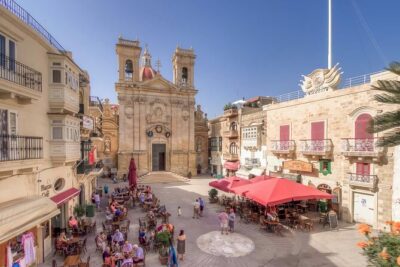



Mdina & the Silent City, compared.
Highlights of Malta & Mdina Full Day Tour with Lunch
Read our review →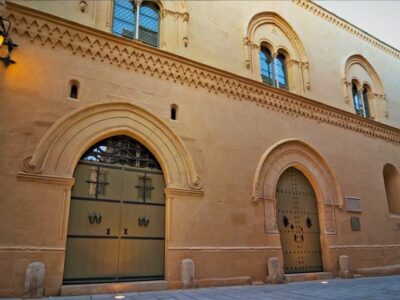
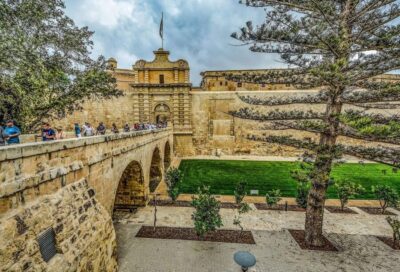
Mdina, Dingli Cliffs and San Anton Botanical Gardens
Read our review →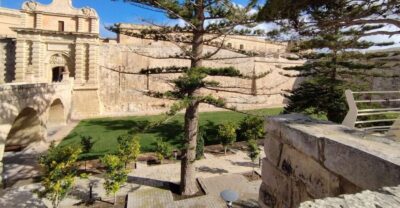
Mdina and Rabat Walking Tour inc. Catacombs and St. Paul’s Grotto
Read our review →Browse the lists this tour appears in