
Reviewed · WALKING TOURS
Valletta Private Walking Tour
Valletta moves fast, but it sticks. This private 1.5-hour walk threads UNESCO heritage through the places that shaped the Knights of St. John and the city’s later survival. I like that it’s built around a tight route you can actually digest on foot, with St. John’s Co-Cathedral and Republic Street pulling the story forward without rushing you.
Two things I really enjoy: the guide’s focus on how Valletta’s past connects to daily life, and the way the tour tackles wartime resilience and the effects of Second World War bombings in a human, understandable way. You’ll also get to see the Palace Square scene, including the singing fountain and the traditional karozzin (horse-drawn carriages), which makes the history feel real instead of frozen in stone.
One drawback to plan for: entrance fees are not included, so if you want to go inside any paid sites along the route, you’ll need to budget extra.
In This Review
- Key things worth knowing before you go
- Why this Valletta walk works so well in 90 minutes
- Palace Square, the singing fountain, and the “gentlemen for gentlemen” idea
- St. John’s Co-Cathedral, built like a fortress of faith
- Republic Street, City Gate, and how Valletta’s medieval layout shapes your walk
- Wartime resilience: how WWII bombings changed the city’s story
- Hastings Gardens and the big panorama over Malta’s waterfront towns
- Manoel Theater, Europe’s third-oldest working theatre
- What the private format really changes for your experience
- Price and value: is $294 per group worth it?
- Best fit: who should book this Valletta tour
- Should you book the Valletta Private Walking Tour?
Key things worth knowing before you go
- Palace Square is the start line: the music fountain area sets the tone with classic Valletta sights and movement.
- Knights of St. John context is the backbone: you’ll learn why their influence still shapes streets, buildings, and symbols.
- St. John’s Co-Cathedral is described differently on purpose: think fort-like strength, not just a church interior vibe.
- Republic Street is the pedestrian core: it’s where the medieval city meets everyday strolling.
- Hastings Gardens delivers big city views: you’ll look out over Floriana, Msida, Sliema, and Manoel Island.
- Manoel Theater is a standout stop: it’s Europe’s third-oldest working theatre, so it feels alive, not museum-still.
Why this Valletta walk works so well in 90 minutes
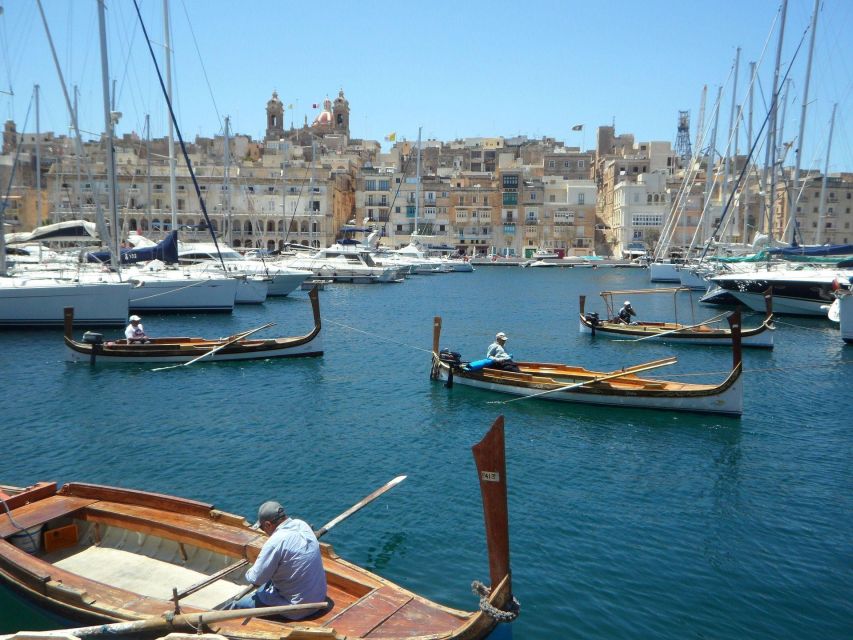
Valletta is tiny, and that’s the whole trick. UNESCO describes the capital as one of the most concentrated historic areas in the world, which means you can go from major landmark to major landmark without long transfers. This tour leans into that advantage with a compact route that still hits the city’s power points: the Knights, the dramatic architecture, the street life, and the WWII scars.
You also get a private setup, meaning your local professional guide is with your group only. That matters more than people think. In a place like Valletta, details are everything, and you’ll want a guide who can connect building, name, legend, and historical turning points into a clear story you can follow while you walk.
The pacing is short, too. At 1.5 hours, you’re not signing up for a full-day commitment, which makes this a smart choice if you’re pairing Valletta with other stops on Malta. If your legs are fresh, it’s a strong way to get your bearings fast, then roam on your own afterward.
More Guided Walks in Valletta


Palace Square, the singing fountain, and the “gentlemen for gentlemen” idea
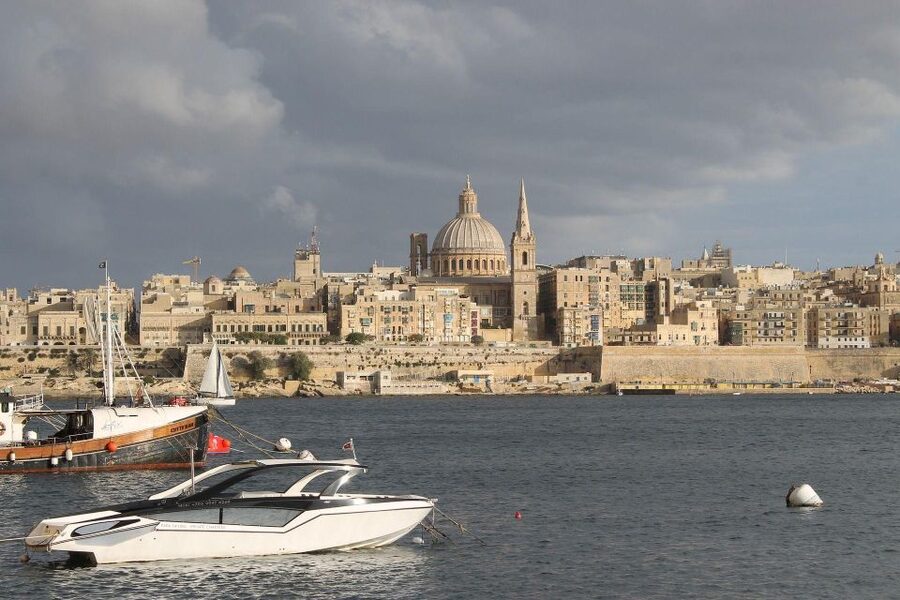
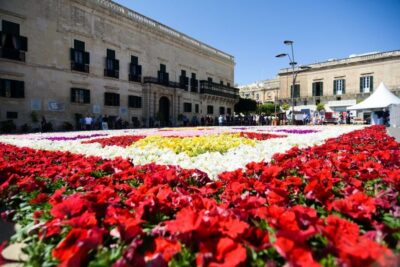
Your tour begins in Palace Square by the music fountain, at the Grandmaster Palace Courtyard. Start there and you immediately get a Valletta snapshot: grand official space right next to everyday movement. It’s a great opening because the square doesn’t feel like a dead monument. You’ll see the singing fountain, and you may spot traditional horse-drawn carriages called karozzin, the kind of local touch that makes the city feel lived-in.
This is also where the story gets political in an interesting way. Valletta was founded by the Knights of St. John, and the tour frames the city as one built by the gentlemen for the gentlemen. That phrase is more than a slogan. It helps you read the architecture and layout with the right mindset, like you’re seeing a plan for power, control, and identity, not just beautiful old stone.
If you’re the kind of traveler who likes your history grounded in real place names and visible choices, this start will click. You’ll be positioned to understand why later landmarks feel the way they do, especially the cathedral stop and the medieval street network.
Practical tip: arrive a few minutes early so you can orient yourself before the walking starts. Palace Square can have activity around the fountain area, and you’ll want an easy meeting moment.
St. John’s Co-Cathedral, built like a fortress of faith
Next up is St. John’s Co-Cathedral, built by the Knights of Malta in the 16th century. The tour’s description is specific, and it’s useful: it’s more similar to a military fort than a typical church. That wording changes how you look at the building. You’re not just seeing religion, you’re seeing a power base, where faith and authority were designed to reinforce each other.
The Knights period isn’t abstract here. The guide ties their legacy to what you’re walking past and what you’re meant to notice. This is also one of those stops where a good guide helps you avoid the common mistake of treating the cathedral as only a photo background. Instead, you’ll learn how to connect the architecture to the values the Knights promoted.
Because entrance fees are not included, plan your expectations. If you want to go inside, you may need to pay separately. If you prefer a lighter approach and mostly focus on exterior viewing, you can still get a strong narrative out of the stop, since the tour is built around guiding stories as much as physical access.
Republic Street, City Gate, and how Valletta’s medieval layout shapes your walk
After the cathedral, you’ll move along Republic Street, Valletta’s main pedestrian area. This is where the city’s medieval structure meets modern strolling. It’s a good shift in tempo from fortress-like imagery into something more human scale, where you’re moving through a street designed for people, not just for ceremonies.
From there you’ll pass the City Gate, which is identified as a UNESCO World Heritage site. A gate is never just a doorway. It’s a boundary marker and a statement about who controlled movement. When you pair the City Gate with the Knights-of-St.-John context from earlier, it starts to make sense why Valletta’s strong identity shows up in places that might otherwise feel like simple architecture.
This section is also where the guide’s talent for turning local legends into something you can picture becomes obvious. You’ll hear medieval tales tied to how the city operated and how it was defended. If you like cloak-and-dagger storytelling, this is the kind of tour moment where it feels perfectly matched to the stonework and the narrow street feel.
Wartime resilience: how WWII bombings changed the city’s story
One of the most valuable parts of this tour is the way it addresses the effects of the Second World War bombings on Valletta. Malta’s story in WWII is not a distant footnote. It directly shaped buildings, public spaces, and the way the city moved forward afterward.
On a walking tour, these moments work best when they’re tied to physical surroundings. That’s what this tour aims to do. You won’t just hear dates and casualty numbers. You’ll learn about wartime resilience in a way that makes you look at the city’s survival as part of the living landscape, even if you’re not entering any museums.
This is especially helpful if you’re visiting for the first time. You’ll get a framework for understanding why Valletta looks the way it does today, and why some places feel like they carry more weight than you’d expect from a small island city.
Off the same quay, a different boat:
- From Malta: Full-Day Gozo UTV Tour with Lunch and Boat Ride★ 4.6 · 4,408 reviews
- From Malta: Full-Day Gozo Quad Tour with Lunch and Boat Ride★ 4.8 · 1,419 reviews
- Valletta: Street Food and Culture Walking Tour★ 4.8 · 1,251 reviews
- Gozo Full-Day Jeep Tour with Private Boat to Gozo & return★ 4.5 · 1,048 reviews
- Valletta: City Walking Tour in a Small Group★ 4.9 · 957 reviews
Hastings Gardens and the big panorama over Malta’s waterfront towns
Then comes one of the smart pacing choices: Hastings Gardens. After time on streets and landmark façades, you get a panoramic view that helps your brain map Valletta’s position in the broader area.
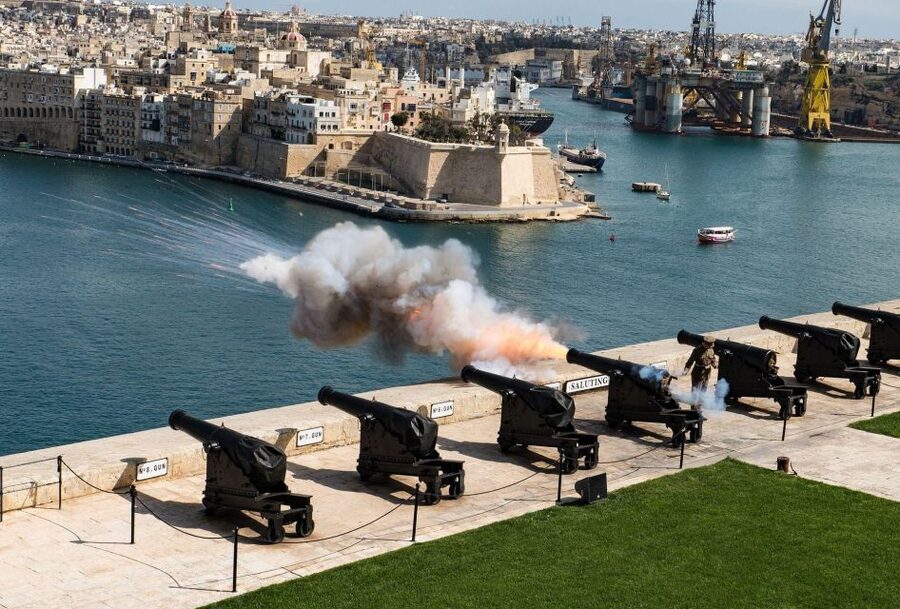
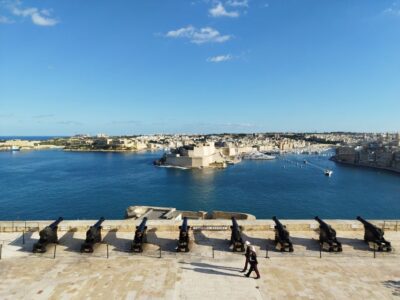
From this viewpoint, you’ll look out over Floriana, Msida, Sliema, and Manoel Island. Even if you don’t plan a full waterfront day, this view is practical. It helps you understand where the city sits and how nearby towns relate to each other. That kind of spatial clarity makes your later self-guided wandering easier.
It also gives you a break from the urban density. Valletta can feel tightly packed, and a short scenic lookout resets you. If you’re traveling with anyone who gets tired of walking quickly between buildings, this is a nice decompression stop.
Manoel Theater, Europe’s third-oldest working theatre
Your tour also includes a stop at Manoel Theater, described as Europe’s third-oldest working theatre. That phrase matters because it signals continuity. This isn’t just a historic building with occasional displays. It’s a place tied to ongoing cultural life.
The guide uses this stop to connect medieval tales and crusades with something more present-day. It’s a reminder that Valletta isn’t only about what happened centuries ago. The city still runs on schedules, performances, and regular local movement.
From a traveler standpoint, this is a great “human scale” ending. After Knights, gates, and wartime endurance, a working theatre gives you a different kind of appreciation: not only survival, but also ongoing community rhythm.
What the private format really changes for your experience
This is a private group tour, and the guide stays with you only. That sounds like a nice perk, but it affects the whole feel of the walk.
In a UNESCO-heavy place like Valletta, questions can come up fast. You’ll notice a detail, want to know what it signals, and then want to ask how it connects to Malta’s destiny shaped by diverse nations over time. A private guide can adjust. You can get the answer now, not later, and the walk stays coherent.
Also, the tour mentions possible customizing on the spot with your guide. That’s useful when you’re a couple, a small family, or a group with mixed interests. If one of you cares more about Knights and legends, and another is more focused on wartime resilience, you can often steer the emphasis without changing the core itinerary.
Price and value: is $294 per group worth it?
The price is $294 per group up to 15 for 1.5 hours. That model is important. This isn’t priced per person. It’s priced per group, which can be good value if you’re traveling with others and can fill the group cap.
For a small party, the “per person” cost depends on how many people are in your group. If you’re just one or two people, it will likely feel like a premium, because you’re paying for guide time rather than splitting it. If you’re a family of four or friends traveling together, the value tends to look better because the cost spreads and you still get that private, question-friendly guide experience.
Entrance fees are not included, so your final budget may rise if you want to enter paid sites. Still, you’re paying for a guided story through key UNESCO-related stops, the kind of value that often costs more when you try to piece it together yourself with a self-guided map.
In short: if you’re visiting Valletta and want an efficient route with strong context, this price can make sense, especially for groups.
Best fit: who should book this Valletta tour
This tour is a strong match if you:
- Want a fast, guided orientation to Valletta’s UNESCO core
- Like history told through place, not just dates
- Prefer private pacing over joining a large group
- Are curious about Knights of St. John, local legends, and how WWII shaped the city
- Appreciate viewpoints and architectural interpretation, not just photos
It might be less ideal if you want a long, slow crawl through every side street and museum interior. This is a focused walk. You’ll see major landmarks and learn the story behind them, but it’s not designed to replace a full day of independent exploring.
Should you book the Valletta Private Walking Tour?
I’d book it if you want a clear, guided route through Valletta’s biggest “why it matters” moments in a short time. The combination of Palace Square, St. John’s Co-Cathedral, Republic Street, City Gate, Hastings Gardens views, and a stop at Manoel Theater gives you variety without losing the main thread. And the guide’s emphasis on Knights of St. John, local legends, and WWII resilience gives the walk more depth than a typical landmarks-only stroll.
Skip it only if your top priority is paid interior time at multiple sites, since entrance fees are not included and the overall duration is limited. If that’s your style, you may pair this with a separate plan for any interiors you care about most.
If you tell me your travel dates and how many people are in your group, I can help you judge whether the per-group pricing will feel like a great deal for your specific party size.
Just landed: new Valletta pages


Walking Tours, compared.


Guided Walking Tour with Optional Cathedral Tour
Read our review →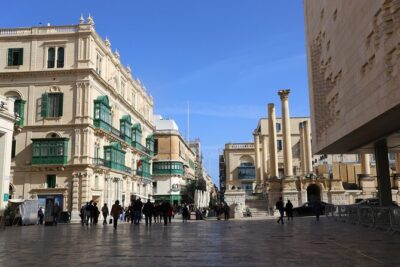
The Valletta Street Food and Culture Walking Tour
Read our review →Browse the lists this tour appears in