
Reviewed · WALKING TOURS
Valletta World War II Private Walking Tour
Valletta gets dark fast. This private WWII walking tour strings together the Siege of Malta story from 1940 to 1943 with the exact monuments and bomb-scarred spots you see today. I love that you get a focused, human-scale route, not a rushed checklist of plaques.
What I especially like is the private guide factor. I like how guides such as Matthew and Mario bring the material to life with personal, Malta-centered storytelling, and then they keep a gentle pace with breaks, even though it is still a lot of walking on old stone. One consideration: this is an outdoor route with uphill moments and some stairs, so you will want solid shoes and a decent walking level.
In This Review
- Why This WWII Walk Feels Personal in Valletta
- Key Points to Know Before You Go
- Meeting at Valletta’s City Gate, Then Turning the Clock Back
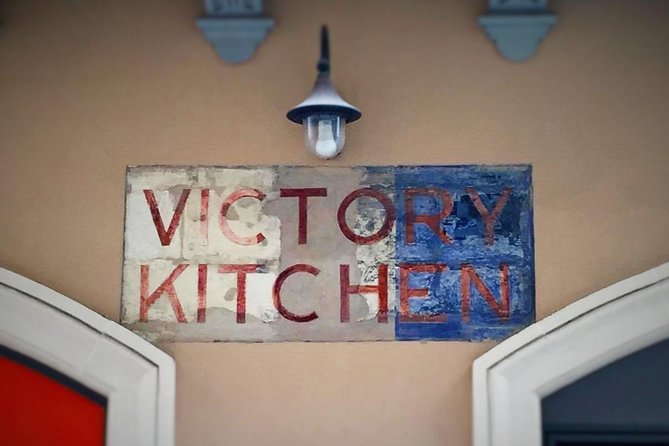
- Siege of Malta Stops: Siege Bell, Tunnels, and Victory Kitchens
- Ruined Royal Opera House and Why These Details Matter
- Illustrious Blitz and Grand Harbour Battles, Explained on Foot
- St Elmo and the National War Museum: George Cross in View
- Walking Practicalities: Shoes, Heat, and Real Stone
- Price and Value for Up to Four People
- Who This Tour Fits Best
- Book or Skip: My Decision Guide
- FAQ
- How long is the Valletta World War II Private Walking Tour?
- Is this tour private or shared?
- What is the group size limit?
- Where does the tour start and end?
- What language is the tour offered in?
- What is included in the tour price?
- Is the National War Museum included?
- Is hotel pickup or drop-off included?
- What refund options do I have if I cancel?
- What walking level should I expect?
Why This WWII Walk Feels Personal in Valletta
This tour is priced per group (up to 4), which is a big deal in Malta where “private” can sometimes mean overpriced or still basically shared. Here, you really get one guide for your group, and that changes the vibe, especially for heavy topics like bombing, hunger, and survival.
You will also see more than the headline sites. The route is built around the Siege of Malta, the tunnels under Valletta for shelter, and the community “Victory Kitchens” created to feed people. You even get a guided visit to the National War Museum at Fort St Elmo, where you can view the 1942 George Cross among other WWII exhibits.
Key Points to Know Before You Go
- Private group up to 4 people means you can ask questions and set the pace
- 3 hours outside gives you real context as you walk past wartime landmarks
- Siege of Malta focus (1940 to 1943) covers the timeline of bombardment and survival
- Siege Bell monument and Grand Harbour views connect the story to the geography
- Optional National War Museum (ticket extra) adds official artifacts, including the 1942 George Cross
- Guides like Matthew and Mario are local, story-driven, and tend to keep it engaging
More Guided Walks in Malta:


Meeting at Valletta’s City Gate, Then Turning the Clock Back
You meet your guide in central Valletta near the city gate area. The tour’s listed starting point is Valletta City Gate, while the mapped meeting point is Victoria Gate, both in the same old-town zone. Translation: don’t overthink it. Plan to arrive a few minutes early so you can find your guide quickly and start on time.
From the first minutes, the tour sets the historical frame. Malta’s war years are tied to Italy’s entry in 1940 when Mussolini declared war, turning the island into a strategic stepping stone for Axis plans in North Africa. Valletta, and Malta generally, didn’t just suffer occasional raids. It became one of the most intensively bombed areas in WWII, with the Axis powers aiming to bomb the population into submission and to starve the island.
That context matters because you will be walking through a city that looks timeless. Honey-colored limestone and baroque angles are beautiful, but this route forces your brain to read the scars, the memorials, and the survival infrastructure as part of the same story.
Siege of Malta Stops: Siege Bell, Tunnels, and Victory Kitchens
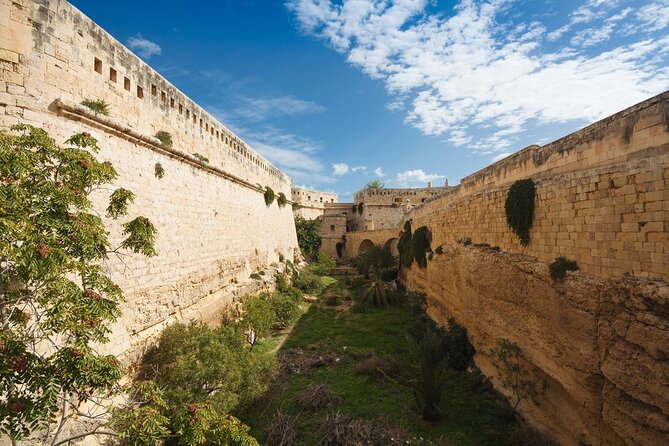
The heart of the experience is the Siege of Malta period, roughly 1940 to 1943. Your guide connects specific sites to what life likely felt like week to week during bombardment.
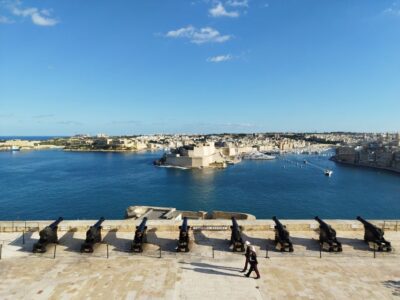
One of the emotional highlights is the Siege Bell Memorial overlooking the Grand Harbour. It is the kind of viewpoint that makes the war feel real because you see the harbor space that attackers targeted and the coastline where Malta had to endure. The bell itself symbolizes readiness and alarm, but the guide usually ties it to the day-to-day reality of waiting, protecting residents, and reacting to raids.
You will also learn about the tunnels built under Valletta for shelter. Even if you never go “deep underground” during the walk, the explanation gives you a practical sense of how the city adapted. In places like this, tunnels are not just a curiosity. They are infrastructure. They represent how communities tried to stay alive long enough to keep going.
Then comes the Victory Kitchens idea, community kitchens created to feed people. I like this part because it shifts the story from bombs to maintenance. You see that survival was also about feeding neighbors, keeping routines, and doing the unglamorous work that prevents total collapse.
Ruined Royal Opera House and Why These Details Matter
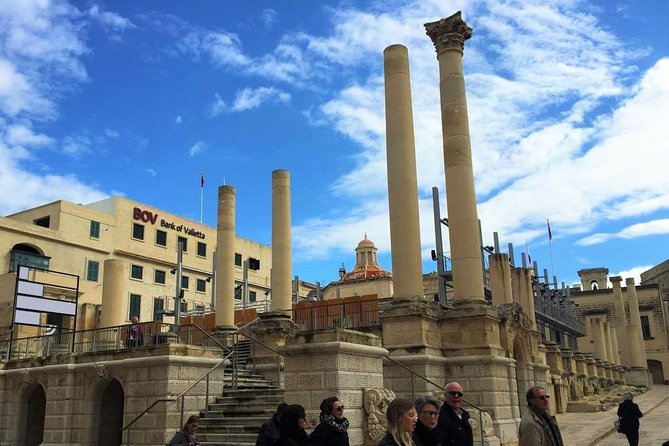
Your route includes the shell of the Royal Opera House, destroyed in a 1942 German bombing raid. It sounds almost too straightforward on paper, but on the ground the ruin lands differently. Even if you do not think of the opera as a “war site,” it becomes one because the bombardment did not spare daily culture.
A good guide will help you connect that destruction to what was at stake. During a siege, symbols of normal life and morale get hit because attackers want more than damage. They want fear, disruption, and the sense that life can’t go on.
As you walk, you will also stop at memorials and commemorative statues tied to the wartime narrative. Don’t treat these as just photo stops. Use them as anchor points for the stories your guide tells, especially the way different events build on each other across 1940 to 1943.
Illustrious Blitz and Grand Harbour Battles, Explained on Foot
Malta’s WWII story includes several named events, and this tour threads them into your walking route. Two of the headline moments you will hear about are the Battle of Grand Harbour and the Illustrious Blitz.
The Illustrious Blitz is tied to 1941, when the Axis powers repeatedly bombed the HMS Illustrious aircraft carrier in the Valletta area. The point here is not just that a ship was attacked. It is that Valletta’s harbor and logistics were central to the wider war at sea and in the Mediterranean. Your guide helps you see Malta not as an isolated island, but as a player in a much bigger chain of battles.
You will also hear about the San Marija Convoy, another event connected with Malta’s supply and survival. Convoys matter because Malta’s endurance depended on getting supplies through while facing relentless pressure.
This is also where private guiding really pays off. As you walk from monument to monument, you can ask: Why did this happen here? What was the island trying to do? What changed over time? A group tour often doesn’t give you room for that. Here, your guide can shape the pace around your questions.
Other ways to spend a sunny hour in Malta
- Private Boat Tour: Crystal Lagoon, Blue Lagoon, Comino and Gozo★ 5.0 · 1,077 reviews
- Gozo Full-Day Jeep Tour with Private Boat to Gozo & return★ 4.5 · 1,048 reviews
- Private Day Sailing Boat Charter★ 5.0 · 662 reviews
- Gozo Full-Day Quad Tour with Private Boat to Gozo & return★ 4.5 · 627 reviews
- Mellieha: Popeye Village with Optional Private Transfers★ 4.6 · 551 reviews
St Elmo and the National War Museum: George Cross in View
About two-thirds of the way through (depending on timing and the pace of your group), you transition to Fort St Elmo for the National War Museum. This part is guided and listed as about an hour.
The museum ticket is not included in the tour price, so you should budget extra. But the guided visit is the difference between a quick self-guided walk and a “you will understand what you are looking at” museum hour. Several guides on this route have been praised for walking through the museum with their group and focusing on the most important exhibits.
The museum is where you can see the 1942 George Cross medal awarded to the population for courage. That medal is not just a trophy case moment. It ties the siege narrative to recognition and official documentation of Malta’s endurance.
You will also encounter audio-visual material and exhibits about the struggle to get supplies to the island. That theme connects tightly to the convoy stories you hear on the street. By the time you reach the museum, the timeline stops feeling like isolated facts.
Tip: if you want the most from the museum, go in ready to spend those 60 minutes paying attention. Sit when you see seating offered for exhibits. If something is visually heavy, read the labels slowly. It is a museum, not a sprint.
Walking Practicalities: Shoes, Heat, and Real Stone
This is a walking tour with moderate physical fitness needs. The route includes uphill stretches and some stairs, and it is on Valletta’s hard stone streets. If you know you hate rocky footing, this is the part to take seriously.
Bring water and consider sun protection. One of the best pieces of advice from people who did this exact tour is simple: wear good shoes and be prepared for steps and hard pavement. Valletta can feel extra hot when you are moving through open street sections, even on days that look mild.
The good news: the pace is not treated like a forced march. The guide keeps it manageable with breaks to look at the locations and talk through what you are seeing. Because it is private, your guide can adjust if anyone in your group needs an extra minute.
Price and Value for Up to Four People
The listed price is $373.48 per group for up to 4 people, for about 3 hours. That means the “per person” cost depends on how many of you book together. If you have a group of four, it works out to roughly $93 each. If it is just two people, it is closer to $187 each.
Is it worth that? In Valletta, yes when you care about WWII context and you prefer guidance over guessing. This price is covering two things that are hard to DIY well: first, a route that links multiple siege-era locations into one coherent story, and second, the museum walkthrough to interpret artifacts like the George Cross.
If you are the kind of visitor who likes to ask questions and get answers tailored to your curiosity, private guiding tends to pay off. If you only want a couple of quick photos and you are fine reading signs on your own, you might prefer a lower-cost option.
But if your goal is to understand why Malta mattered and how people coped, this tour is built for that.
Who This Tour Fits Best
This tour is a great match if:
- You want a WWII-focused route in Valletta that stays on topic and does not wander
- You like speaking with a guide face-to-face, not just hearing audio commentary
- You care about Malta’s survival stories, not only the military headlines
- You appreciate a guided museum hour rather than a solo sprint at Fort St Elmo
It may feel less ideal if:
- You dislike walking on old stone or you struggle with stairs
- You want a long museum visit, because the guided part is about an hour
- You prefer a light or casual tour tone, because the subject matter is intense
For families, it can still work, but only if the kids can handle a serious history hour and the walking pace fits. The private format helps because the guide can pause for questions, and that can make the material feel less like a lecture.
Book or Skip: My Decision Guide
Book this tour if you want a solid, Malta-specific WWII story delivered on foot, with a real guide and a museum walkthrough at the end. The best version of this tour is when you let it be a slower, thoughtful experience: listen, ask, and connect the memorials and ruins to the survival infrastructure like tunnels and Victory Kitchens.
Skip it if your priorities are only scenic stops or if you are unable to handle uphill walking and some stairs. Also skip if you are not planning to pay for the National War Museum ticket, since the museum is a meaningful component of the experience.
If you do book, consider reserving ahead. The average time this tour is booked is about 29 days in advance, so popular slots can go fast.
FAQ
How long is the Valletta World War II Private Walking Tour?
It lasts about 3 hours.
Is this tour private or shared?
It is a private tour/activity, so only your group participates.
What is the group size limit?
The price is per group for up to 4 people.
Where does the tour start and end?
You start at the Victoria Gate area in Valletta, and you end at Fort St Elmo and the National War Museum area.
What language is the tour offered in?
The tour is offered in English.
What is included in the tour price?
A private tour and a professional guide are included.
Is the National War Museum included?
The guided visit is included, but the ticket to the National War Museum is not included.
Is hotel pickup or drop-off included?
No, hotel pickup and drop-off are not included.
What refund options do I have if I cancel?
This experience is non-refundable and cannot be changed for any reason.
What walking level should I expect?
It’s best for travelers with a moderate physical fitness level, with an outdoor walking route that includes uphill sections and some stairs.
Just landed: new Malta pages


Walking Tours, compared.


Guided Walking Tour with Optional Cathedral Tour
Read our review →
The Valletta Street Food and Culture Walking Tour
Read our review →Browse the lists this tour appears in