
Reviewed · WALKING TOURS
World War II Malta Full-Day Walking Tour
WWII Malta on foot feels uncomfortably real. I love stepping into the Air Raid Shelters, where the siege story becomes physical, and I also like the Lascaris War Rooms underground command spaces that connected Malta to big Allied planning. One possible drawback, it is a packed 7 hours, so if you want long, slow time in every room, you may feel the pace is tight.
This full-day walk pairs Vittoriosa to Valletta with memorials and viewpoints, from the harbor-facing Siege Bell to panoramic Upper Barracca Garden views. It is designed for English-speaking visitors who want the big WWII story told on the streets, not just read off a sign.
In This Review
- Key Highlights You Should Not Skip
- Where WWII Malta Hits Differently When You Walk It
- The Siege of Malta in Plain English, Without the Jargon
- Vittoriosa to Valletta, How the Day Gets You Oriented
- Fort St Elmo: A Coastal Defense Stop You Can Actually Feel
- Air Raid Shelters: When the Tour Becomes Personal
- Lascaris War Rooms: Where Command Decisions Were Made
- Valletta Land Front Stops: Porta Reale, Teatru Irjal, and Strada Stretta
- Memorials and Honor: Numbers, Names, and Malta’s George Cross
- Victory Kitchens: The War Story Through Food Waste
- Gates and Harbor Honor: Victoria Gate and Santa Marija Memorial
- Upper Barracca Garden and the Siege Bell Over the Great Harbor
- Price and Value for a Full-Day WWII Malta Tour
- Pace, Audio, and the One Thing to Plan For
- Who This Tour Suits Best
- Should You Book This WWII Malta Walking Tour?
- FAQ
- How long is the World War II Malta Full-Day Walking Tour?
- Where does the tour take place?
- What sites have included entrances or tickets?
- Is there a live guide, and is it in English?
- Is hotel pick-up and drop-off included?
- Is lunch included?
- Is the tour suitable for people with mobility impairments?
- What is the cancellation policy?
Key Highlights You Should Not Skip
- Fort St Elmo and the Malta War Museum included, so you get both fortifications and interpretation in one day
- Air Raid Shelters access, where you can understand what bombing meant in daily life
- Lascaris War Rooms underground complex, tied to Malta’s air defense and major command decisions
- Valletta land-front landmarks like Porta Reale and the former Royal Opera House site (Pjazza Teatru Irjal)
- Siege Bell Memorial views over the Great Harbor of Valletta, built to honor 7,000 people
Where WWII Malta Hits Differently When You Walk It
I like Malta for the way it compresses time. You are in warm, everyday streets, then your guide is talking about 1940 to 1942, when the island was fought for in the Mediterranean. That contrast is the whole point of this tour.
You will connect the dots between the sea and the city, between defense and desperation. You start in Vittoriosa, move through Valletta, and end with those harbor views that make the Siege of Malta feel less like a lesson and more like a location.
A bonus from the reviews: the guides can be real characters. One guide was described as a former mayor, and that kind of local voice usually changes the tone from tour-group talk to something more human.
More Guided Walks in Valletta


The Siege of Malta in Plain English, Without the Jargon
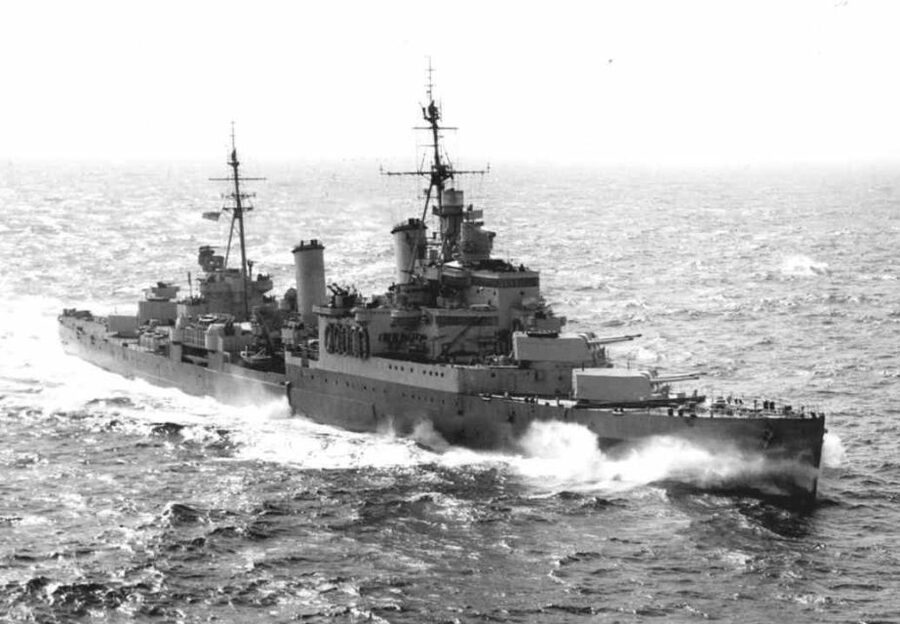
The WWII story here is not just about planes. It is about the island’s job in the Mediterranean supply chain.
In the early years of the war, Malta became a prize because Axis powers needed control of sea lanes, and Allied forces needed Malta to hit convoys. British air and sea forces based on the island could attack shipments carrying vital supplies and reinforcements. Then North Africa opened up in mid-1940, which raised Malta’s strategic value even more.
Your guide sets it up with the core conflict: Italy and Germany on one side, and the Royal Air Force and Royal Navy on the other. General Rommel, effectively leading the Axis in North Africa, warned in May 1941 that without Malta the Axis would lose control of North Africa. That is the scale of what you are walking through.
This tour tries to keep that big picture attached to places. That is what makes it more satisfying than a list of “see this, then that.”
Vittoriosa to Valletta, How the Day Gets You Oriented
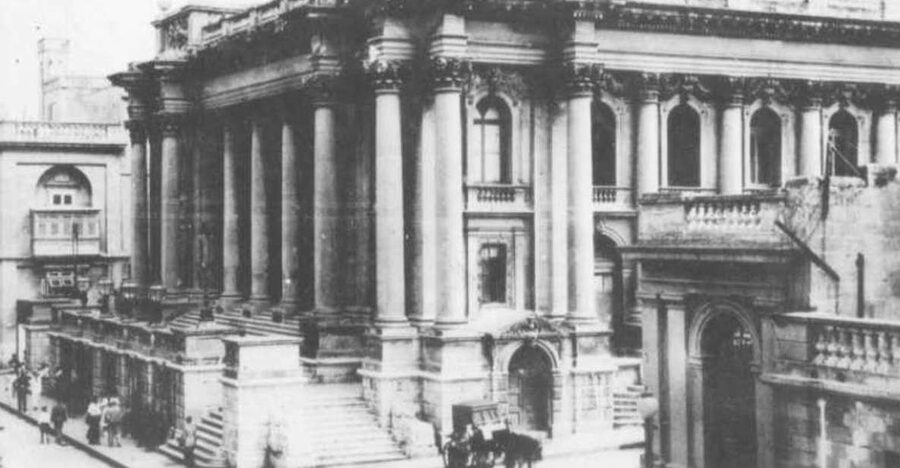
Before you hit the major sites, you get a route that helps your brain build a map.
Vittoriosa gives you a harbor-side start, then Valletta pulls you inward toward the land front and the layers of defense. You are moving through the kind of city where sightlines matter. When your guide points out fort lines, gate locations, and memorial placements, you start understanding why certain buildings were targets.
This is also where the tour design helps solo visitors. You do not have to figure out bus stops, museum times, or which streets connect where. You just follow the guide and let the story lead.
Fort St Elmo: A Coastal Defense Stop You Can Actually Feel
Fort St Elmo is one of those places where the walls look modest until you remember what they were built to do: control a coastline and resist repeated attack.
On this tour, you get entrance included to Fort St Elmo, and it pairs nicely with the story your guide is telling about the war’s pressure on Malta from sea and air. Even if you already know the Siege of Malta at a high level, forts like this can make the conflict feel more grounded. You see defense as a real physical system, not just a concept.
One balance note: the day is busy, so you might not get long, quiet time inside every corner. If you are the type who likes reading every panel and lingering, plan to treat Fort St Elmo as one major introduction, then consider returning later on your own when you want a slower pace.
Air Raid Shelters: When the Tour Becomes Personal
The most memorable part for many people is the air shelters. Here, the war is not abstract. It is the built response to fear, noise, and urgency.
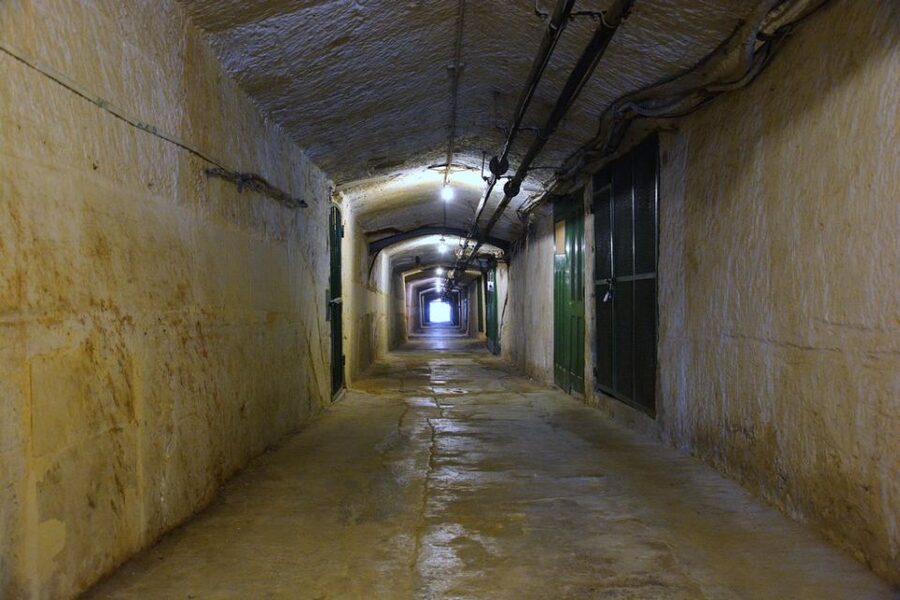
You get tickets to the Air Raid Shelters, and you are guided through what these spaces were meant for. The key value is context. You are not just looking at a bunker. You are learning how Malta’s civilians, and the island’s defenses, lived under constant threat.
The reviews also point out a practical thing: the shelter segment can feel like it could be longer, depending on how detailed you want the walkthrough to be. If you are especially interested in shelters and tunnels, you may leave wanting more time in the underground sections. Still, even with limited time, access changes the day. It is one of the only ways to make the siege story hit at ground level.
Off the same quay, a different boat:
- From Malta: Full-Day Gozo UTV Tour with Lunch and Boat Ride★ 4.6 · 4,408 reviews
- From Malta: Full-Day Gozo Quad Tour with Lunch and Boat Ride★ 4.8 · 1,419 reviews
- Valletta: Street Food and Culture Walking Tour★ 4.8 · 1,251 reviews
- Gozo Full-Day Jeep Tour with Private Boat to Gozo & return★ 4.5 · 1,048 reviews
- Valletta: City Walking Tour in a Small Group★ 4.9 · 957 reviews
Lascaris War Rooms: Where Command Decisions Were Made
After the shelters, the day shifts from surviving to directing.
The tour includes entry to the underground Lascaris War Rooms, where Malta’s air defense was coordinated. This is a big deal because it turns Malta from “a place that was attacked” into “a place that organized responses.”
You also learn about Mediterranean sea battles in this underground setting. The most striking part is the name dropping, but in a good way: General Eisenhower, Admiral Cunningham, Field Marshal Montgomery, and Air Marshall Tedder directed the Invasion of Sicily in 1943 from this kind of command environment.
You do not need a military background to appreciate it. The rooms help you understand how decisions traveled from people to operations, and how a small island could matter to large-scale campaigns.
A small caution from the experience format: like many guided days with ticketed sites, you may not have continuous guide narration in every museum space. One review mentioned that the Malta War Museum portion could be self-guided rather than fully guided. If that matters to you, go in ready to read and take your time.
Valletta Land Front Stops: Porta Reale, Teatru Irjal, and Strada Stretta
Valletta is where you start seeing the war story stitched into urban geography.
You will pass Porta Reale, a curtain wall at the center of the Valletta Land Front. That is one of those details most people walk past without thinking, but when your guide explains its role, it becomes part of the defense logic.
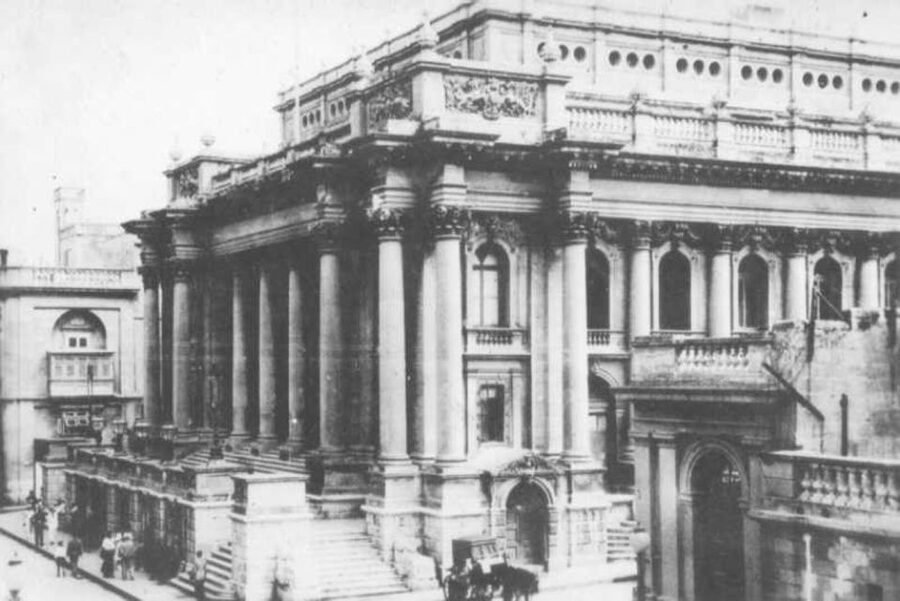
Next is Pjazza Teatru Irjal, the site of the former Royal Opera House, heavily bombed in 1942. It is a powerful reminder that even cultural landmarks were targeted or affected during wartime pressure.
Then you walk along Strada Stretta, a lively stretch where the city’s scale feels manageable, even under siege conditions. Your guide points out squares and street-level markers tied to wartime recognition.
Memorials and Honor: Numbers, Names, and Malta’s George Cross
Some tours mention memorials. This one tries to give them meaning.
You see the commemorative RAF monument to the 2,298 Commonwealth aircrew who lost their lives in WWII air battles. That figure can be hard to hold in your head without context, so having it placed on a route you can walk around helps.
You also stop at Misrah San Gorg, known as St George’s Square. This is linked to the George Cross awarded to Malta in 1942. That award matters because it is a formal recognition of resilience and endurance, not just a military outcome.
Then you reach Republic Square for the Queen Victoria statue. It is not a war monument, but it adds perspective, showing how older layers of authority and identity sat alongside the siege-era struggle.
Victory Kitchens: The War Story Through Food Waste
One of the more human stops is the Victory Kitchens, built as community kitchens during shortage. The idea was to avoid food waste, which sounds practical, almost domestic, but it is also a window into how war reshaped everyday routines.
It is also a reminder that wartime hardship was not only about battles. It was about systems, rationing, and keeping a community going day after day.
If you are the kind of person who likes war history beyond the dramatic air raids, this stop can be a standout.
Gates and Harbor Honor: Victoria Gate and Santa Marija Memorial
Valletta’s gates are more than architecture. They are thresholds in the defense story.
You will visit Victoria Gate, built on the site of the old Del Monte Gate. It is the kind of detail that makes the city feel like it has a memory.
Then you pay respects at the Santa Marija Memorial, which is anchor-shaped and connected to sailors of Operation Pedestal. Operation Pedestal is tied to critical resupply efforts, so this memorial helps you understand that Malta’s survival was not just about repelling attacks. It was also about getting supplies through.
Upper Barracca Garden and the Siege Bell Over the Great Harbor
You finish with two high-impact viewpoint moments.
At Upper Barracca Garden, you see statues including Winston Churchill and other prominent men. These names help anchor Malta’s story in the wider Allied leadership narrative.
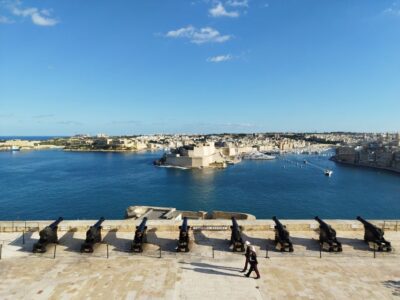
Then the day ends with the Siege Bell Memorial, overlooking the Great Harbor of Valletta. The memorial was built in 1992 to honor 7,000 people who lost their lives in the Siege of Malta. Standing there, the harbor becomes more than scenery. It becomes the reason this place mattered.
Price and Value for a Full-Day WWII Malta Tour
At $71 per person for a 7-hour guided experience, the value is strongest if you want multiple paid entries covered for you.
Included features you are paying for inside that price include:
- ticketed access to Fort St Elmo
- ticket to the Air Raid Shelters
- access tied to the Malta War Museum
- licensed local guide
- pick-up and drop-off from your hotel or nearest point
- English-language live guidance
Lunch is not included, so you will want to plan for a meal on your own during breaks or in Valletta. That missing meal can be a deal-breaker for some people who hate decision-making, but for most visitors, it is manageable if you bring a plan.
When this tour feels like good value is when you are happy with guided pacing and guided priorities. When it feels less valuable is when you want unstructured time to linger deeply inside one site. The day is built to hit the main WWII anchors across Malta, not to maximize time in each room.
Pace, Audio, and the One Thing to Plan For
This is a long walk day. It includes museum and underground segments, plus city streets between them. In plain terms, wear shoes you trust.
Audio can matter too. One review mentioned that hearing the guide could be difficult when off the bus, because the group could not hear her clearly at times. It is not something you can control, but it is a reason to be proactive. If you are sensitive to audio clarity, bring a small personal hearing solution, or position yourself where you can see and hear best.
Also, keep expectations realistic about time at each stop. Some comments pointed out that you might only see two areas in the tunnel-like or underground spaces before moving on. That does not mean it is low quality. It means the tour design chooses breadth over depth.
If you love WWII detail, this tour works best as an efficient “set the scene” day, then you follow up later.
Who This Tour Suits Best
This is a great pick if:
- you want WWII Malta history explained in English with a licensed local guide
- you like your history tied to places you walk through, not just museums
- you want a structured day that includes multiple key sites without planning them yourself
- you are comfortable with a full day on your feet and in underground spaces
It may not be the best fit if:
- you need very slow pacing or lots of quiet time inside each stop
- you want a deeply focused, single-theme tour with no interruptions or transitions
- mobility is an issue, since the tour is not suitable for people with mobility impairments
Should You Book This WWII Malta Walking Tour?
I think you should book it if your goal is to understand how Malta’s WWII story fits together across Vittoriosa and Valletta, with the added power of entering places like the Air Raid Shelters and the Lascaris War Rooms. For the price, the included tickets plus the guided route make it practical, especially if you do not want to piece together sites on your own.
Skip it or plan your expectations differently if you are craving long stays in one location, or if you know you struggle in busy group pacing. In that case, you might get more satisfaction doing fewer sites independently after you learn the overall story.
If you want one day that gives you a strong Malta WWII map in your head, this is the kind of tour that delivers.
FAQ
How long is the World War II Malta Full-Day Walking Tour?
The tour lasts 7 hours.
Where does the tour take place?
It visits Vittoriosa and Valletta in Malta.
What sites have included entrances or tickets?
The tour includes tickets for the Air Raid Shelters and Fort St Elmo, plus a ticket to the Malta War Museum.
Is there a live guide, and is it in English?
Yes. The tour includes a licensed local guide, and the live tour guide is English.
Is hotel pick-up and drop-off included?
Yes. Pick-up and drop-off are included from your hotel or the nearest point.
Is lunch included?
No, lunch is not included.
Is the tour suitable for people with mobility impairments?
No. It is listed as not suitable for people with mobility impairments.
What is the cancellation policy?
You can cancel up to 24 hours in advance for a full refund. There is also reserve now and pay later option available.
Just landed: new Valletta pages

Walking Tours, compared.



Guided Walking Tour with Optional Cathedral Tour
Read our review →
The Valletta Street Food and Culture Walking Tour
Read our review →Browse the lists this tour appears in