
Reviewed · THREE CITIES HARBOUR WALKS
Vittoriosa Three Cities Private Walking Tour
History walks with you in Birgu, and this private Vittoriosa tour delivers the big backstory fast. It is a personal, English-language walk through key sites in Malta’s Three Cities, paced so a guide can explain what you are seeing. You start at Café Riche in Birgu and move through landmarks that connect the prehistoric past to the Knights, the inquisition, and the Grand Harbour era.
I love how the Inquisitor’s Palace stop turns a hard subject into clear context, including the Maltese inquisition period up to the start of French occupation. I also love the payoff at the Birgu waterfront, where the Maritime Museum and Fort St Angelo help you understand why this harbor mattered so much. One possible drawback is that there is no hotel pickup, so you need to make your own way to the meeting point in Birgu.
In This Review
- Key things that make this Vittoriosa private walk worth it
- Finding your footing in Vittoriosa, the Grand Harbour’s oldest core
- Couvre Porte and why fortifications change how you see the streets
- Inquisitor’s Palace: the 238-year story, explained step by step
- Auberge d’Angleterre: where Knights lived, and power looked casual
- St Anne’s (Santa Scholastica): a cloister stop with a real-purpose question
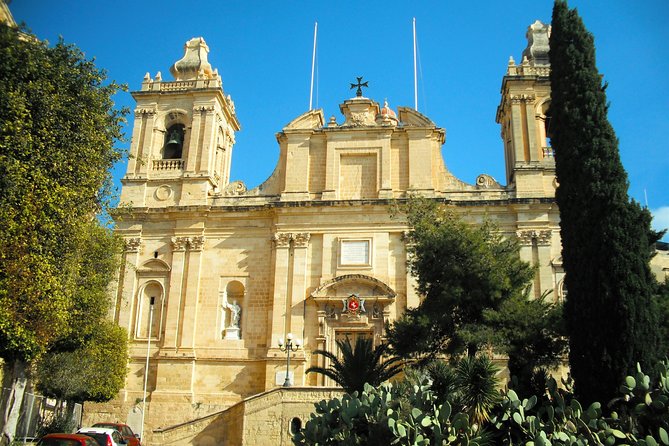
- St. Lawrence’s Church: the parish side of Birgu
- The Birgu waterfront and Malta Maritime Museum: why ships made the city
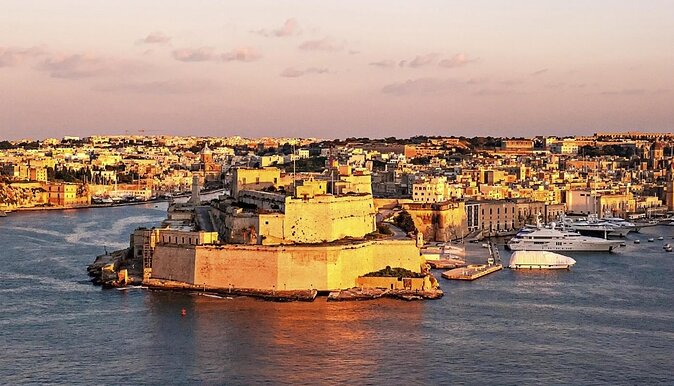
- Fort St Angelo: the Grand Harbour’s heart, in bastion form
- How much time you really need, and what the pace feels like
- Price and value: $319.54 per group can still be a smart deal
- Who this private Vittoriosa walk suits best
- Practical tips so you enjoy every stop
- Should you book this Vittoriosa Three Cities private walking tour?
- FAQ
- How long is the Vittoriosa Three Cities Private Walking Tour?
- Is this tour private, and what group size does it allow?
- What language is the tour offered in?
- Where do we meet, and where does the tour end?
- What is included in the price?
- Is hotel pickup or drop-off included?
- Are food and drinks included?
- Do I need to pay admission fees for the stops?
- Do I get a mobile ticket, and are service animals and children allowed?
- What is the cancellation policy?
Key things that make this Vittoriosa private walk worth it
- A guide-led route that explains why Vittoriosa exists, from prehistoric settlement to later Knights of St. John power
- Inquisitor’s Palace with real historical context, including the inquisition period ending at the start of French occupation
- Knight-era architecture you can actually see, like the Auberge d’Angleterre stop
- A practical harbor-focused ending, with the Malta Maritime Museum and Fort St Angelo near the Grand Harbour
- Admission is noted as free at each listed stop, so you are not constantly paying your way through the itinerary
- Private pacing, meaning you can ask questions without feeling rushed
Finding your footing in Vittoriosa, the Grand Harbour’s oldest core
Vittoriosa, often called Birgu, sits right by the Grand Harbour. This tour starts in a busy, practical spot in Birgu at Café Riche, then gets you oriented on foot. The guide begins with a straightforward big picture: this area is the oldest settlement near the harbour and it has roots reaching back to prehistoric times.
That first context matters. If you arrive in the Three Cities and just wander, you can see stone and streets but miss the plot. Here, you get the plot first, then the buildings and fortifications start making sense.
You also pass key defensive ideas as you walk. One of the early beats includes the fortification of the Couvre Porte, which is the kind of detail you would normally gloss over. With a guide, it becomes the reason people could hold this place, survive raids, and control trade routes tied to the harbour.
More of the Three Cities, across the water:

Couvre Porte and why fortifications change how you see the streets
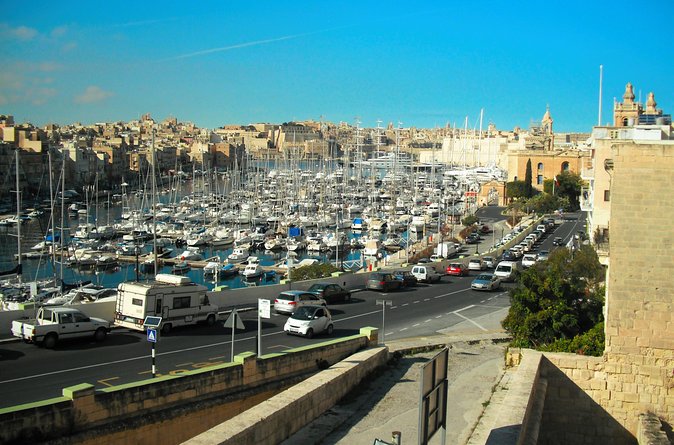
Malta’s history can feel like a string of empires on a map. What this walk does well is show the physical reality of power: walls, gates, and vantage points. As you move through Vittoriosa, the guide ties the architecture to the world that produced it.
This is also where you learn how the Three Cities connect to the harbour. Vittoriosa was never a backwater. It was the kind of place that mattered because ships mattered, and control of the water meant control of everything else.
If you are the type who likes to look up when you walk, you will have fun. The pacing is built for seeing, not just getting from A to B. Expect short stops and a guide who points out what to look for, then explains the why.
Inquisitor’s Palace: the 238-year story, explained step by step
The tour’s first scheduled stop is the Inquisitor’s Palace. You spend about 15 minutes here, and the time is structured for meaning, not just photos. The guide explains the history of the Inquisition and how it functioned locally.
A key point you should listen for is the timeline. The Maltese inquisition was held in this area until the beginning of French occupation. In real terms, that makes the building more than a dark curiosity. It shows how long institutions like this shaped everyday life.
One other reason this stop gets attention is how the guide frames it. The explanation is direct enough to follow, but not so fast that you miss the human impact. You should be prepared for heavy history. This is not a cheerful coffee break. It is a chance to understand why Malta looks the way it does in its oldest quarters.
Practical note: the itinerary indicates Admission Ticket Free for this stop. So you can focus on the guide’s narrative without suddenly worrying about an entrance fee.
Auberge d’Angleterre: where Knights lived, and power looked casual
Next you head to the Auberge d’Angleterre area, with about 20 minutes on the stop. This is one of those places that feels like it should come with a dramatic story, and it does. The guide helps you understand that this was once home to the Knights.
In particular, you learn about the Knights of St. John connection. That matters because it changes how you read the buildings. You are not just looking at old walls. You are looking at a social and military base for an order that shaped Malta’s fortunes.
I like this stop because it is a bridge. It connects the grim institutional past you just heard about to a more organized, almost official era of rule. Once the guide explains what an auberge was and who used it, the neighborhood feels different. Even if you only have a couple of hours, this kind of context keeps the walk from becoming a checklist.
Again, the itinerary lists Admission Ticket Free here, which makes it easier to keep your time focused.
St Anne’s (Santa Scholastica): a cloister stop with a real-purpose question
You then visit St Anne’s, also known as Santa Scholastica (Knisja Sant’Anna). This segment is about 10 minutes. The way it is set up is simple: the guide points out what it was, then explains what the cloistered nunnery was previously used for.
Even if you are not a church-and-monastery person, this stop helps you understand how religious life fit into Malta’s broader story. It is part of the same historic world, just seen through a different role.
This is also a good time to slow down mentally. The previous stops swing between fear and power, Knights and institutions. A cloistered setting gives you a quiet contrast, and the guide’s explanation should help you see how these places supported communities, not just worship.
Admission for this stop is also marked as free in the itinerary notes.
More Guided Walks in Malta:
- The Original Valletta Walking Tour★ 5.0 · 2,719 reviews
- Valletta: 3-Hour Walking Tour★ 4.7 · 1,605 reviews
- Valletta: Guided City Walking Tour★ 4.8 · 1,256 reviews
- Valletta: Street Food and Culture Walking Tour★ 4.8 · 1,251 reviews
- Malta: Mdina and Rabat Walking Tour with Catacombs★ 4.8 · 1,126 reviews
St. Lawrence’s Church: the parish side of Birgu
The next stop is St. Lawrence’s Church, a parish church of Birgu. You get about 10 minutes here. The guide has you look at it not just as a building, but as a marker of everyday religious life.
This is a small stop by time, which is fine. You are building a pattern. If Inquisitor’s Palace explains institutional force and Auberge d’Angleterre explains the Knights’ presence, then St. Lawrence’s gives you the local, community rhythm.
If you like to travel with your eyes open, this is where you should pay attention to details the guide points out. Even short visits can feel meaningful when someone connects architecture to the role it played for locals.
Admission is listed as free for this stop as well.
The Birgu waterfront and Malta Maritime Museum: why ships made the city
After the churches and historical sites, the tour shifts to the water. You spend about 10 minutes at the Vittoriosa Waterfront, then about 10 minutes at the Malta Maritime Museum.
This part is a practical reward. Walking by the harbour helps you picture all the political and religious stories you have just heard. The harbour was not scenery. It was the engine.
The waterfront stop is also your chance to absorb views and take in the geometry of the fortifications. In a few minutes, you can go from reading history to feeling why Malta’s key players cared about this coastline.
Then the Malta Maritime Museum helps tie it together. The itinerary notes that you learn about the history of this important building. With a guide, you are not just looking at displays. You are getting a guided interpretation that should connect back to what you saw around the Grand Harbour.
Admission for this museum stop is noted as free in the itinerary.
Fort St Angelo: the Grand Harbour’s heart, in bastion form
The last major scheduled stop is Fort St Angelo, with about 15 minutes. This is the big finish for a reason. The fort is described as a bastioned fort at the heart of the Grand Harbour, and it is also noted as the oldest fortification in the Grand Harbour area.
So you are ending on the most direct expression of why Vittoriosa mattered. When you look at a fort like this after learning about the Knights, the inquisition-era power structures, and the harbor’s role, the whole walk clicks. You finally see the city’s story in one place: defence built for a strategic waterfront.
The guide wraps up the walk near the waterfront area. The tour ends at the Fort St Angelo Waterfront area in Birgu, and the overall description also says the walk concludes back at the original departure point area. In practice, plan for an ending around the fort and harbour rather than deep inland.
Admission is also listed as free for this fort stop.
How much time you really need, and what the pace feels like
The listing gives a duration of about 2 hours, but the description also uses the phrase three-hour private walking tour. Either way, plan for a short, focused experience, not an all-day meander.
This matters if you are juggling other plans in Valletta or planning a boat trip later. The upside is that you can still fit this into a compact Malta itinerary. The downside is that you will need comfortable shoes and a willingness to keep walking between stops.
Because it is private, the guide can adjust the rhythm to your group. That is a real advantage. If one site grabs you and another feels less interesting, a private guide can usually help you spend the right amount of attention without turning the day into chaos.
Price and value: $319.54 per group can still be a smart deal
This tour is priced at $319.54 per group for up to 4 people. That pricing can look steep if you compare it to a group tour bus. But private history walks are not “one person, one story.” You are paying for one guide, one custom pace, and time spent answering your questions.
If you book with a full group of four, you are effectively paying about $80 per person. For a guided, multi-stop walk that includes several major historical sites and a harbor-focused finish, that can be strong value. You also do not have to worry about wandering into the wrong streets or missing key context.
Also, the itinerary notes that each listed stop has Admission Ticket Free. That can reduce the chance of surprise expenses and keeps the experience focused on the guide’s explanations.
Who this private Vittoriosa walk suits best
This is an excellent fit if you are a first-time visitor to Malta and want to understand how Vittoriosa connects to the wider Three Cities story. The tour is also good if you enjoy history but prefer it explained in plain terms, with a route that keeps the narrative moving.
It is also a strong match for couples and small groups who want control over pacing. You will have time to chat and ask questions as you walk, and that personal interaction is the kind of thing that makes a tour feel like a conversation instead of a script.
Families can participate, with the rule that children must be accompanied by an adult. If you bring kids, you will likely want to help them see the bigger story early, so the palace and fort stops feel relevant rather than scary or abstract.
Practical tips so you enjoy every stop
Bring comfortable walking shoes. The tour is a walking route through older streets and waterfront areas, and you will enjoy it more if your feet are happy.
Wear layers. Harbour areas can feel breezier than inland streets, and churches and historic sites can be cooler than the sun outside.
Bring water if you tend to get thirsty. Food and drinks are not included, so plan on keeping your energy up.
If you are sensitive to darker historical topics, know that the Inquisitor’s Palace stop is a key moment. The guide’s job is to explain clearly, but the subject matter is heavy by nature.
Should you book this Vittoriosa Three Cities private walking tour?
I would book it if you want a guided route that gives you context at each stop, from early settlement and fortifications to the Knights, religious sites, and the Grand Harbour’s defensive core at Fort St Angelo. The private format is a big plus when you like asking questions, and the stop at the Inquisitor’s Palace is the kind of experience you will remember because it is explained with a timeline, not vague gloom.
I would hesitate if you prefer hotel pickup convenience, because this starts at Café Riche in Birgu and ends around Fort St Angelo Waterfront. You are in charge of getting there and back on your schedule.
If you are staying in the Three Cities area or you already plan to explore Birgu anyway, this is a smart way to make that walking time count.
FAQ
How long is the Vittoriosa Three Cities Private Walking Tour?
It is listed as about 2 hours.
Is this tour private, and what group size does it allow?
Yes, it is a private tour, and the price is per group of up to 4 people. Only your group participates.
What language is the tour offered in?
The tour is offered in English.
Where do we meet, and where does the tour end?
You meet at Café Riche, Triq P. Boffa, Birgu, Malta. The tour ends at Fort St Angelo Waterfront, Birgu, Malta.
What is included in the price?
The tour includes a professional guide and a private tour.
Is hotel pickup or drop-off included?
No, hotel pickup and drop-off are not included.
Are food and drinks included?
No, food and drinks are not included.
Do I need to pay admission fees for the stops?
The itinerary notes Admission Ticket Free for each listed stop.
Do I get a mobile ticket, and are service animals and children allowed?
The tour uses a mobile ticket. Service animals are allowed, and children must be accompanied by an adult.
What is the cancellation policy?
Free cancellation is available, and you can cancel up to 24 hours in advance for a full refund. If you cancel less than 24 hours before the start time, the amount paid will not be refunded.
Just landed: new Malta pages



Three Cities Harbour Walks, compared.

Three Cities guided tour including harbour boat tour
Read our review →Browse the lists this tour appears in